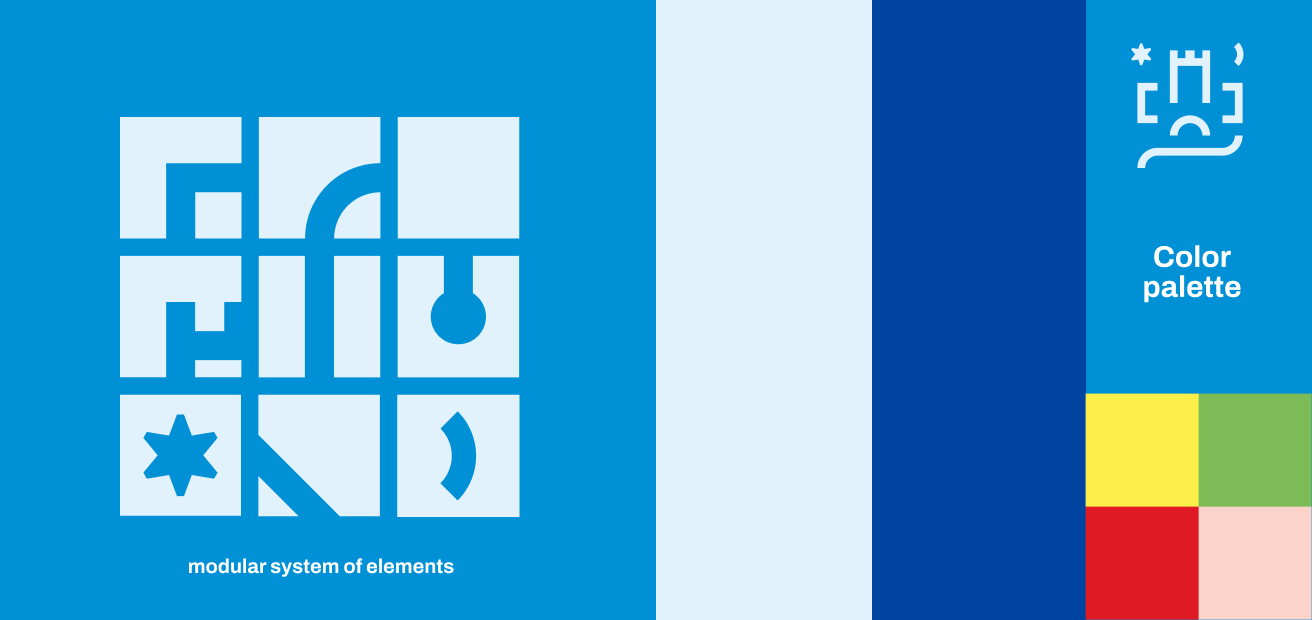
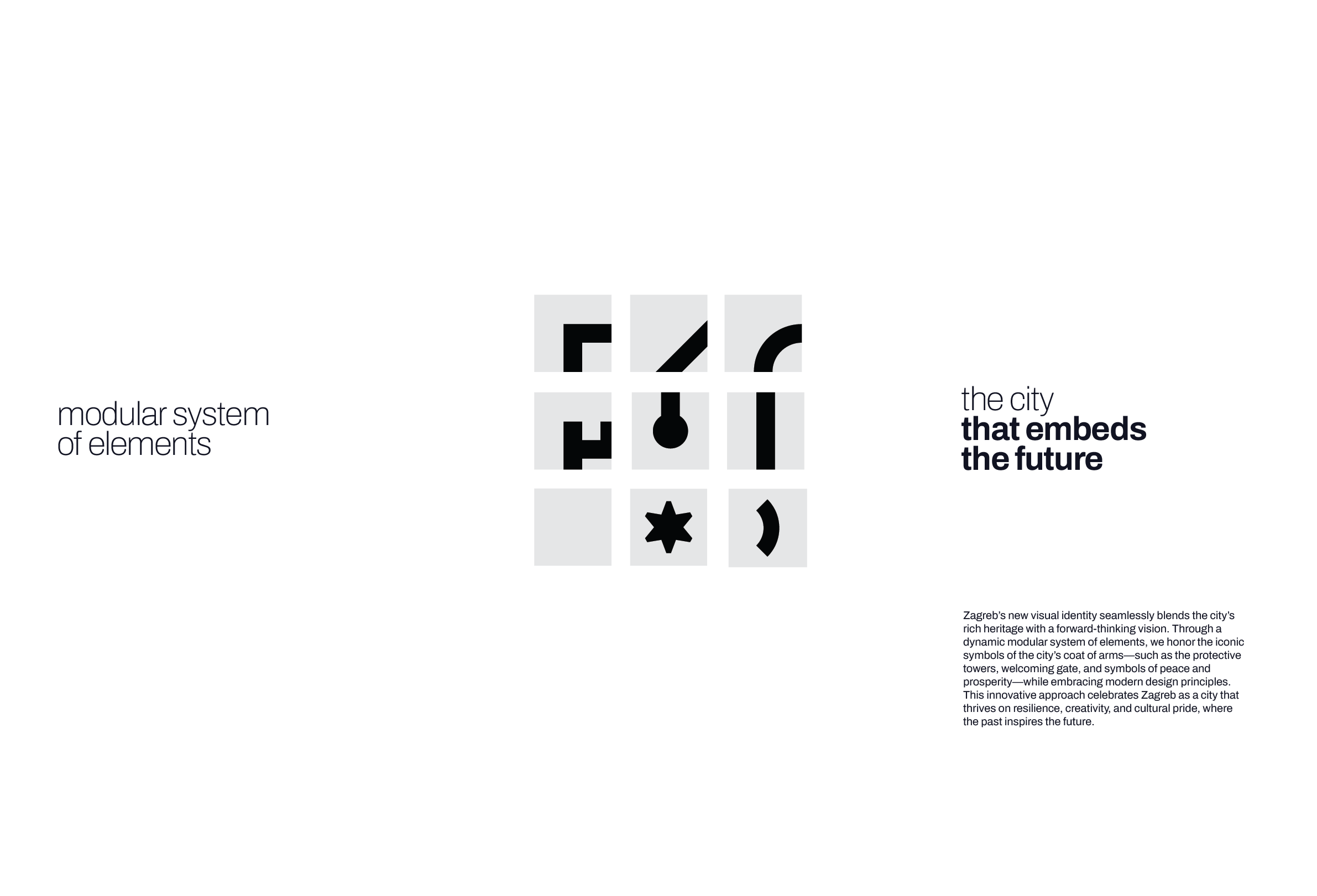
Zagreb's squares are its soul—Ban Jelačić, Zrinjevac, St. Mark's, and beyond. The visual identity honors this with a modular system built from the square form: a flexible, evolving language that captures the city's structure, warmth, and enduring spirit.
Zagreb's heritage runs deep: traditional lacework, the protective towers of the coat of arms, the open gate welcoming visitors. This identity translates these symbols into a contemporary modular system—rigorous, elegant, endlessly adaptable.
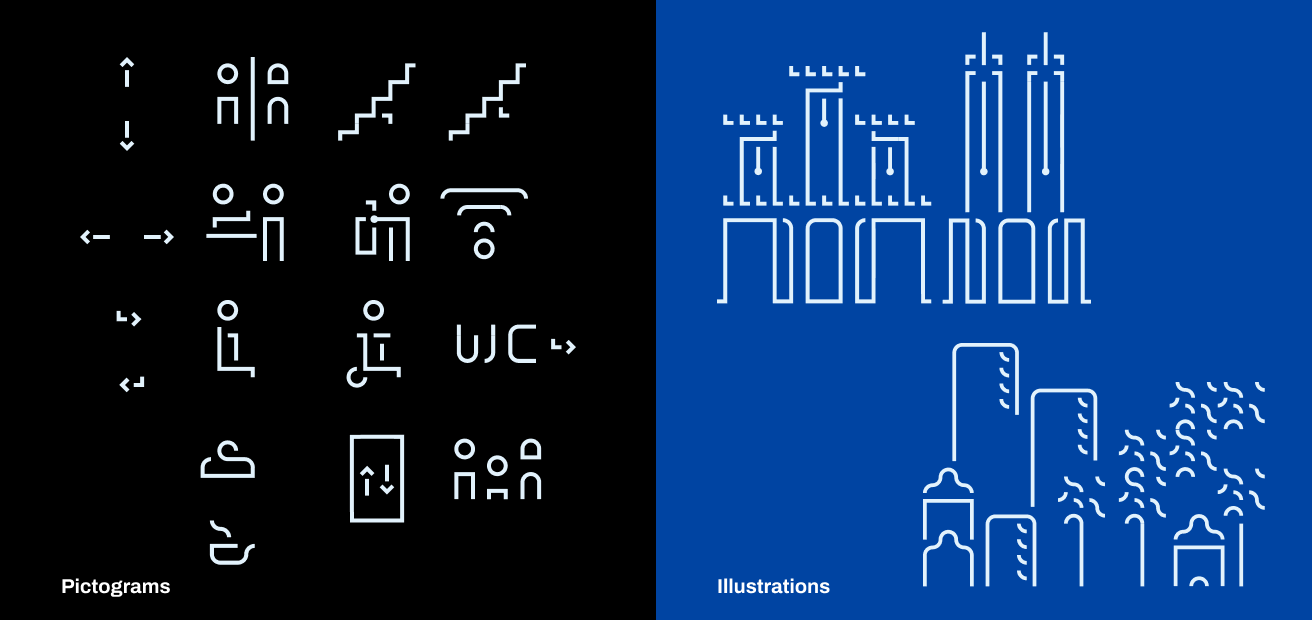
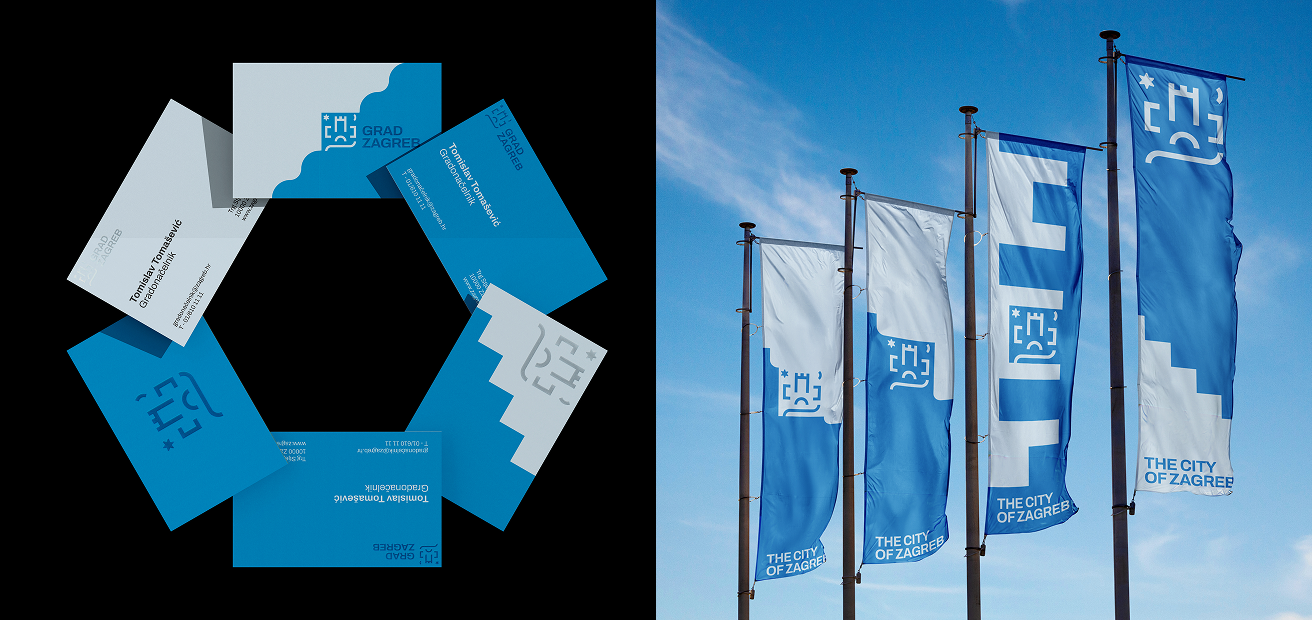
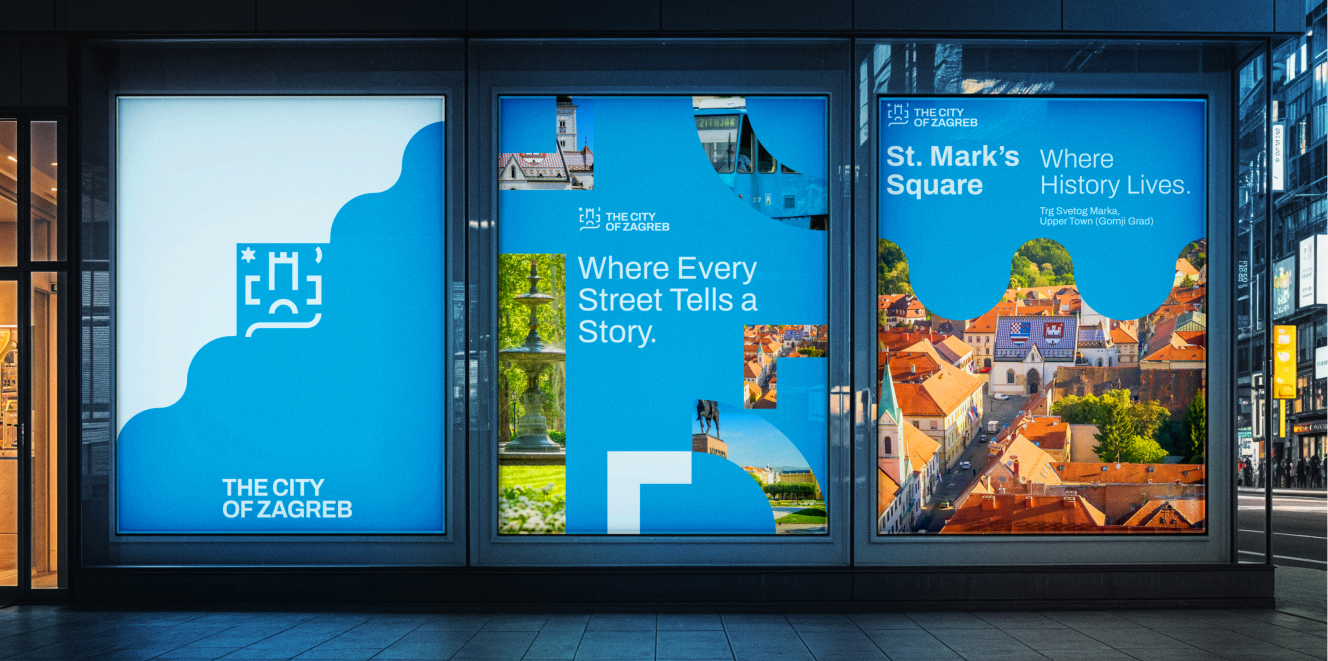
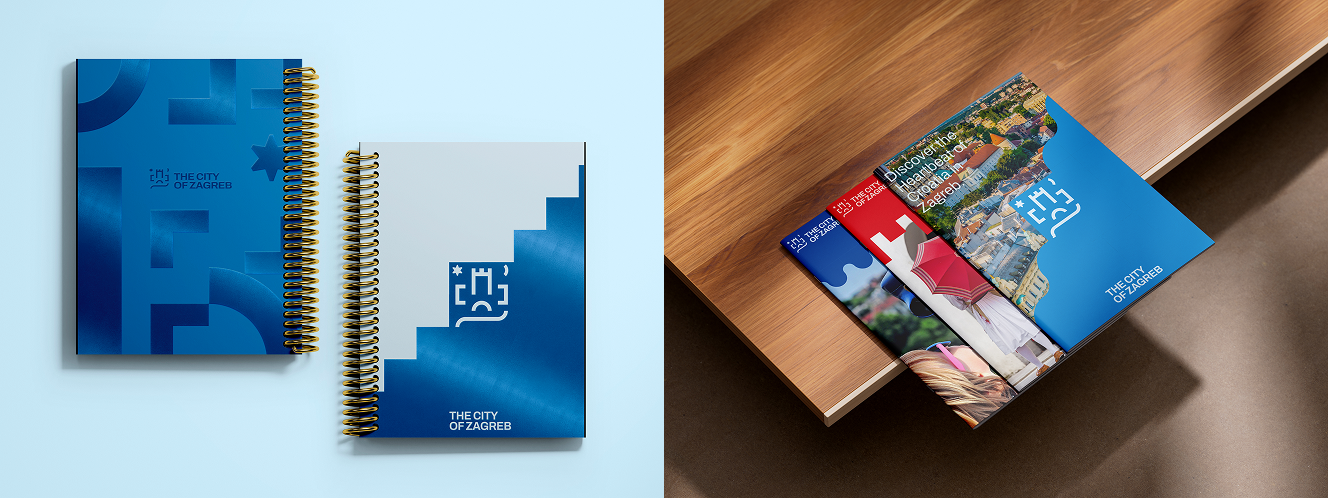
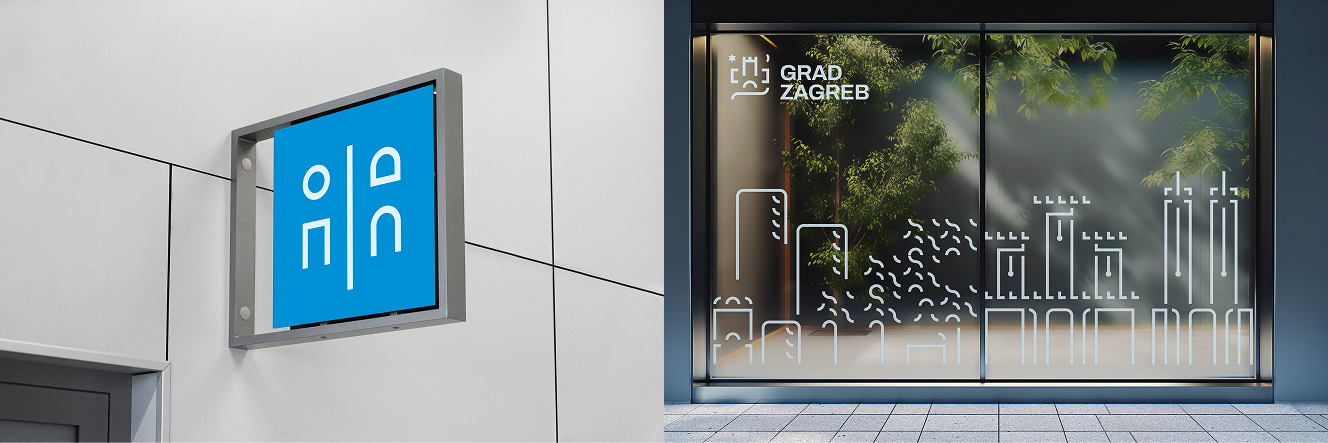
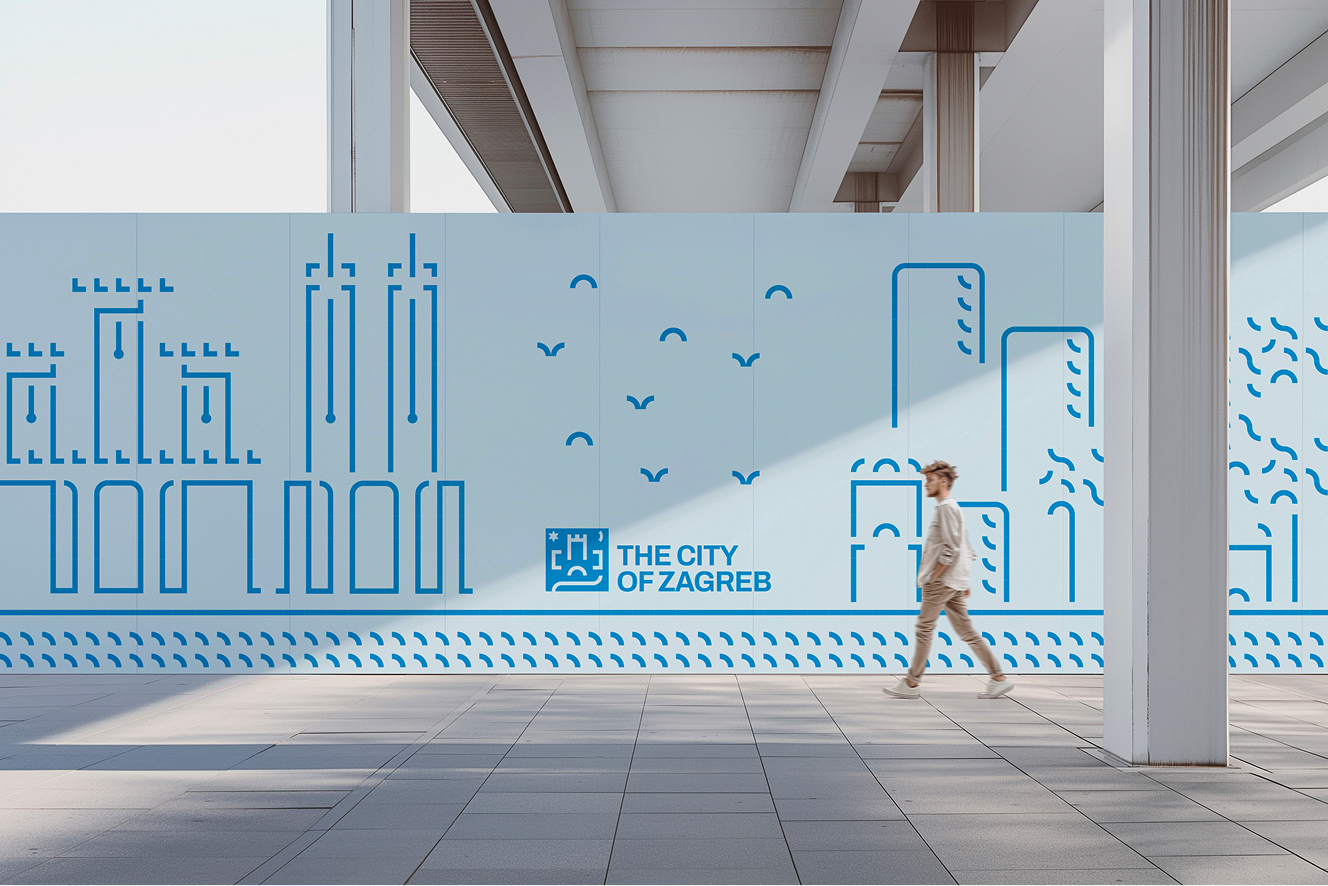
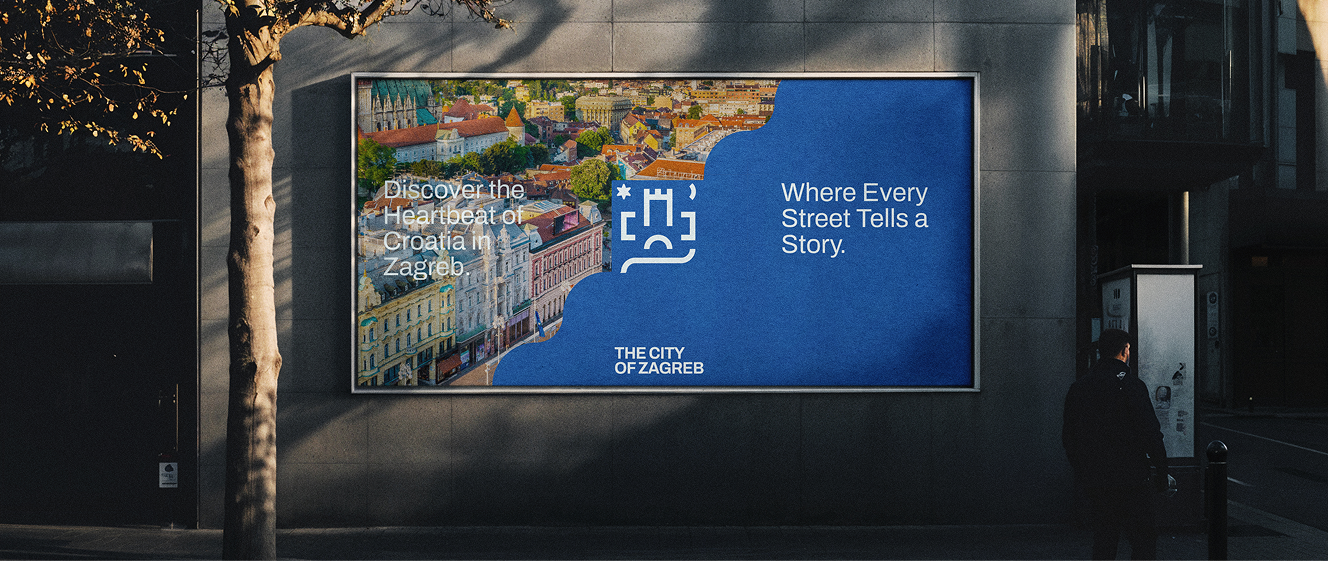
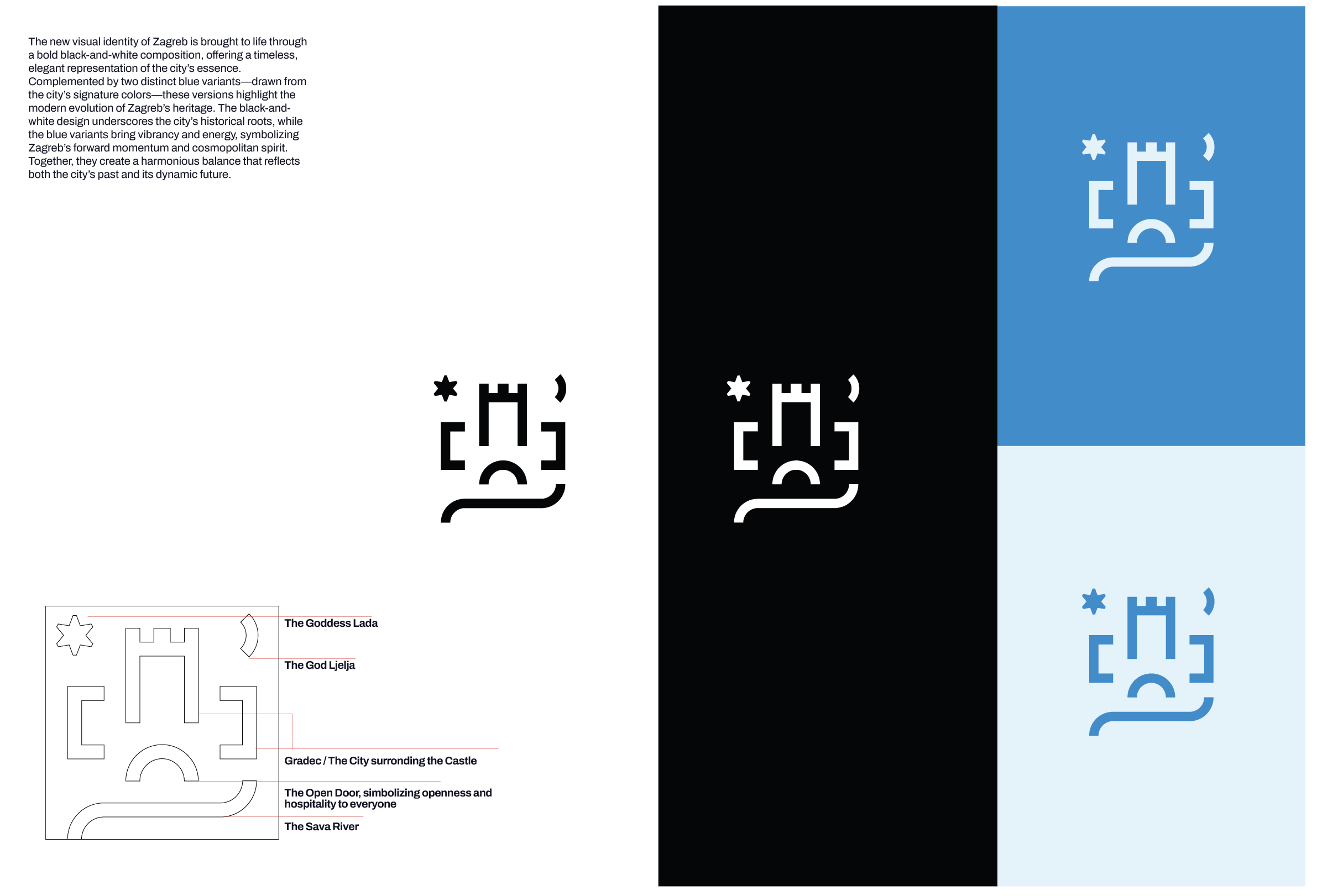
Black and white for history; two blues for the city's signature colors and forward momentum. The new visual identity of Zagreb balances heritage and innovation, building a flexible system from the elements that define the city: squares, lace, and an open gate.
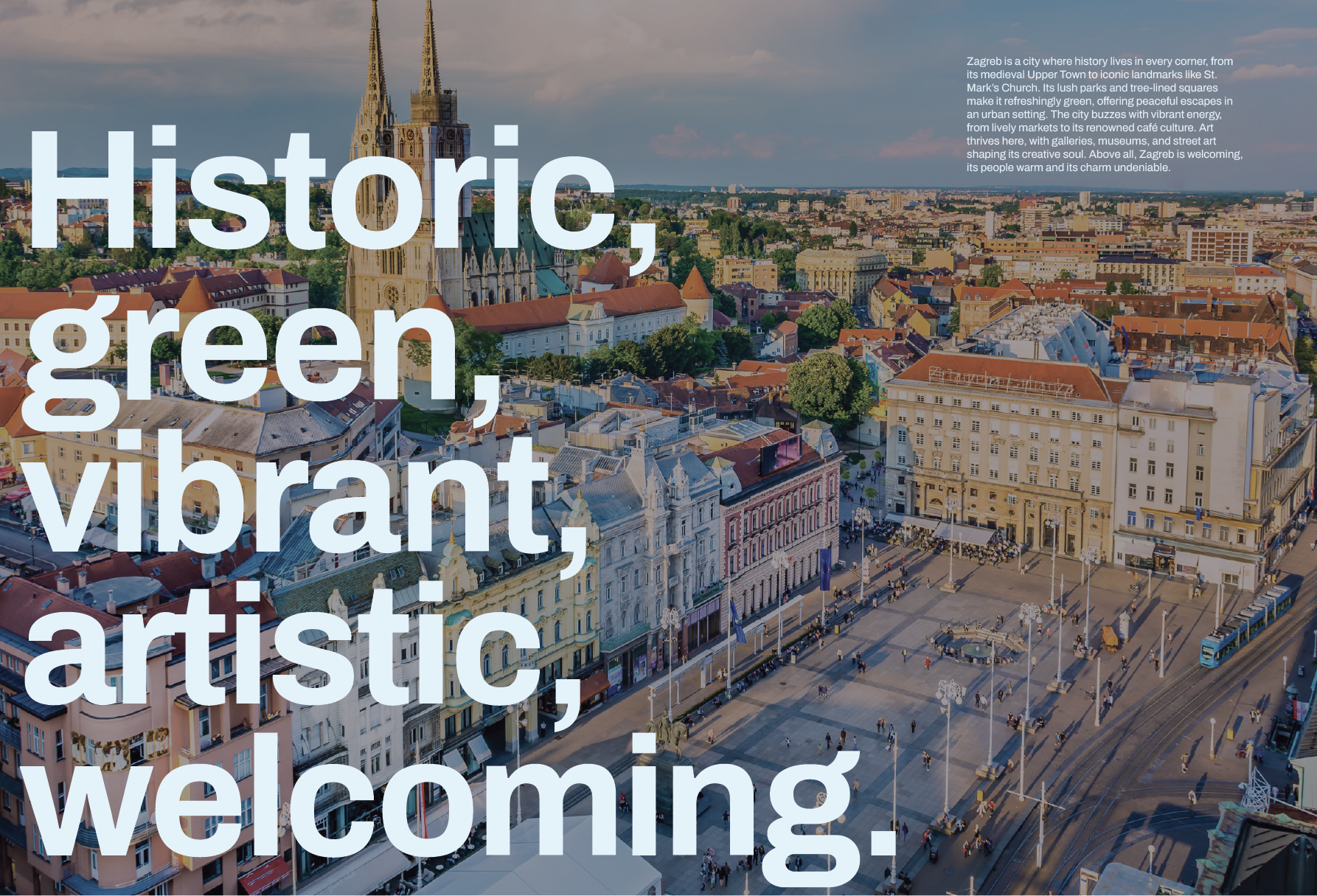
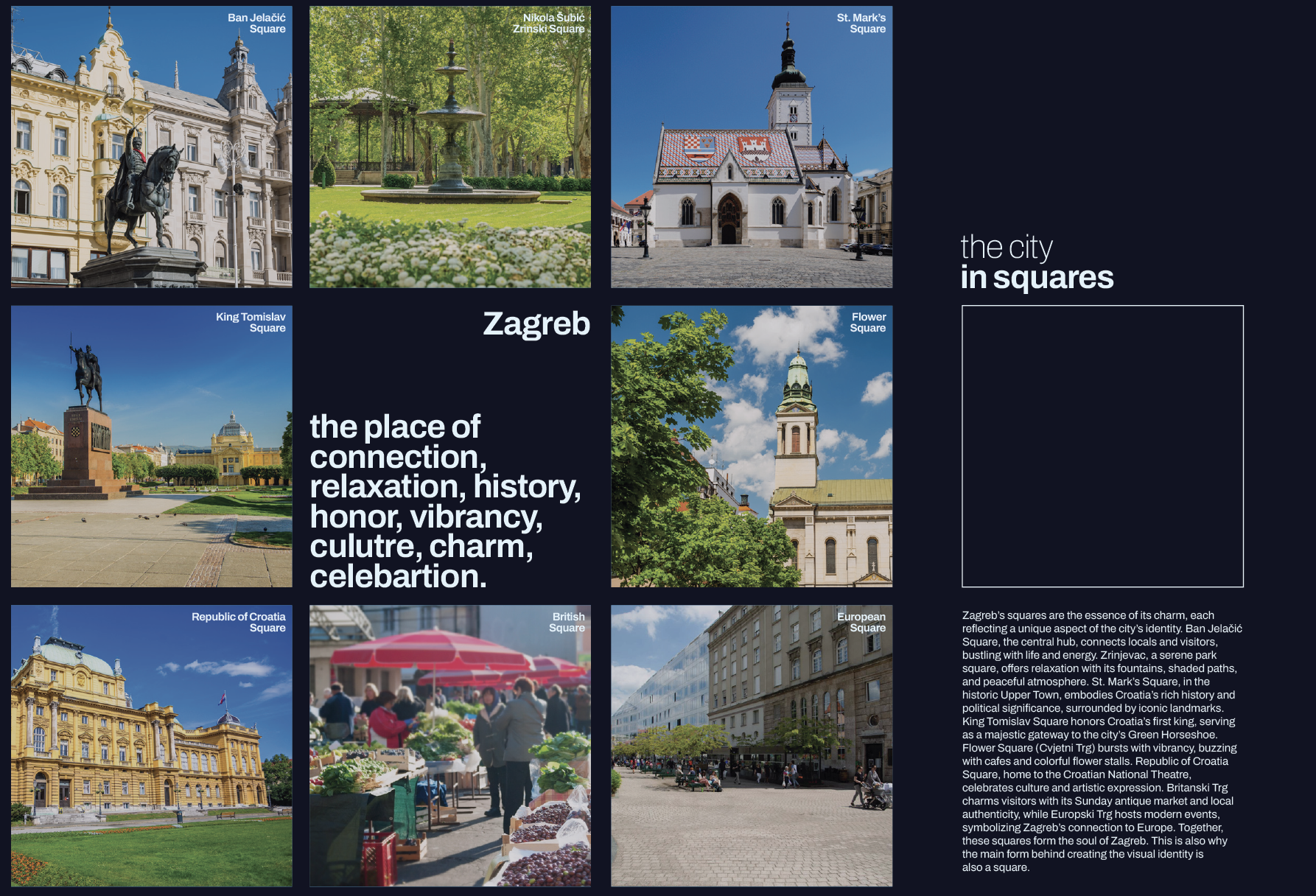
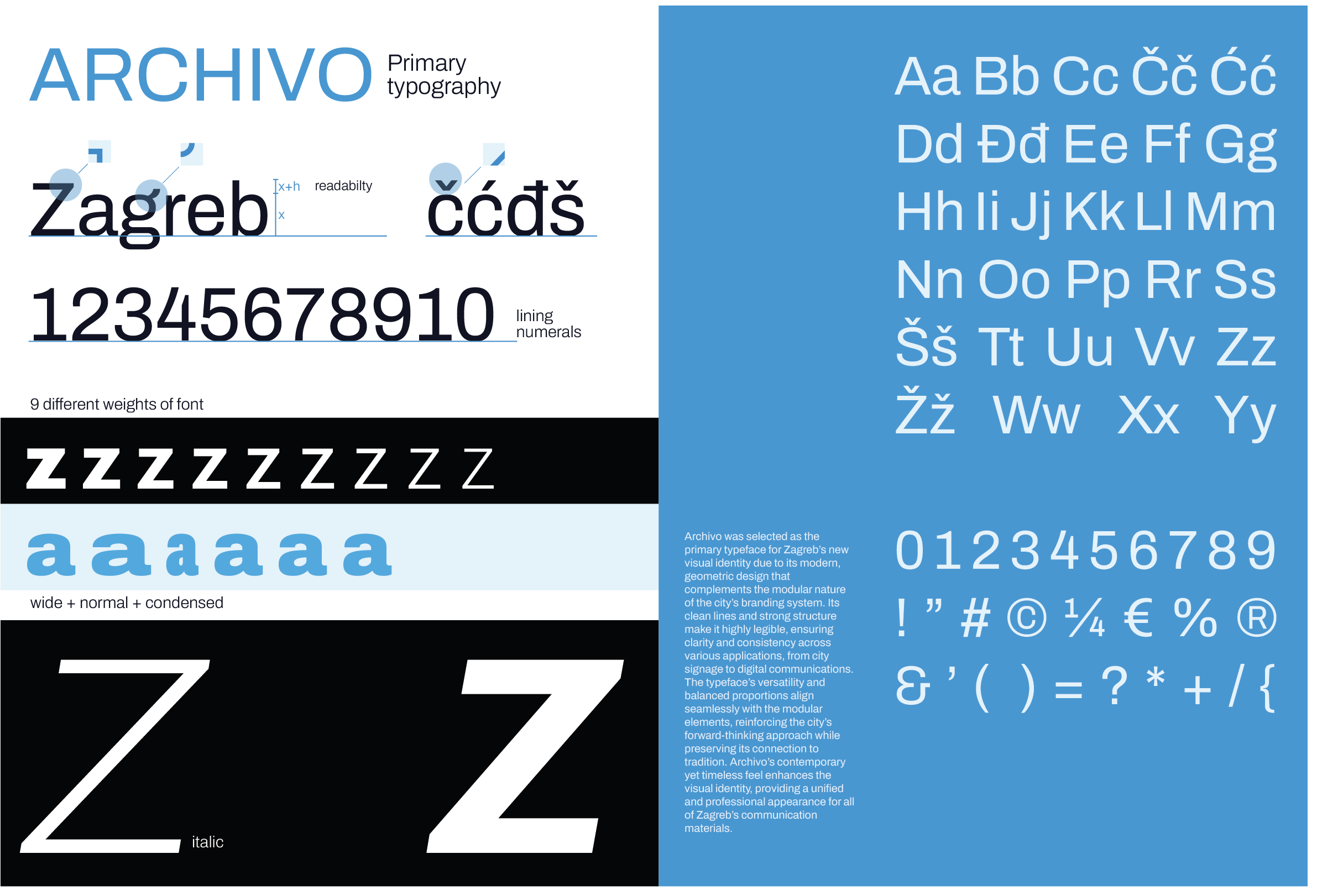
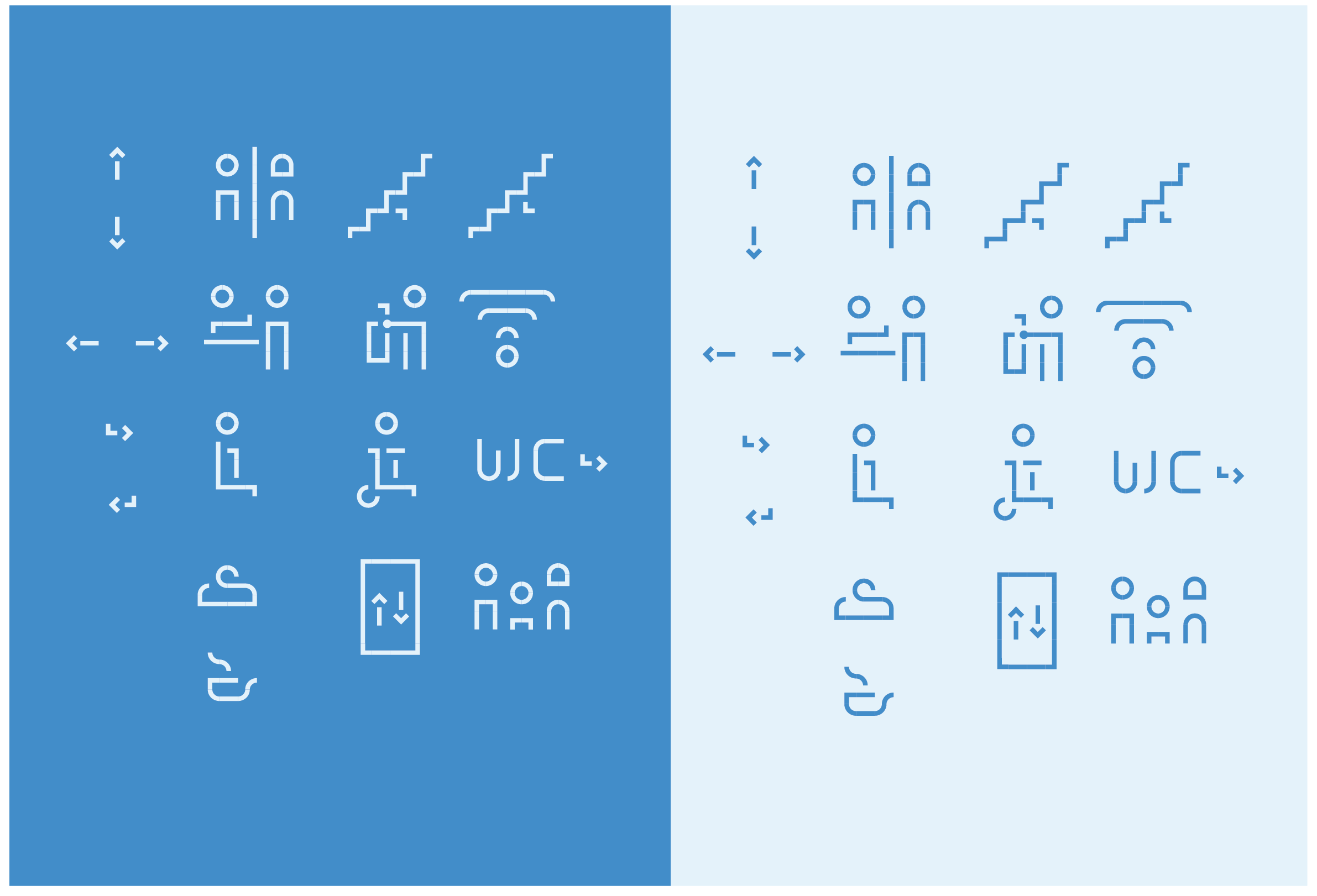
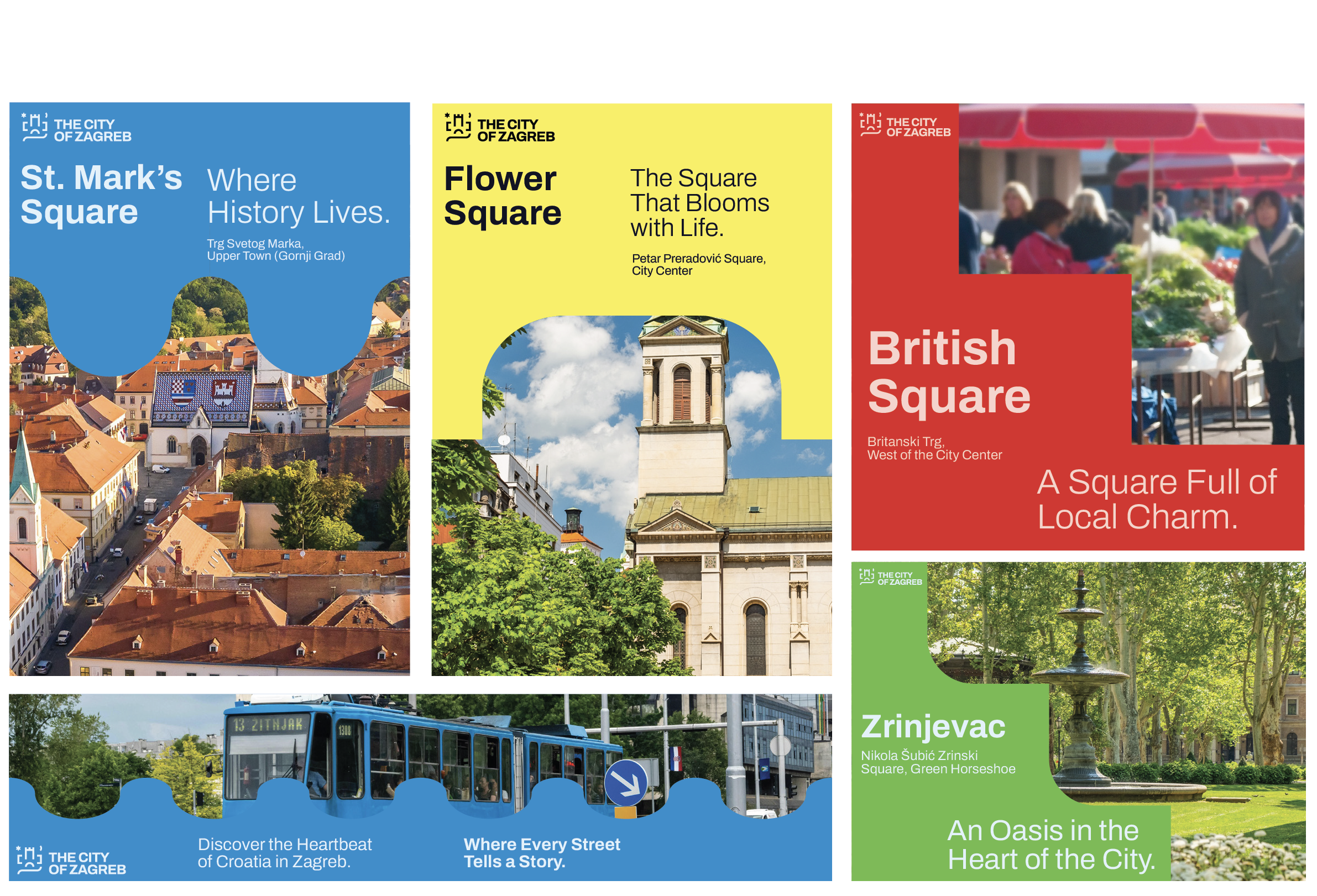
Zagreb is a city defined by its squares. Ban Jelačić Square, the central hub where locals and visitors meet. Zrinjevac, a serene park of fountains and shaded paths. St. Mark's Square, steeped in history and political significance. King Tomislav Square, gateway to the Green Horseshoe. Flower Square, buzzing with cafes and stalls. Republic of Croatia Square, home to the National Theatre. Britanski Trg, with its Sunday antique market. Europski Trg, a symbol of Zagreb's connection to Europe. Each square reflects a different facet of the city—together, they form its soul.
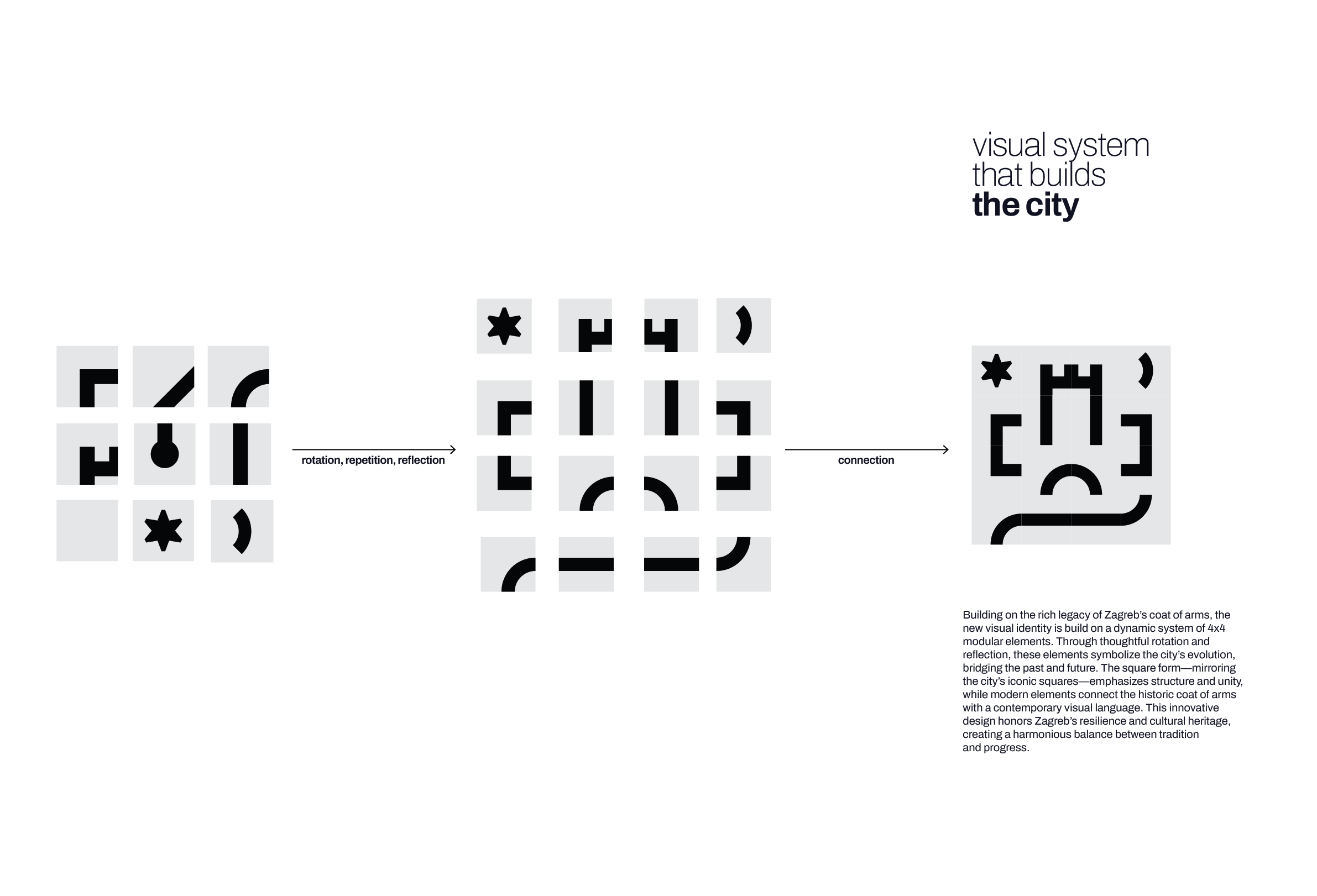
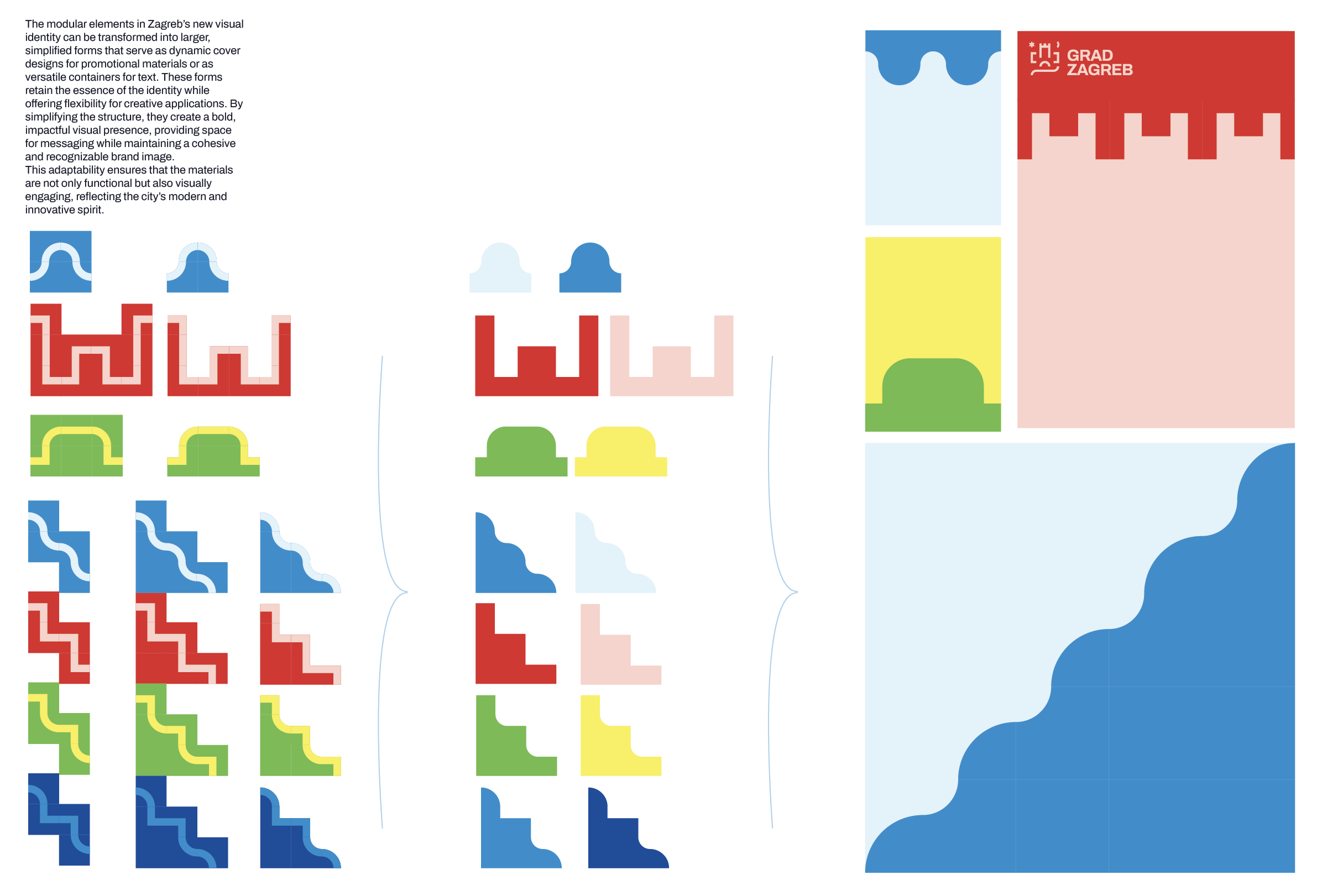
The new visual identity for the City of Zagreb begins with this observation. The square becomes the foundational form: a module that can be rotated, reflected, repeated, and combined. It is a system built for flexibility, for the complexity of a city that is at once historic and modern, traditional and cosmopolitan, rooted and open.
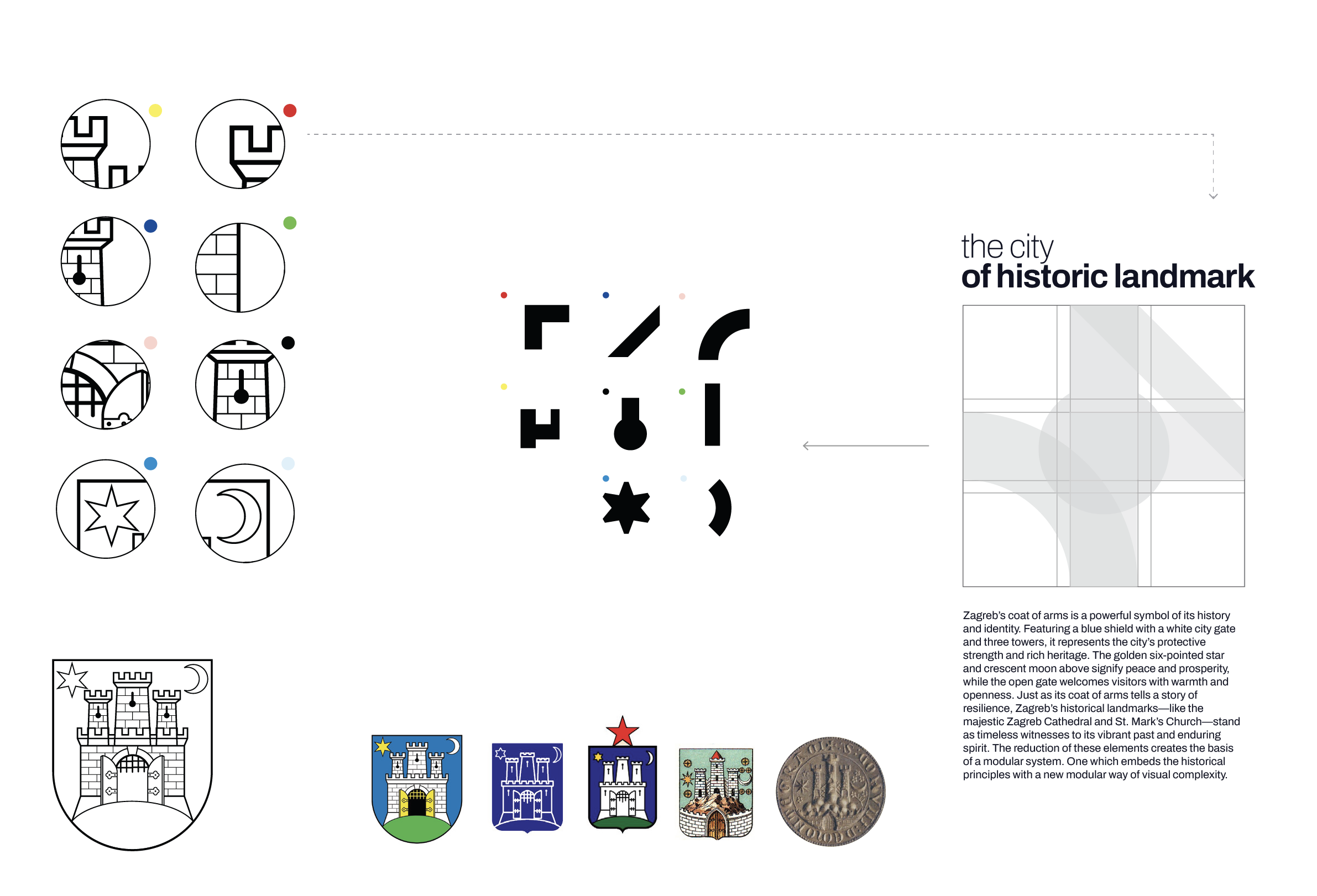
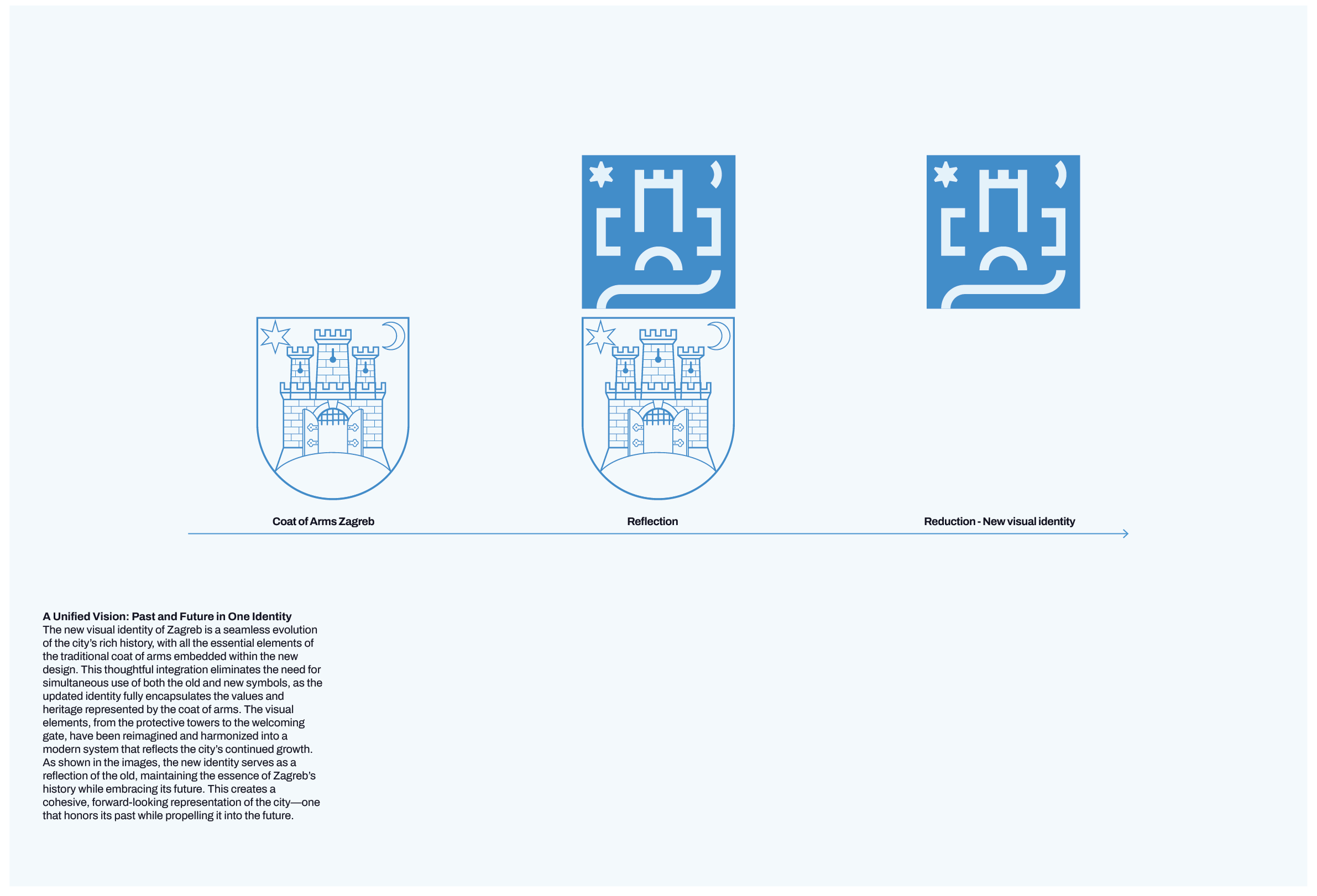
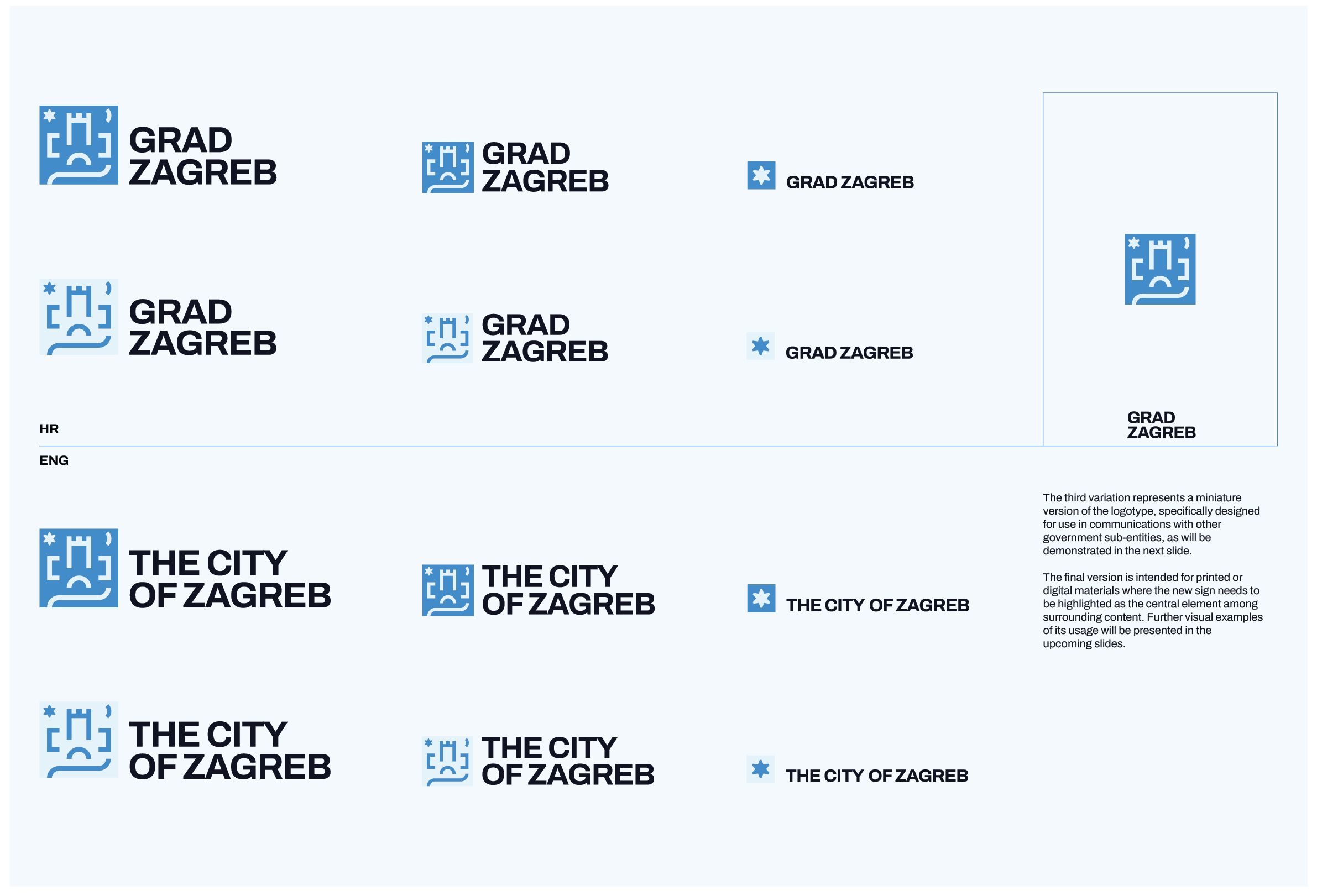
The identity draws on other deep sources. Zagreb's coat of arms—the blue shield with its white city gate and three towers, the golden star and crescent moon above—provides a vocabulary of protective strength, peace, prosperity, welcome. These elements are reduced, abstracted, woven into the modular grid. The towers become shapes; the gate becomes an opening; the star and moon become gestures of hope.
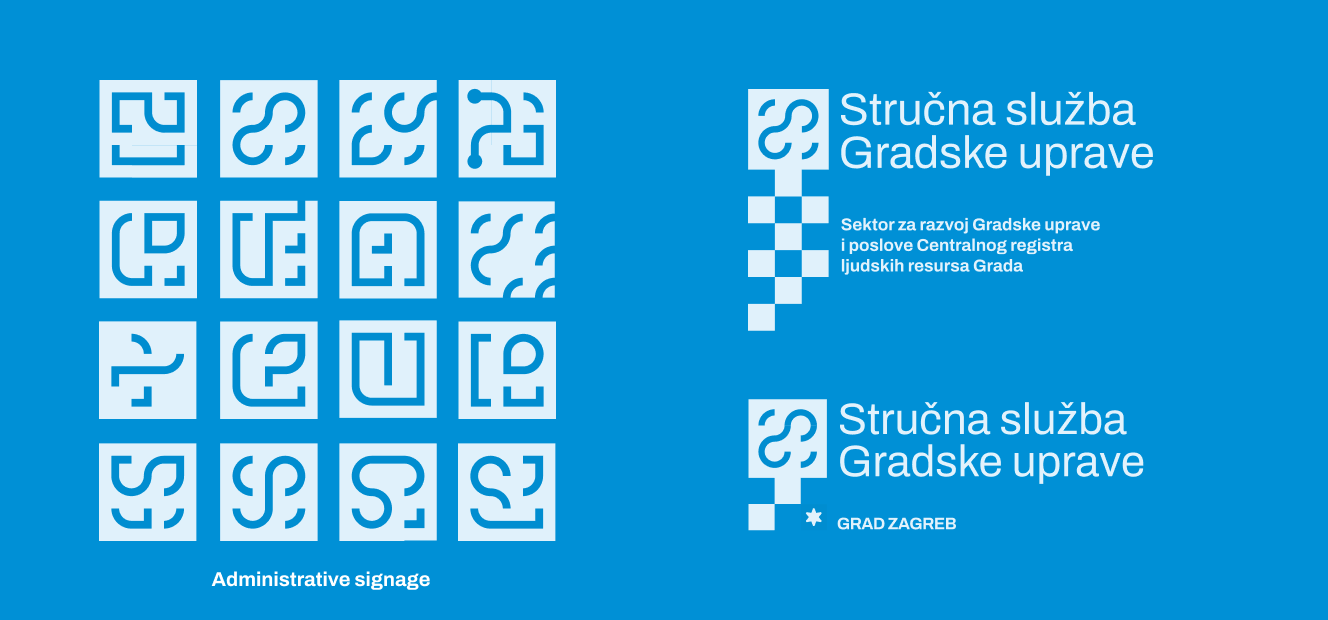
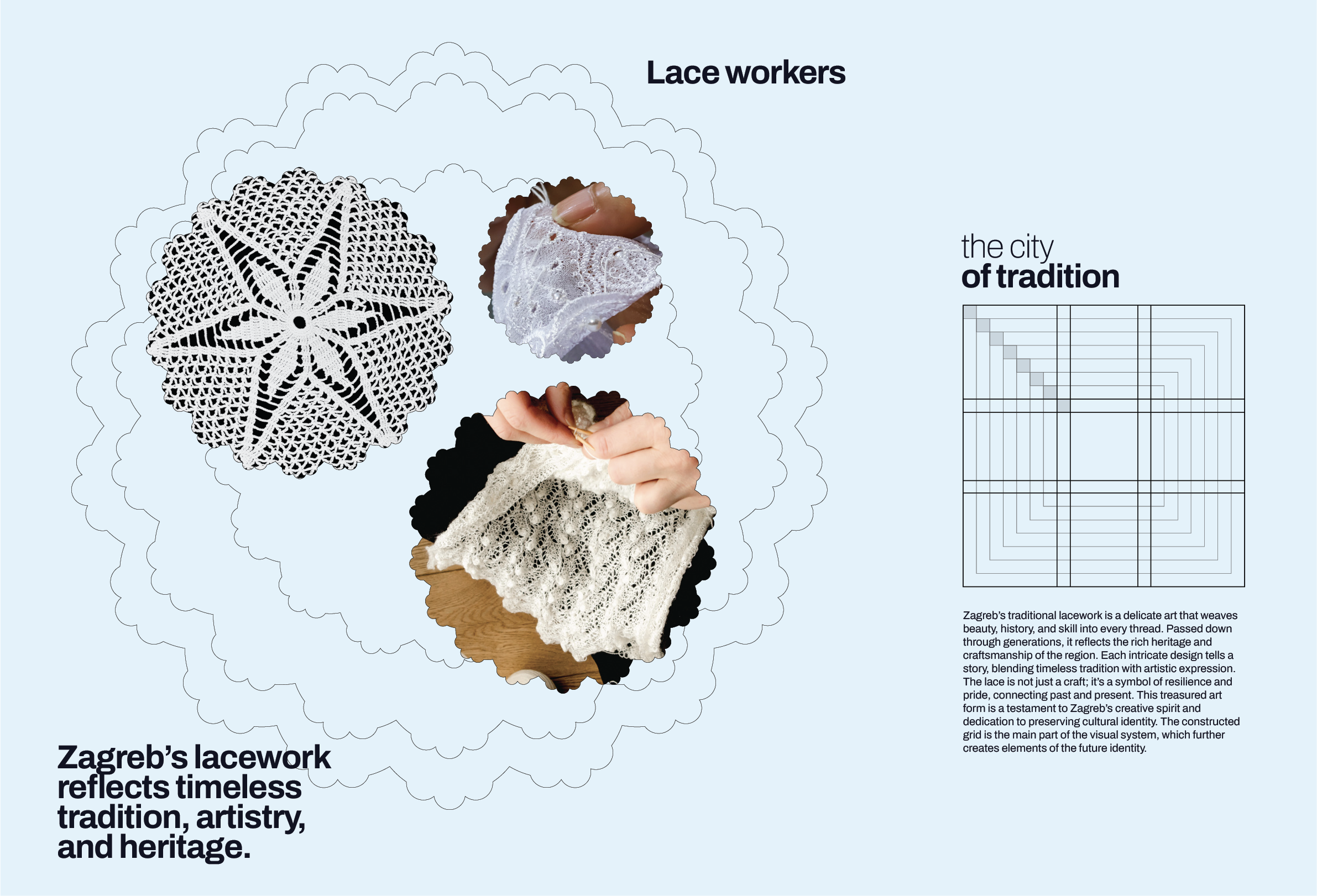
Traditional lacework, a delicate art passed down through generations, offers another layer. The intricate patterns that have long been a symbol of Zagreb's creative spirit and cultural pride find new expression in the modular system. The lace is not copied but translated—its logic of repetition, variation, and interconnection embedded in the grid.
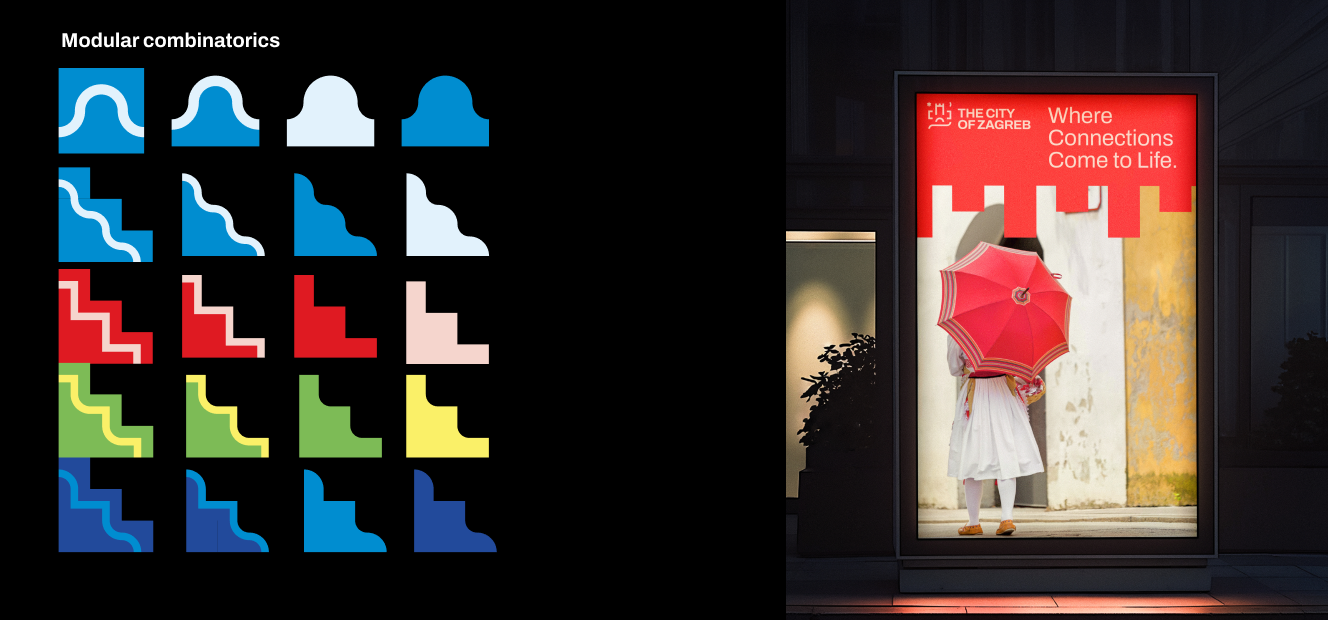
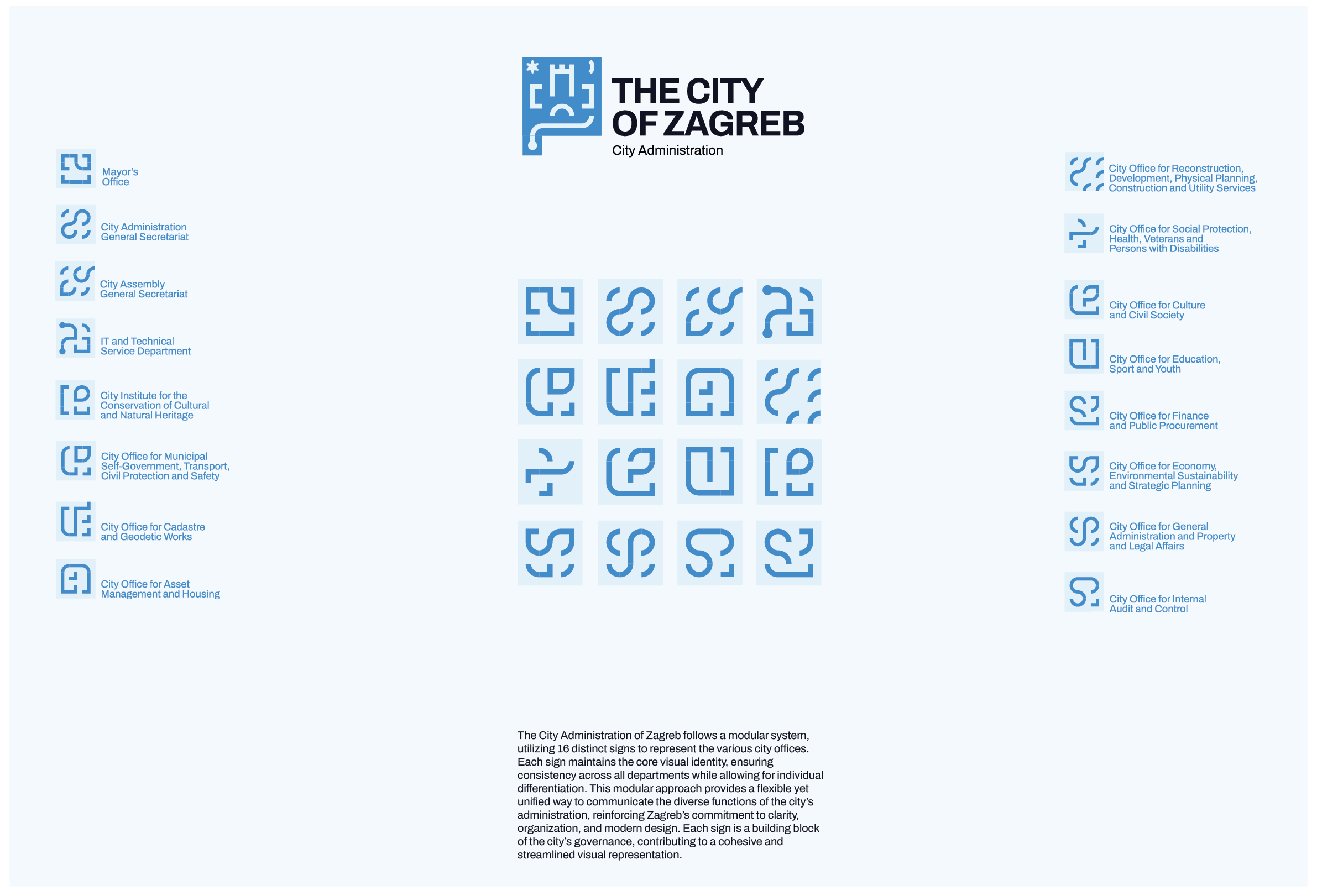
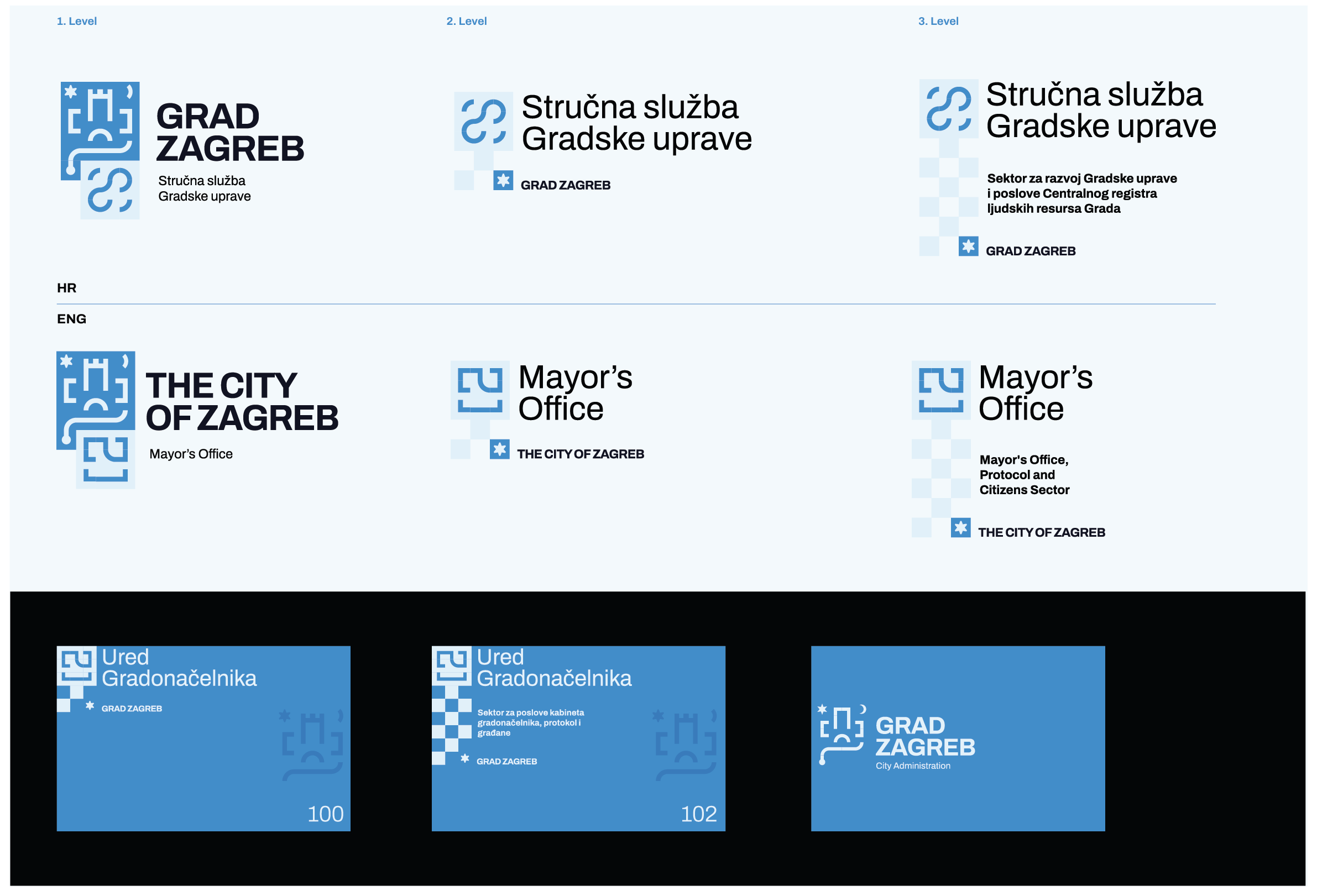
The result is a visual language that is both historically grounded and resolutely contemporary. The 4×4 modular system allows for endless variation: a pattern for a street banner, a mark for a civic document, a background for a digital interface, a symbol for a cultural event. The system is rigorous but not rigid. It can expand, contract, adapt.
Color completes the identity. Black and white provide a timeless foundation—elegant, legible, rooted in tradition. Two blue variants, drawn from the city's signature colors, introduce vibrancy and energy. These blues speak to Zagreb's forward momentum, its cosmopolitan spirit, its embrace of the new. Together, the palette balances history and aspiration.
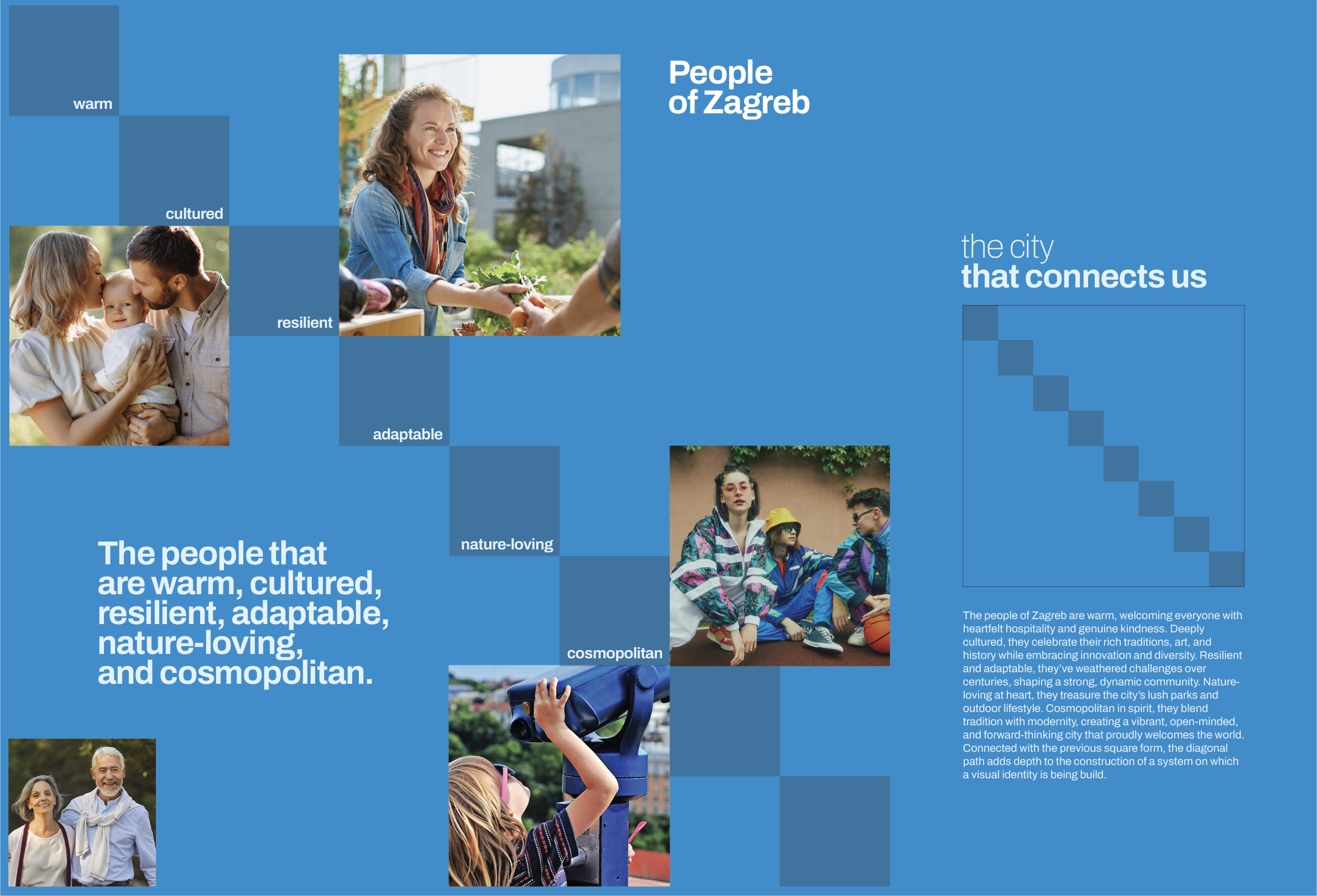
The identity is built for a city that is many things: warm and welcoming, deeply cultured, resilient through centuries of challenge, nature-loving, cosmopolitan. It is for a people who blend tradition with modernity, who celebrate their rich heritage while embracing innovation and diversity. The visual system must hold these qualities together—and it does, through the square that opens, the gate that welcomes, the lace that connects.
For the designers, the project was an opportunity to create not just a logo but a language—a system that can grow with the city, that can speak across contexts, that can be used by everyone from municipal offices to cultural institutions to local businesses. It is an identity that honors Zagreb's past while looking toward its future, that celebrates the city's squares while building new ones.
In the end, this is an identity for a city that welcomes the world. The open gate in the coat of arms becomes the open system of the visual language. The square becomes a place to gather, to connect, to begin. Zagreb's story continues—and now, it has a visual language to tell it.
.gif)