What is good food? What is bad food? The line is rarely clear. FittoFit explores this question through gameplay, asking players to navigate obstacles while making choices about balance, joy, and health.


We seek pleasure in food, but also nourishment. FittoFit captures this tension: every choice is a negotiation between what we want and what we need. Can you find balance? The decision is yours.
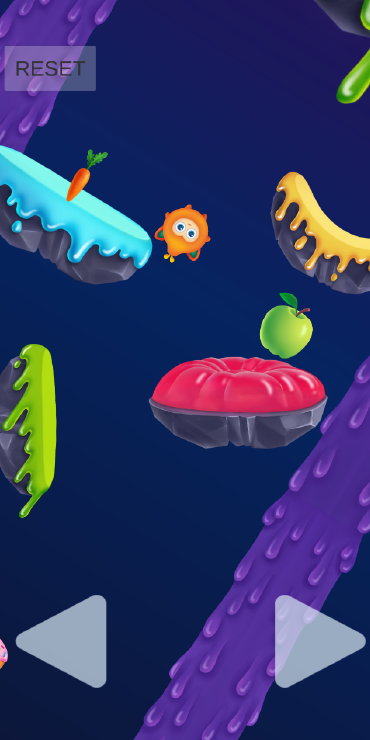
Developed at the Outfit 7 Talent Camp, FittoFit is a prototype exploring the complexity of eating. No simple categories, no easy answers—just the challenge of balancing joy and health, one meal at a time.



In 2019, Strahinja Jovanović participated in the Outfit 7 Talent Camp, an intensive program for emerging game designers. The project he developed there, FittoFit, is a prototype that explores a question central to human experience: how do we balance the pleasure of food with its nutritional necessity? What is good food? What is bad food? And who gets to decide?
The game does not offer easy answers. It acknowledges that categorization is difficult, that the line between "good" and "bad" food is rarely clear, that joy and health often collide in the choices we make. The player navigates a series of obstacles, making decisions about what to eat, what to avoid, how to balance the competing demands of taste and nutrition. The mechanics are simple, but the questions they raise are anything but.
The title FittoFit suggests the central tension. "Fitto" evokes fit, appropriate, suitable—but also the idea of fitting into constraints, of making things work within limits. "Fit" suggests health, fitness, the body's needs. Together, they capture the negotiation at the heart of the game: can you fit the obstacles and eat balanced food? The question is not rhetorical; it is asked of the player, who must answer through play.
The development context was significant. Outfit 7 is known for its successful mobile games, including the Talking Tom franchise. The Talent Camp provided an opportunity for emerging designers to develop prototypes, to experiment, to learn from industry professionals. For Strahinja, it was a chance to explore game design as a medium for asking questions, for engaging players in reflection, for creating experiences that are both playful and meaningful.
FittoFit is a prototype, not a finished product. The rights belong to Outfit 7, reflecting the collaborative nature of the Talent Camp. But the project remains significant in Strahinja's portfolio as an exploration of how games can address complex themes. It moves beyond the simple reward structures of many food games, beyond the binary of good/bad eating, into the messy territory of real decision-making.
The game's treatment of food is nuanced. It acknowledges that we eat for pleasure, for comfort, for celebration—not only for nutrition. It recognizes that health is not a simple function of calorie counts, that "good" and "bad" are cultural categories as much as nutritional ones. The obstacles the player faces are not only physical but conceptual: the difficulty of making choices in a world where information is partial, where desires conflict, where balance is always provisional.
For Strahinja, FittoFit was an opportunity to bring his interests in systems, in ethics, in the relationship between design and experience into a new medium. The game format allowed for direct engagement: the player does not passively receive information about food choices but actively makes them, lives with their consequences, learns through trial and error.
In the end, FittoFit is a meditation on eating as a human practice. It asks us to consider what we value in food, what we sacrifice for pleasure, what we owe our bodies. The answer is not given; it is discovered through play, through the repeated act of choosing, through the attempt to fit within constraints that are always shifting.
.gif)