Through the lens of String Theory and Aristotle’s “Meta,” Manifest of Algorithism traces the emergence of a new being—the meta-sapiens. No longer bound to one reality, this entity moves fluidly between nature, digital worlds, and speculative neuro-spaces, coordinated by the algorithm.
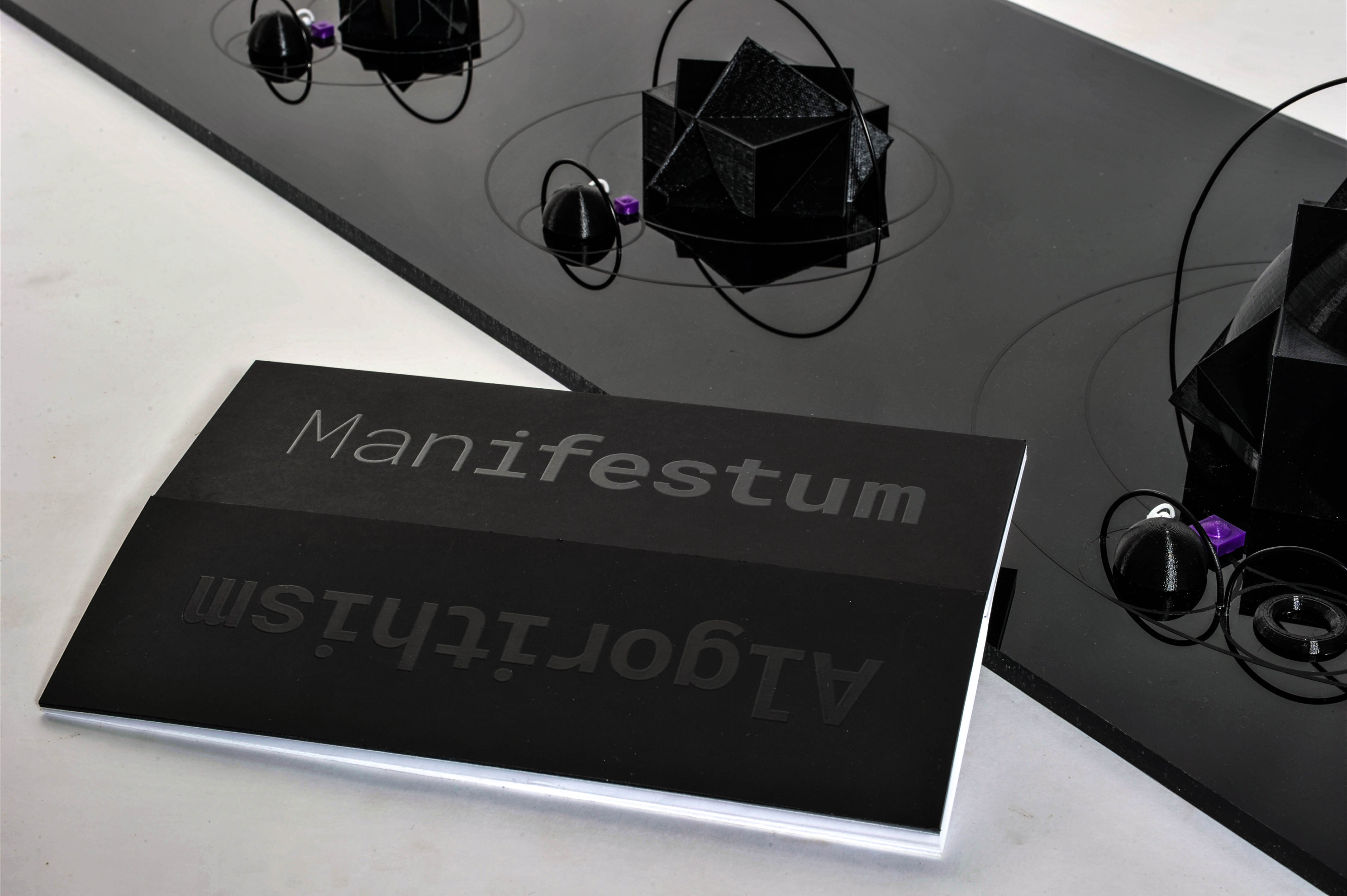
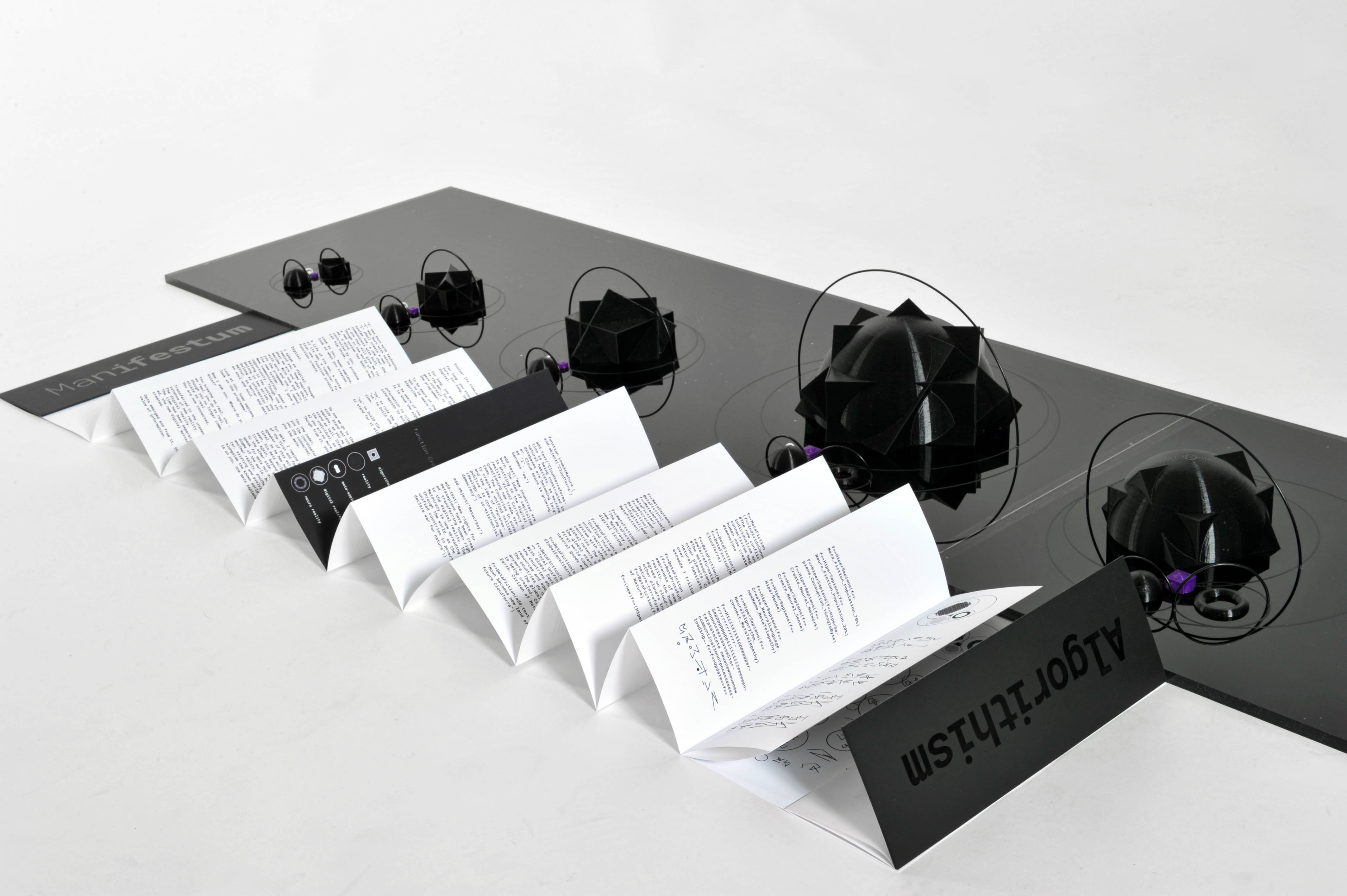
Nature, digital, and neuro worlds evolve across eight timeframes, their relationships shifting as the algorithm grows. Presented as a mirrored sculpture, the work visualizes how technology reshapes reality—and how we reshape ourselves within it.
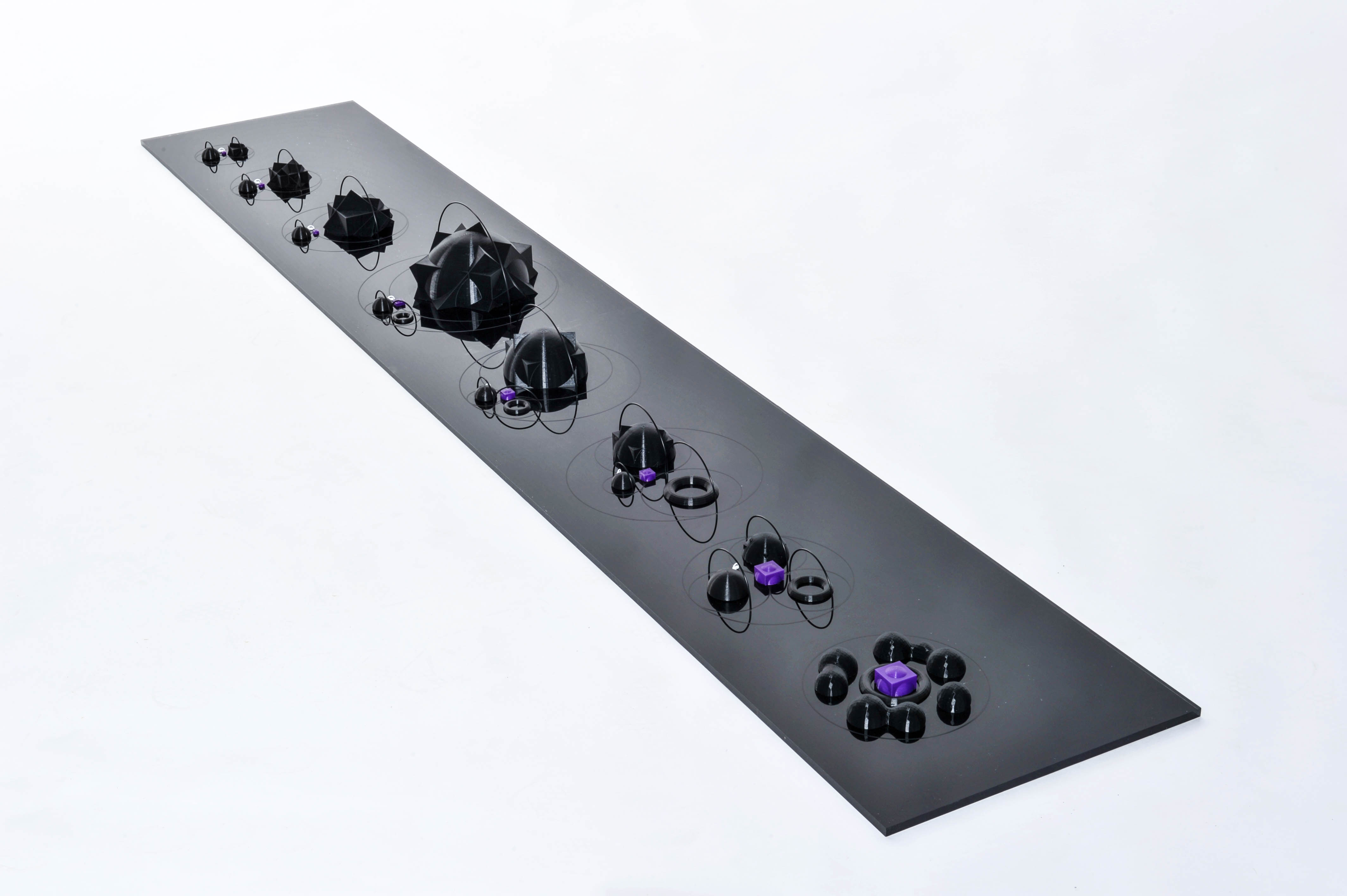

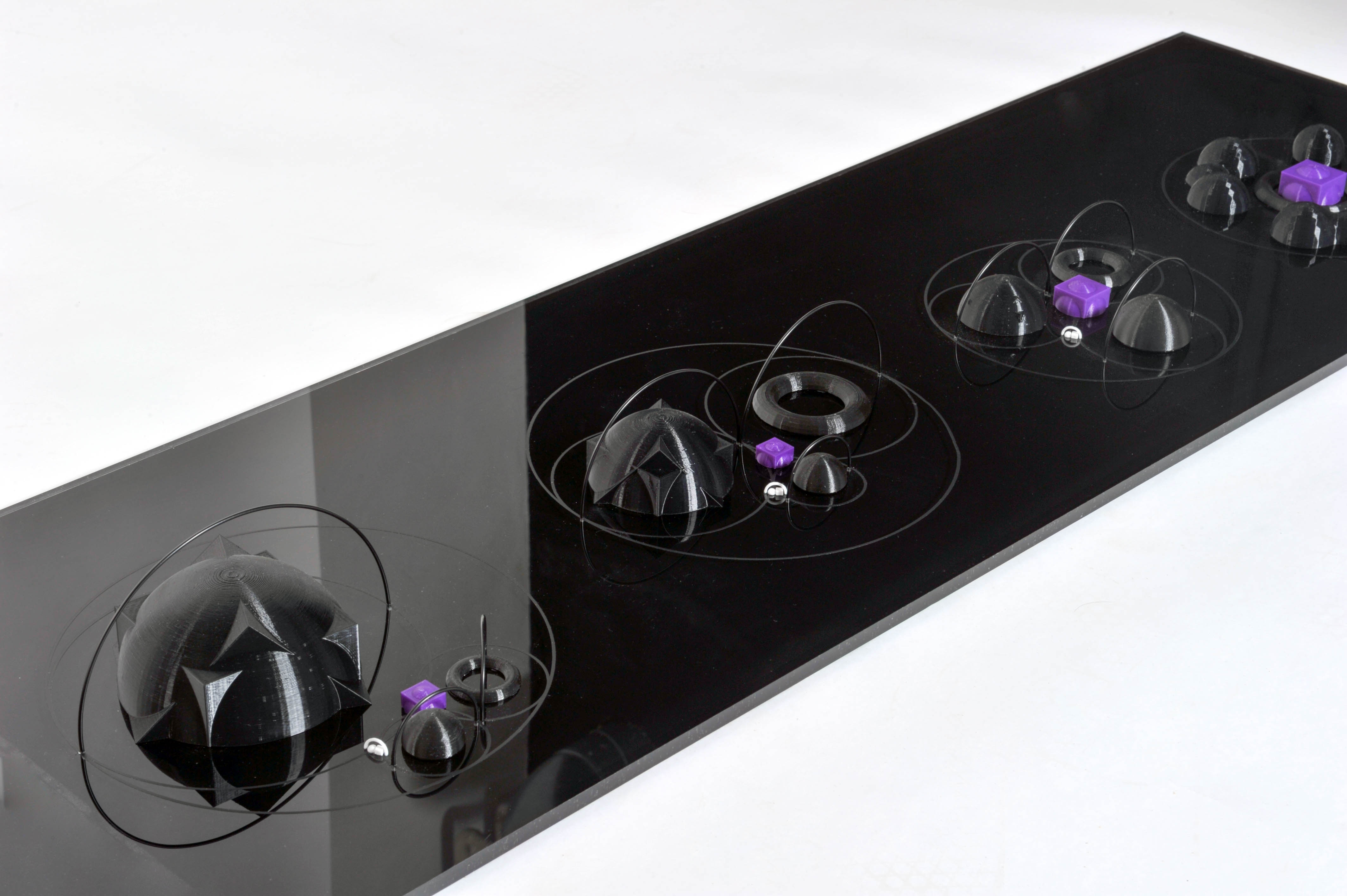
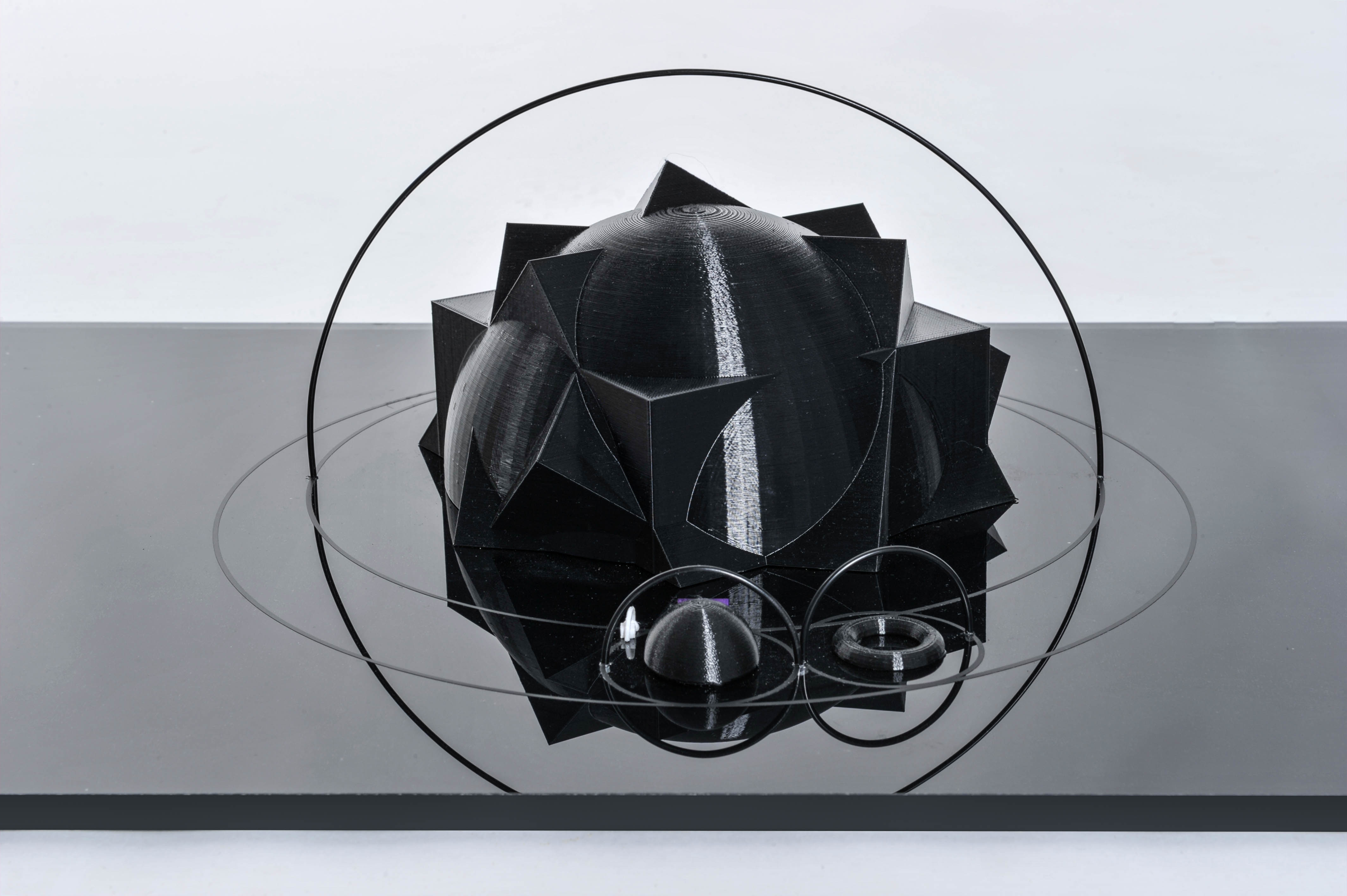
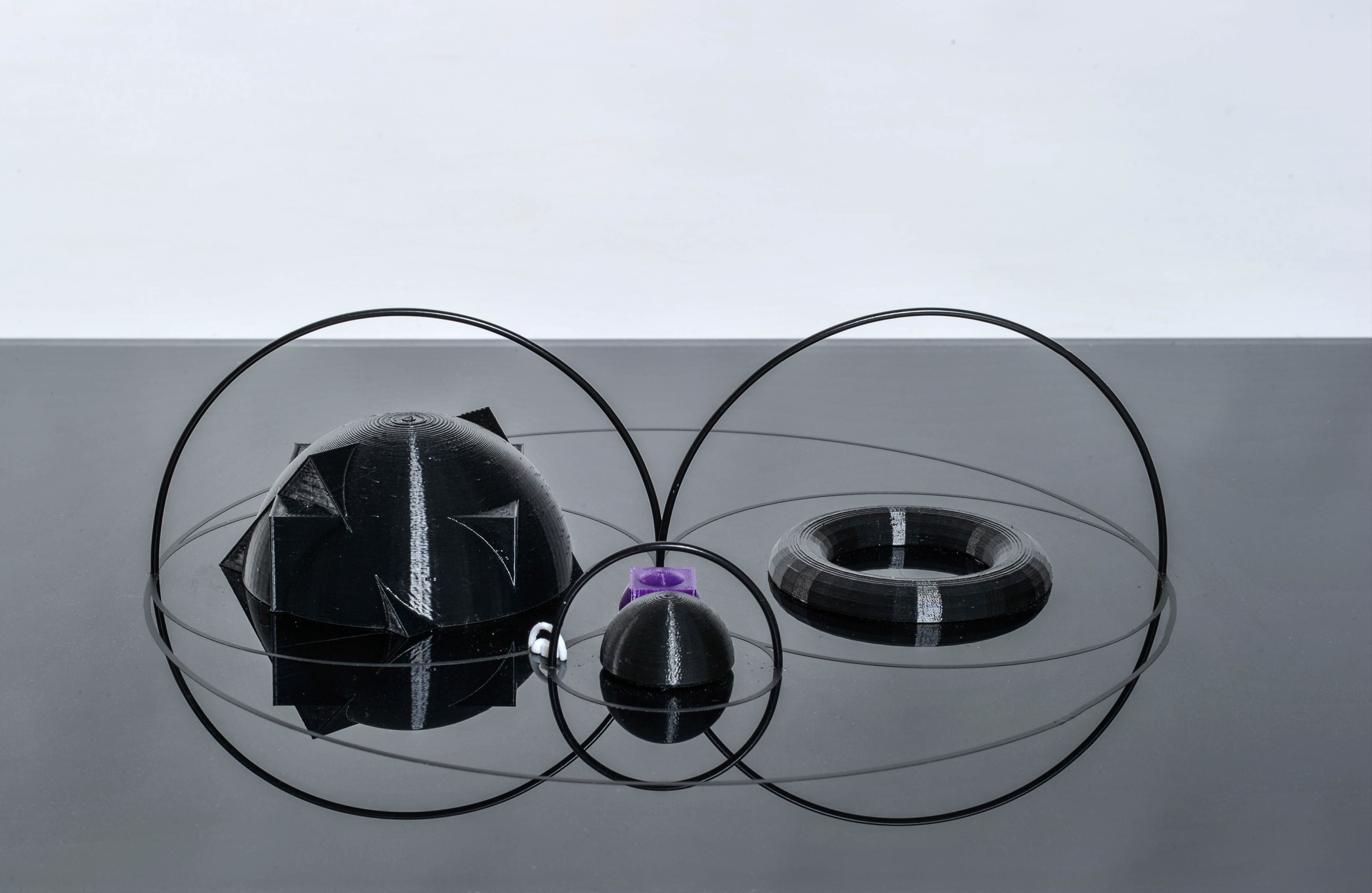
The manifesto proposes a radical idea: programming should become the world’s first language. Through a 3D printed installation on plexiglass, the work calls for awareness of the algorithm’s growing role and humanity’s new capacity to navigate multiple realities.
What does it mean to be human in an age of algorithms? This question lies at the heart of Manifest of Algorithism, a speculative design project created by Strahinja Jovanović at the Academy of Fine Arts and Design in 2021. The work begins with a provocation: can we still say that homo-sapiens exists in one reality? Or has technology fragmented our existence into multiple, overlapping worlds?
Drawing on concepts from String Theory, Aristotle’s notion of “Meta,” and contemporary discourse on the Metaversum, the project traces the emergence of a new being: the meta-sapiens. Unlike its predecessor, the meta-sapiens is not bound to a single reality. It moves fluidly between the natural world, the digital realm, and the speculative “neuro” world of virtual and augmented reality. These three spheres—nature, digital, neuro—are visualized as distinct yet interconnected, their relationships evolving across eight timeframes as the algorithm grows in influence.
The algorithm itself is represented as a violet sphere-box, a presence that expands throughout the epilogue, binding the three spheres together. It is neither antagonist nor savior; it is simply a force, a logic, a structure that coordinates the shifting relationships between realities. The work does not mourn this transformation nor celebrate it uncritically. Instead, it asks us to understand it, to become conscious of the forces shaping our experience of the world.
The physical form of Manifest of Algorithism is as carefully considered as its conceptual framework. The elements are 3D printed on a plexiglass base measuring two meters long, forty centimeters wide, and fourteen centimeters high. The scale is deliberate—the viewer stands before the work, looking across a landscape of spheres and mirrored forms, each reflecting the others in a play of light and dimension. The mirror images create what Strahinja describes as a “mirror-dimensional sculpture,” amplifying the sense of multiplied realities, of selves reflected across digital and physical spaces.
The final outcome of the manifesto is a call to awareness. The meta-sapiens is not a distant future; it is already emerging. We shift between realities constantly—checking our phones, stepping into VR, navigating digital identities while remaining rooted in physical bodies. The manifesto proposes that programming should become the first language of the world, not as a technical skill but as a fundamental literacy, a way of understanding the structures that increasingly coordinate our lives.
The work has been exhibited at the Academy of Fine Arts and Design, where it invites viewers to contemplate their own relationship with technology. Are we users, or are we used? Are we in control, or are we being coordinated? The manifesto does not offer easy answers, but it offers a framework for thinking—a way of seeing the algorithm not as invisible infrastructure but as a presence we can name, understand, and perhaps, guide.
Manifest of Algorithism is ultimately a work of speculative philosophy made material. It argues that the future of humanity is not singular but multiple, not linear but networked, not predetermined but shaped by the awareness we bring to it. To be meta-sapiens is to know that we live in many realities at once—and to choose how we move between them.
%20ANIM%2027-01-2021%20(SJ)%201-min.gif)