Oblak is a swing designed to reenact the floating movement of clouds. For one person or many, its gentle motion mimics the drifting, billowing quality of clouds—an invitation to float, to pause, to be carried.
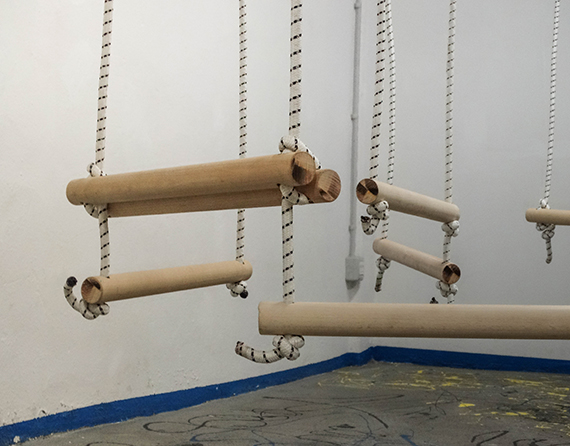
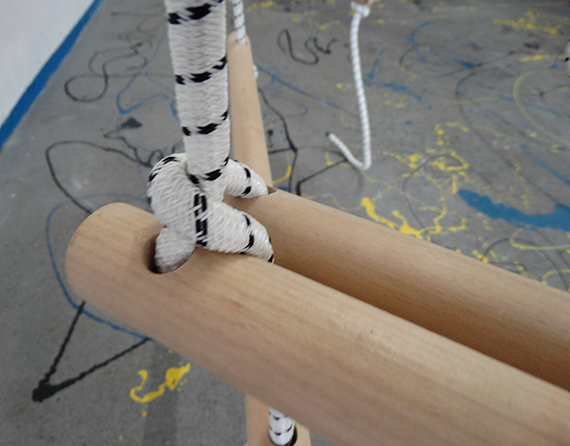
Unlike a traditional swing, Oblak accommodates multiple people, its movement shaped by the interactions of those who use it. The experience is collective—a shared floating, a drifting together, like clouds gathering in the sky.
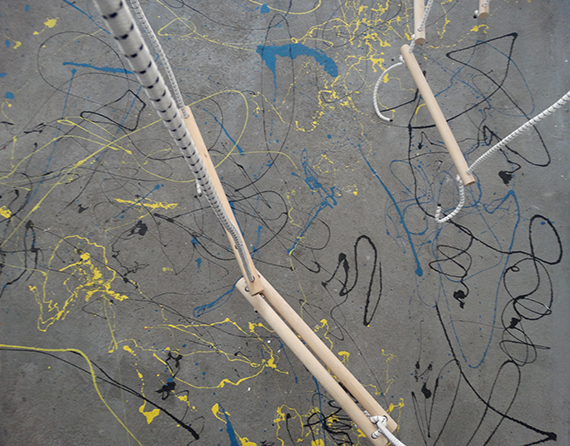

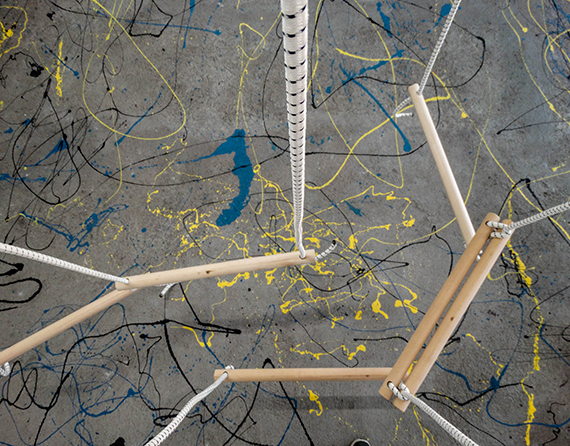
Created at the Petnica Design Seminar, Oblak transforms play into meditation. The swing’s movement is soft, responsive, collaborative. It asks: what does it feel like to be a cloud? To float? To move with others?
In 2017, a team of young designers gathered at the Petnica Design Seminar to ask a simple question: what would it feel like to be a cloud? The result was Oblak, a swing designed not for the solitary back-and-forth of a playground, but for the gentle, drifting, collective movement of clouds in the sky.
The project was a collaboration between Strahinja Jovanović, Bojan Krak, Stevan Crnogorac, Marija Maslać, and Sofija Miličić. Their goal was to create an object that reenacts the floating quality of clouds—not by representing them visually, but by inviting users to experience something of their movement. The swing became a medium for this exploration: a structure designed for one or several people, its motion mimicking the slow, billowing drift of cumulus against a summer sky.
Oblak is not a traditional swing. It does not move in a predictable arc, does not isolate the rider in their own trajectory. Instead, its movement is responsive, shaped by the interactions of those who use it. When one person moves, others feel it. The swing becomes a collective experience, a shared floating. The motion is soft, gentle, unhurried—more like drifting than swinging, more like being carried than propelling.
The design process at Petnica emphasized experimentation. The team built prototypes, tested materials, refined the mechanics that would produce cloud-like movement. They considered weight, balance, suspension, the ways bodies interact with each other and with the structure. The final object is deceptively simple—a swing, after all—but its simplicity is hard-won, the result of careful attention to the qualities they wanted to evoke.
The name Oblak, meaning "cloud" in Slovenian and several other Slavic languages, signals the project’s intent. This is not a swing for speed or thrill. It is for drifting, for pause, for the pleasure of moving gently with others. The experience is meditative, almost dreamlike. Users are invited to let go of the urge to control, to allow themselves to be moved, to feel the collective rhythm of the swing as it responds to multiple bodies in motion.
For the team, the project was an exploration of how design can create experiences, not just objects. Oblak is functional—it is, after all, a swing—but its function is secondary to the feeling it produces. The swing is a tool for a particular kind of attention: to the body, to others, to the slow drift of movement through space. It asks users to slow down, to float, to be present.
The project was developed at Petnica, a science center known for its intensive, interdisciplinary seminars. The context encouraged experimentation, collaboration, and a willingness to follow questions where they lead. Oblak emerged from this environment: a project that is playful and serious, simple and rich, a swing that is also an invitation.
In the years since, the team has gone on to other work, but Oblak remains a marker of what they made together. It is a reminder that design can be gentle, that objects can invite presence, that a swing can become a cloud.
.jpg)

.gif)