Fussil Textile transforms digital cellular automata into fabric. Scalable vector graphics become knitted cotton—patterns that echo the logic of growth, the rhythm of reaction-diffusion, the texture of emergence. Design becomes something you wear.
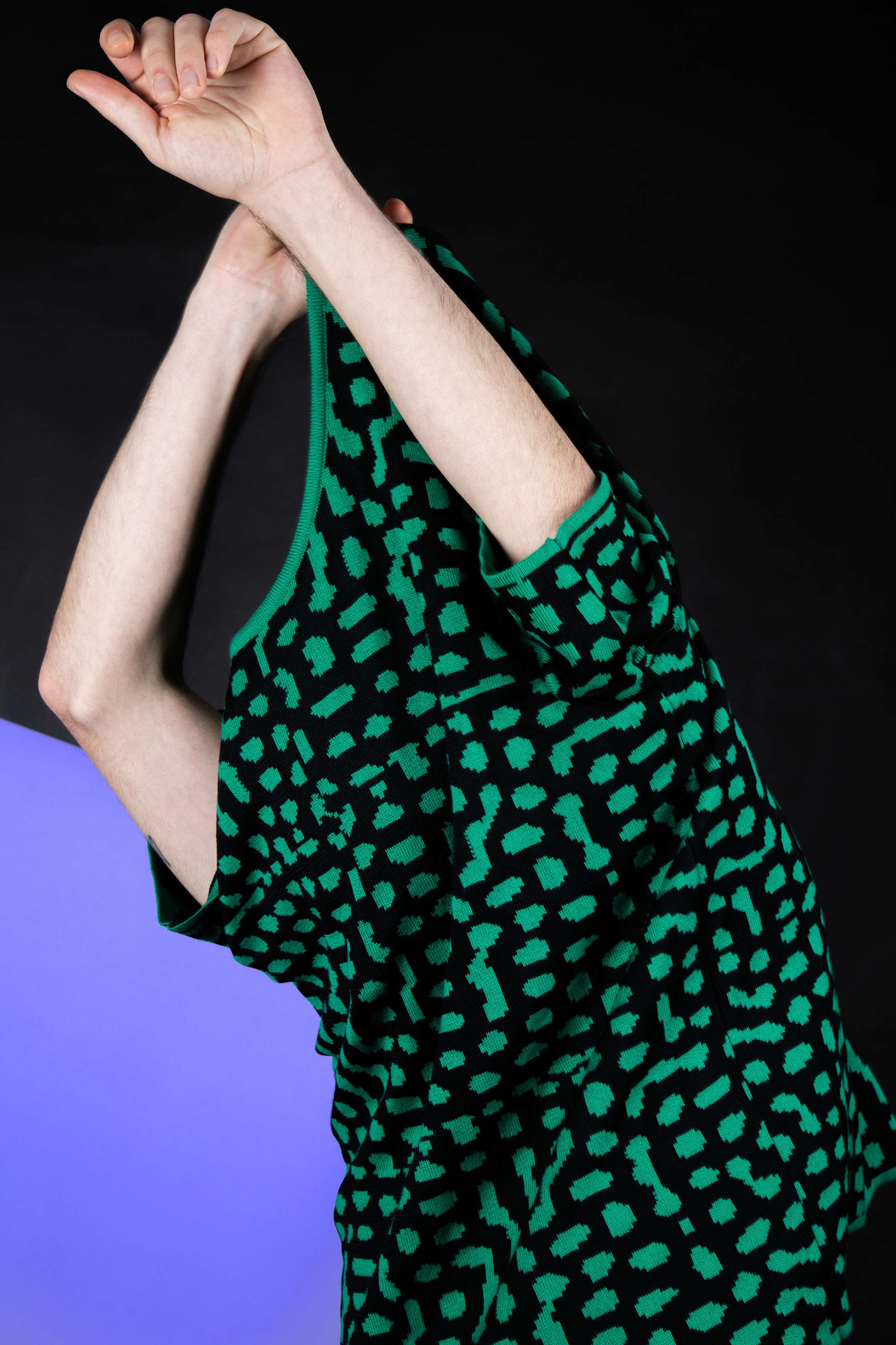
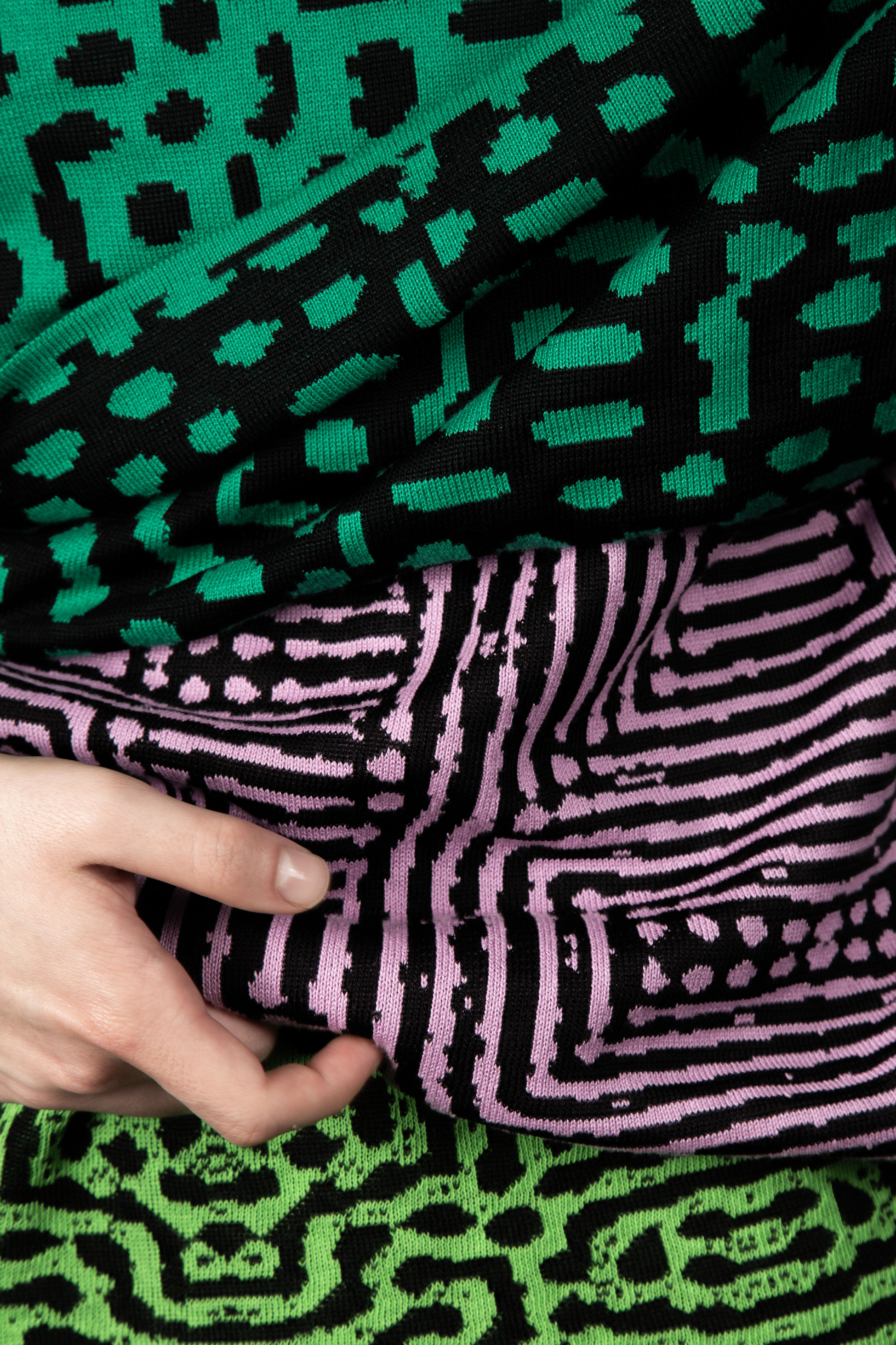
The wearer becomes the canvas, the embodiment of a new relationship between nature and design. Each textile variation—color, thickness, form—tells a story of co-creation, of algorithms made tangible, of design as symbiosis.
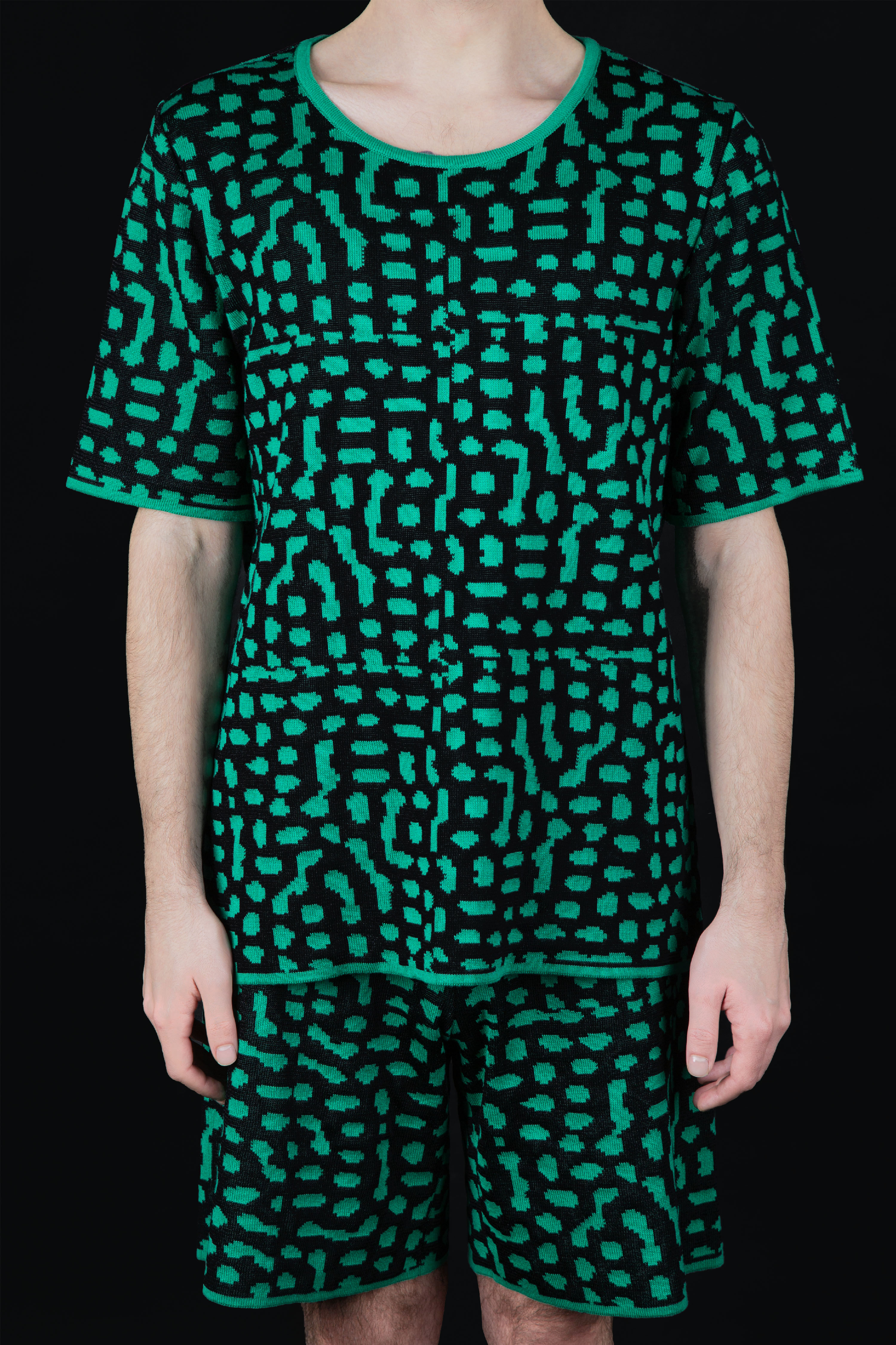
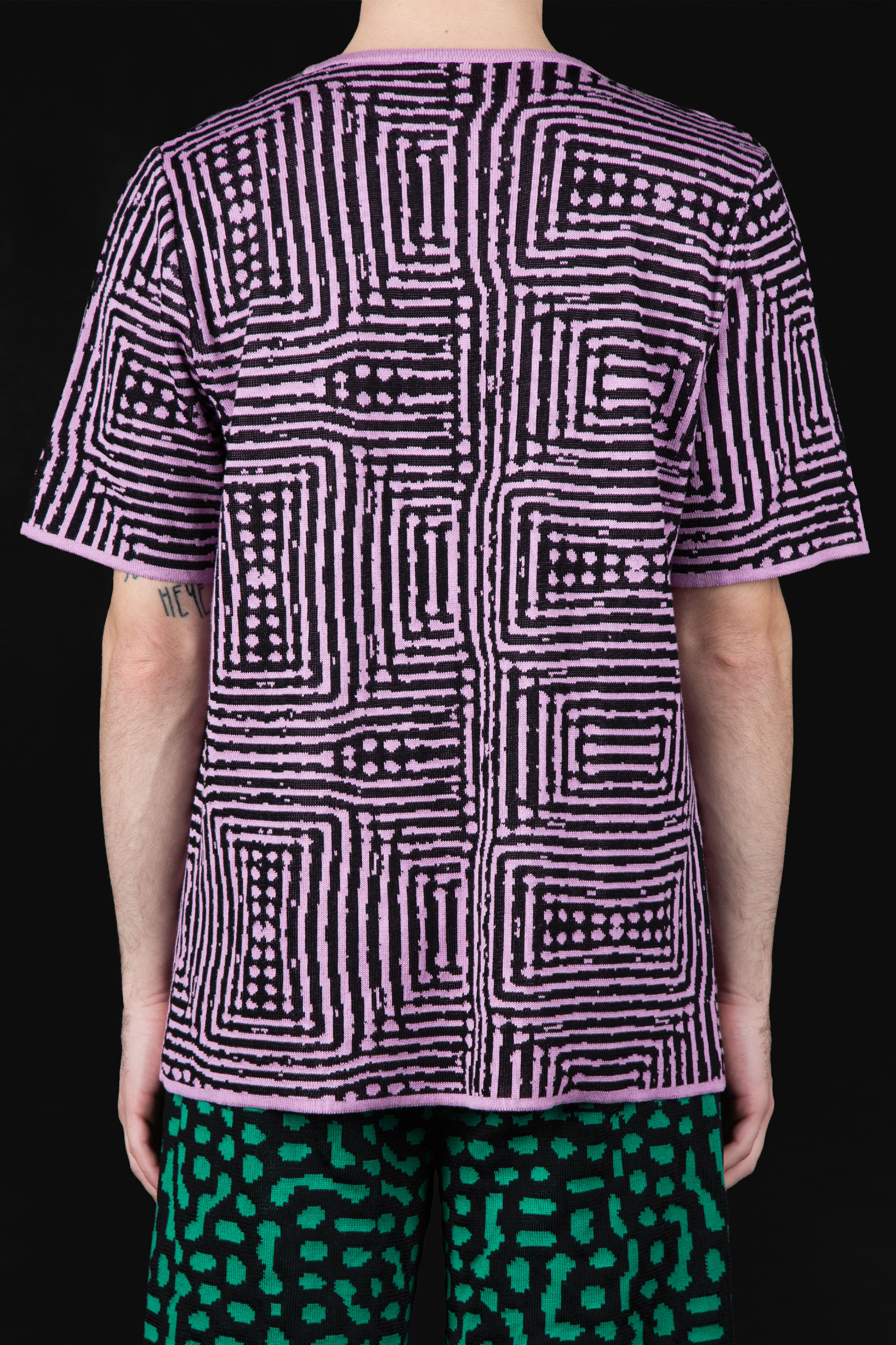
From code to cotton, from algorithm to garment. Fussil Textile asks what happens when the patterns that shape life are woven into the clothes we wear. The answer is a collection that is at once ancient and futuristic, organic and synthetic.
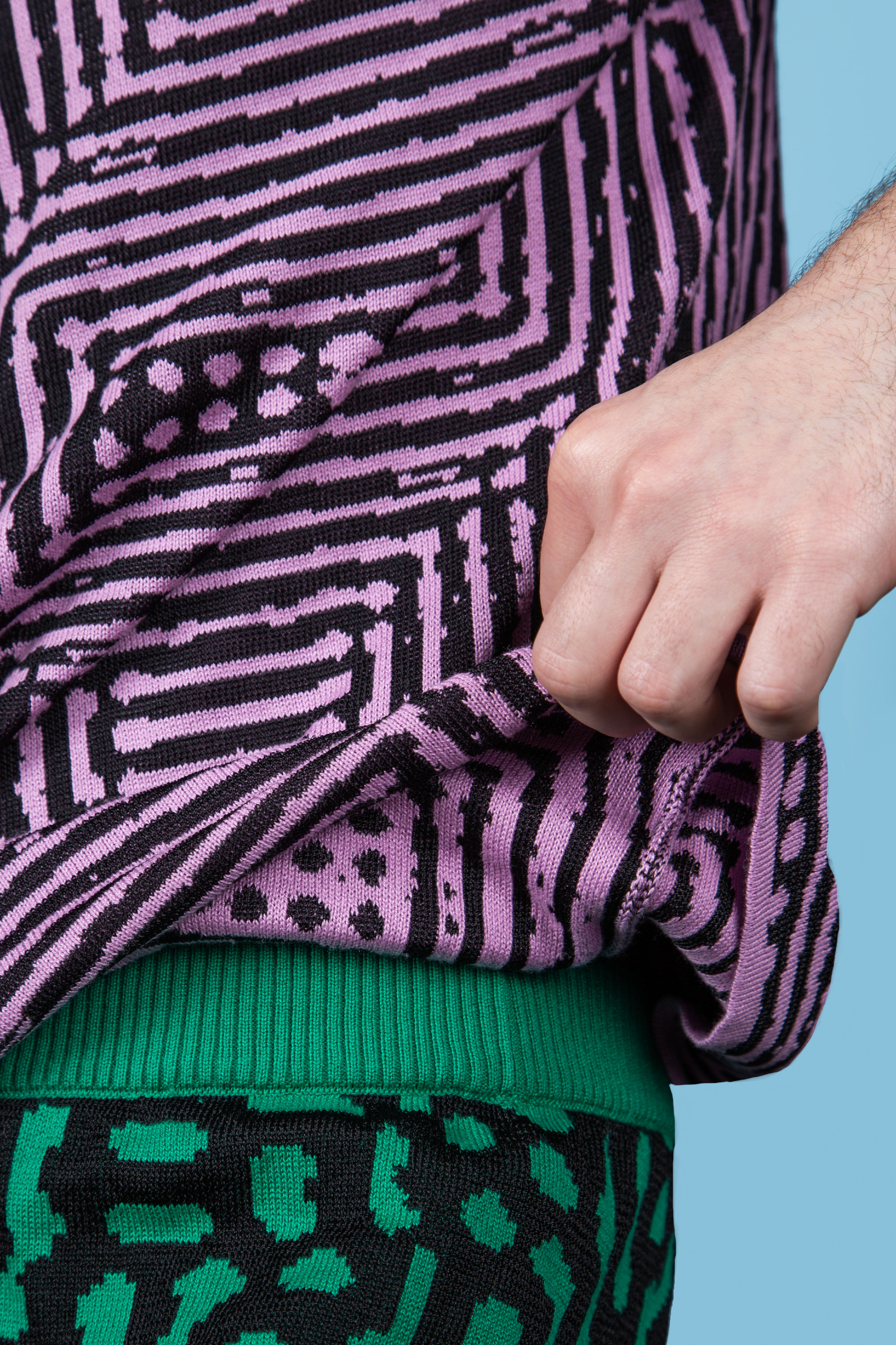
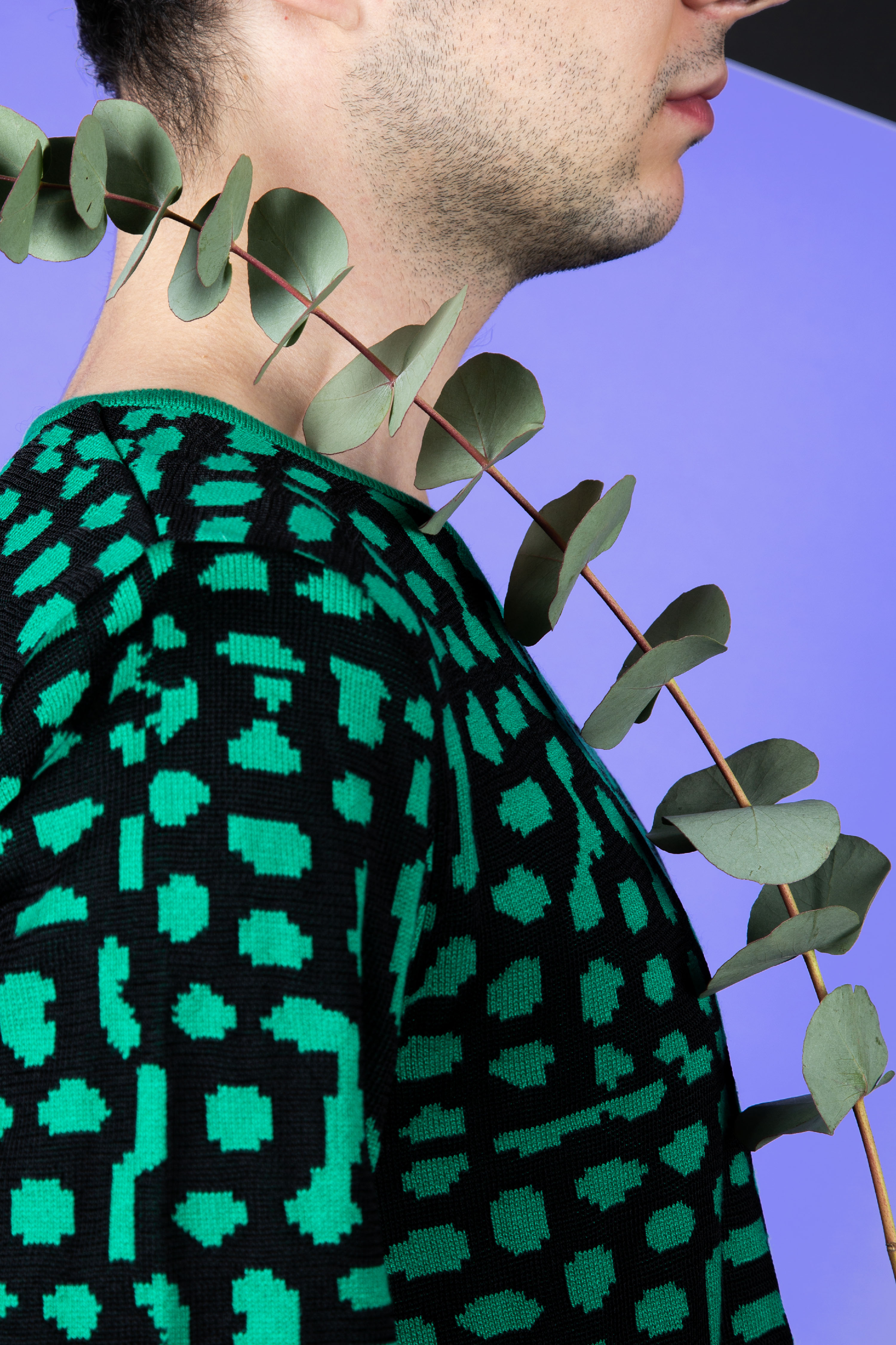
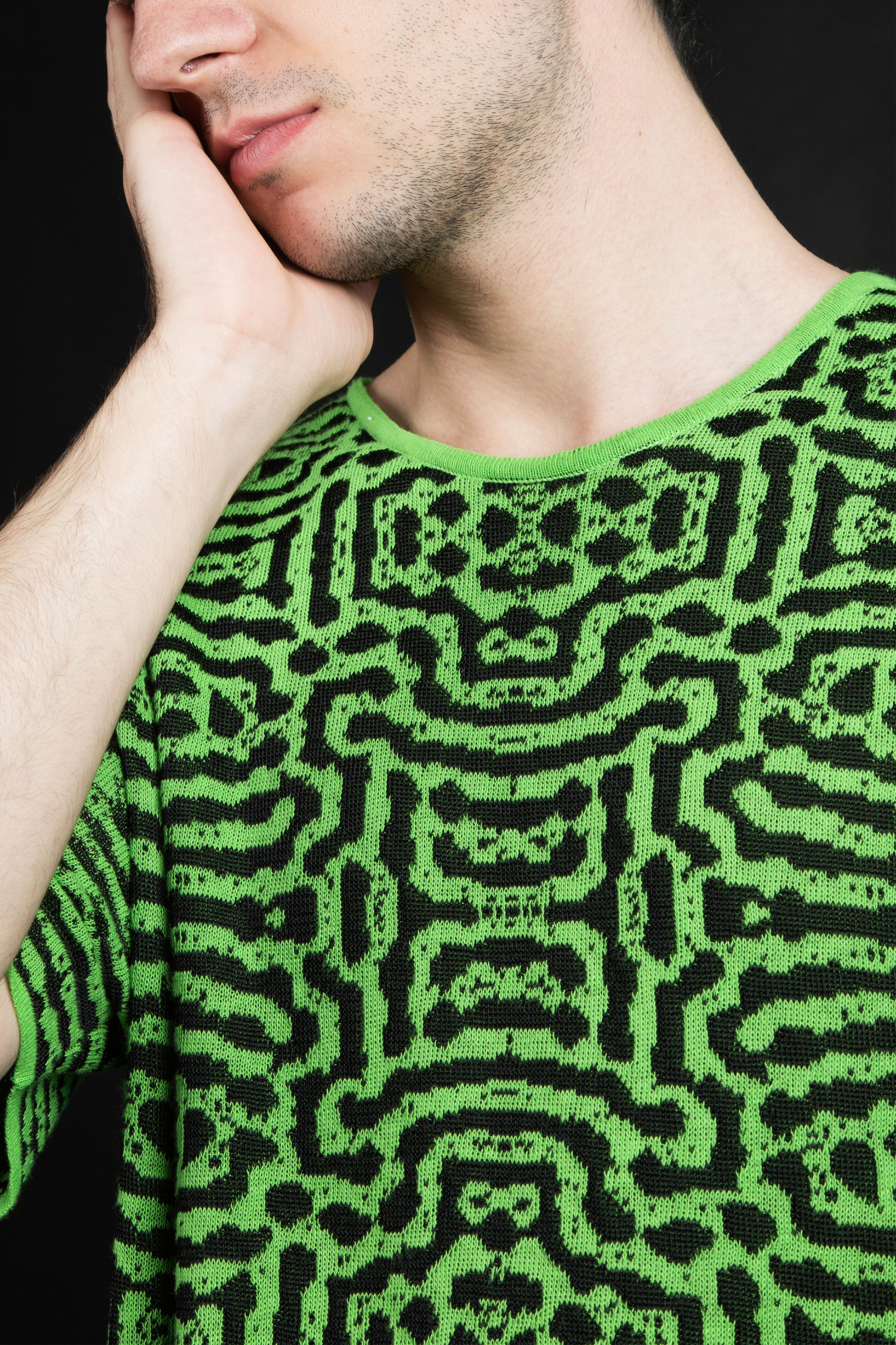
What principles guide nature's design? Does it follow a fundamental algorithm—an embedded logic that shapes life at every scale? Fussil Textile, an extension of Strahinja Jovanović's master's thesis, offers a material answer to these questions. The project translates digital cellular automata into textile patterns, creating garments that embody the logic of emergence, the rhythm of growth, the texture of co-creation.
The process begins with Fussils, a digital tool developed as part of the thesis. Fussils generates scalable vector graphics based on cellular automata, reaction-diffusion systems, and morphogenetic principles. The user sets parameters—cell size, diffusion rates, interaction rules—and the algorithm produces forms that are never fully predictable. It is a process of co-creation, where human intention meets computational emergence.
For Fussil Textile, these vector graphics become patterns. They are knitted with cotton yarn, in varying colors, thicknesses, and forms. The translation from screen to fabric is not direct; it involves decisions about scale, about material, about the relationship between pattern and body. The designer chooses which forms to realize, how to adapt them to the constraints of knitting, how to position them on the garment. The algorithm provides the raw material; the designer shapes it into something wearable.
The result is a collection of textiles that are at once organic and synthetic, ancient and futuristic. Some patterns suggest biological structures—cells dividing, tissues forming, organisms taking shape. Others evoke geological processes—erosion, sedimentation, the slow work of time. Still others are abstract, existing somewhere between the digital and the physical, the algorithmic and the handmade. Each piece is unique, a product of the parameters that generated it, the material that shaped it, the decisions that guided its making.
The human element is central to the project. The wearer does not simply display the textile; they become part of it. The garment moves with the body, shifts with breath, changes with light. The pattern that was algorithm becomes something lived, something experienced, something that interacts with the world in ways that no static image can. The wearer embodies the new "nature" designs, serving as a narrative for the urgent need for symbiotic, adaptive design.
The project is situated within a broader inquiry: how can we move from designing alongside nature to actively co-designing with it? This is not about mimicking natural forms, but about engaging with the processes that produce them—the algorithms that shape life, the rules that generate complexity from simplicity. Fussil Textile is an artifact of this engagement, a garment that carries the trace of code and the warmth of the hand, the logic of algorithm and the texture of the body.
The urgency of this approach is underscored by the context of climate change and rapid technological transformation. If design is to respond to the challenges of our time, it must learn from the systems that have sustained life on this planet for billions of years. Fussil Textile proposes one way forward: not nature as resource, but nature as model; not nature as object, but nature as process; not design against nature, but design with nature.
In the end, the textiles are both garments and provocations. They are beautiful—their patterns intricate, their colors varied, their presence quiet but insistent. But they are also arguments: for a design practice that is less about control and more about collaboration, less about imposition and more about emergence, less about the human and more about the more-than-human. They are clothes for a future we are only beginning to imagine, worn by bodies that are part of that becoming.