In the modern era, ornament was declared a crime. Modument argues for its return—not as decoration, but as a tool for navigating visual complexity. This BA thesis presents a digital tool for generating ornament, reimagining ornament for the digital age.
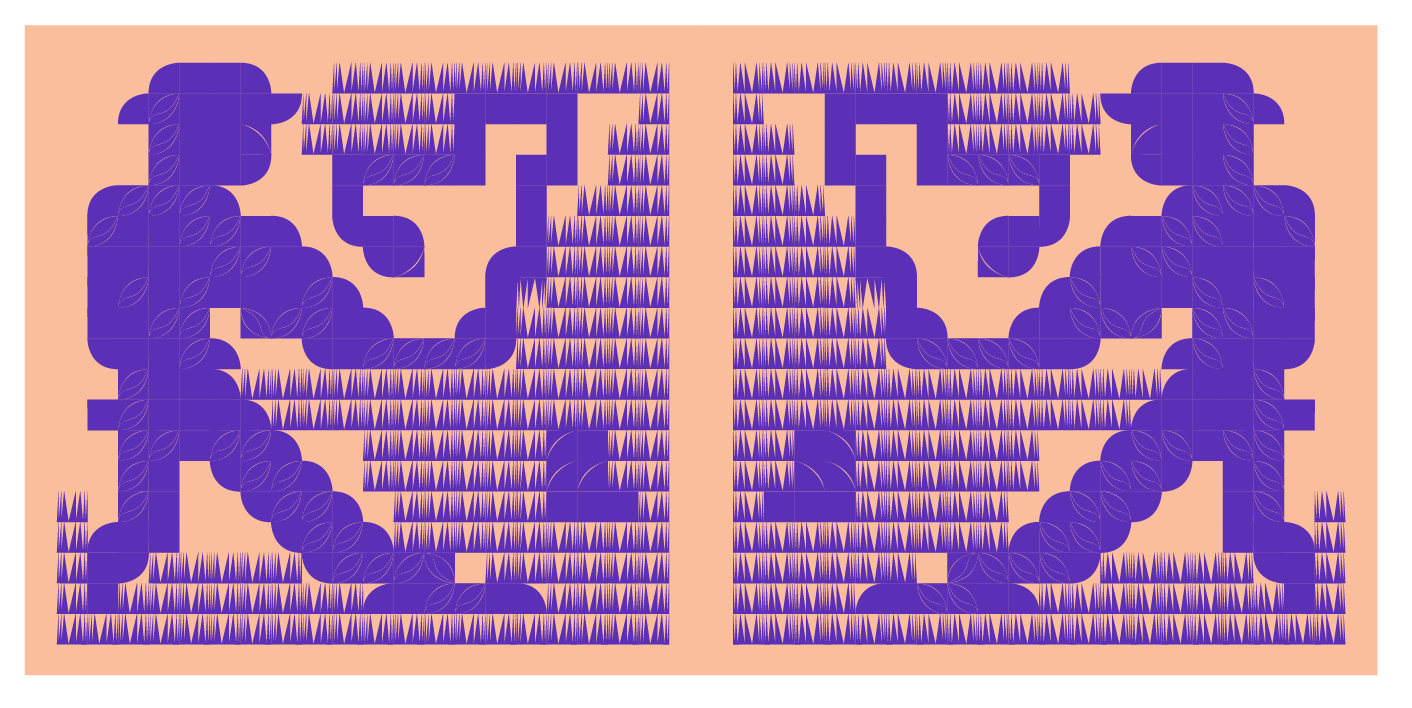

Modument is both thesis and artifact: a critical examination of ornament’s place in design history, and a digital tool for generating new ornamental forms. It asks how ornament can help designers work with complexity, transparency, and generativity.
.gif)
.gif)
.gif)
In an age of data saturation, understanding visual content is more important than ever. Modument argues that ornament—long dismissed—can help us navigate complexity. The project proposes a new role for ornament: not decoration, but meaning-making.


In 2021, Strahinja Jovanović completed his BA thesis at the Academy of Fine Arts and Design, a project titled Modument. The work takes as its starting point a question that has haunted design for over a century: what is the place of ornament? Once central to architectural and decorative arts, ornament fell from favor with the rise of modernism. Adolf Loos famously declared ornament a crime; the Bauhaus championed functionalism; ornament became associated with excess, with the past, with all that design was trying to leave behind.
But the question has never quite been settled. Postmodernism attempted to rehabilitate ornament, but often as quotation or irony, not as a living practice. Modument approaches the question from a new angle: what can ornament become in the age of digitalization and industrialization? The thesis argues that ornament has been lost—not eliminated, but forgotten, rendered invisible by the very movements that sought to banish it. And in this loss, something important has been sacrificed.
The argument is grounded in the context of contemporary visual culture. In an era of data saturation, where images proliferate at unprecedented scale, the ability to understand visual content has become crucial. Complexity is no longer an exception but the rule. Ornament, Modument suggests, offers a way of working with this complexity—not by simplifying it, but by giving it form, structure, meaning.
The project engages with postmodernism and its critique, but moves beyond it. The goal is not to revive historical ornament or to adopt a postmodern attitude of pastiche. Instead, Modument proposes a new understanding of ornament, one that emerges from the conditions of digital production. This ornament is generative, algorithmic, responsive. It is not applied to surfaces but generated from within them.
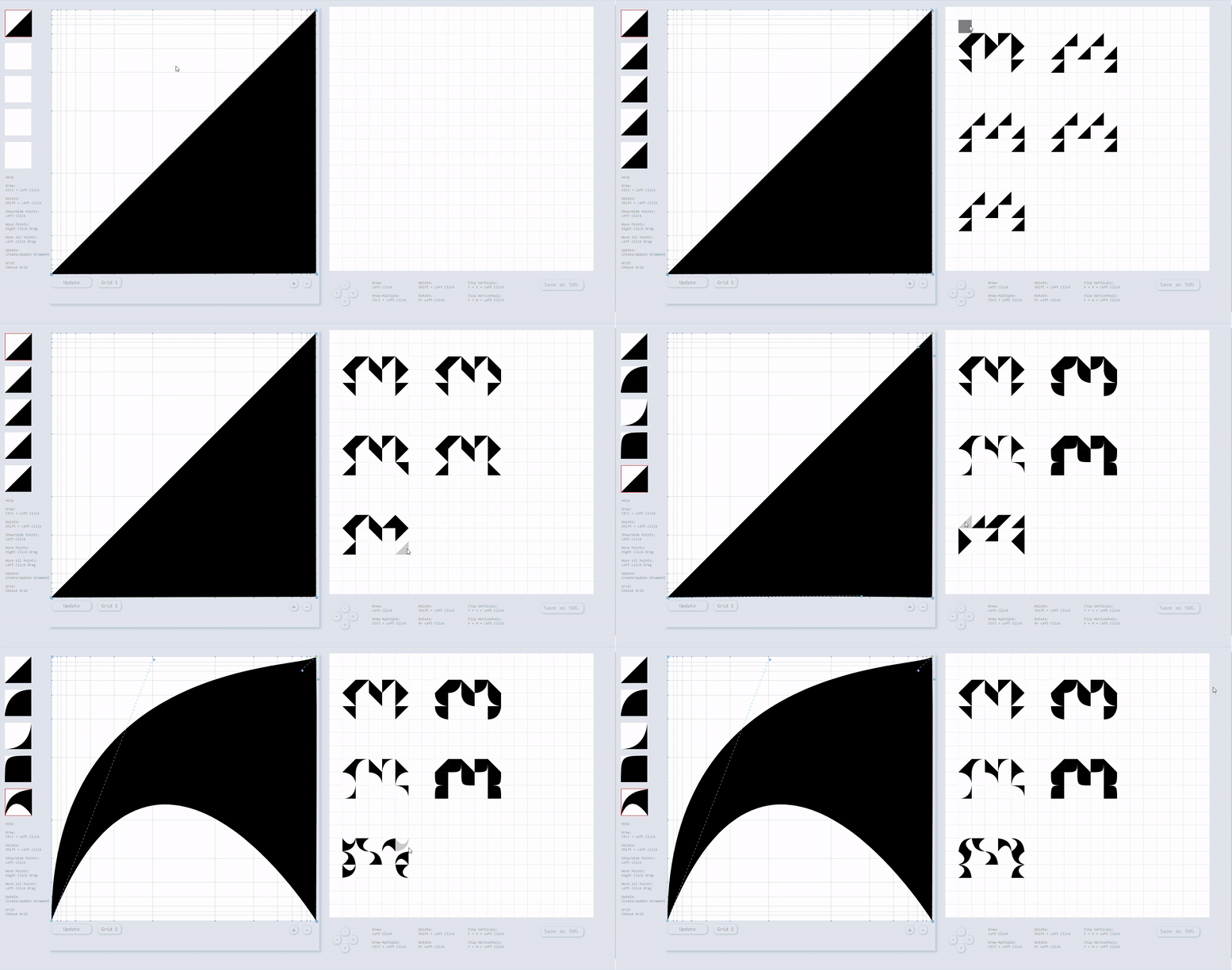
The thesis culminates in a digital tool—an instrument for creating ornament, intended to serve designers as a new element in their practice. The tool is not a solution to a problem but a provocation: a way of working that makes visible the generative possibilities of ornament, that invites designers to engage with complexity not as something to be minimized but as something to be explored.
For Strahinja, Modument is a work of theory and practice intertwined. The thesis is written, but it is also built. The tool is an argument made material. The project asks designers to reconsider ornament—not as decoration, but as a mode of thought, a way of structuring visual complexity, a resource for navigating the dense and layered visual environments we inhabit.
The title Modument suggests the stakes: monument, document, module. Ornament is monumental in its historical weight, documentary in its traces of cultural value, modular in its generative potential. The thesis is a critical intervention, but it is also a practical one. It aims not only to analyze but to enable—to give designers new tools for working with ornament in a digital age.
In the end, Modument argues for ornament’s return, but on new terms. Not the ornament of the past, but an ornament of the present: generative, digital, transparent in its complexity, open to transformation. It is a proposal for design that is not afraid of richness, not afraid of pattern, not afraid of the work that ornament can do.
.gif)
.gif)