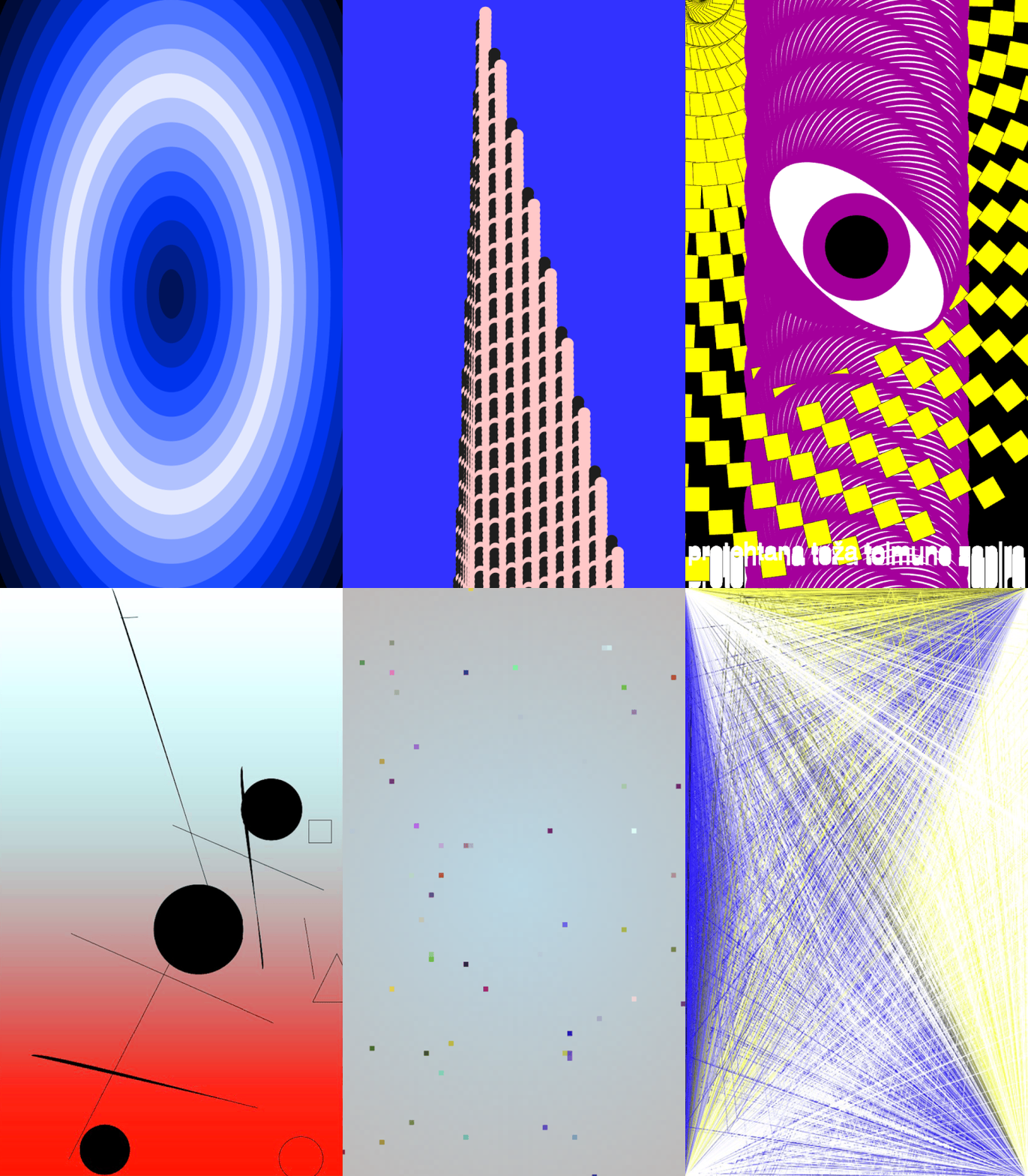
Dimensions explores space across scales—from the macro to the micro. Through color, line, and perspective, it renders dimensions we cannot see, worlds within worlds, the architecture of the multiverse.


What lies between the cosmic and the microscopic? Dimensions traces the continuum, using abstract visual language to suggest scales beyond human perception. Connected to the Elementarium project and multiverse theory.
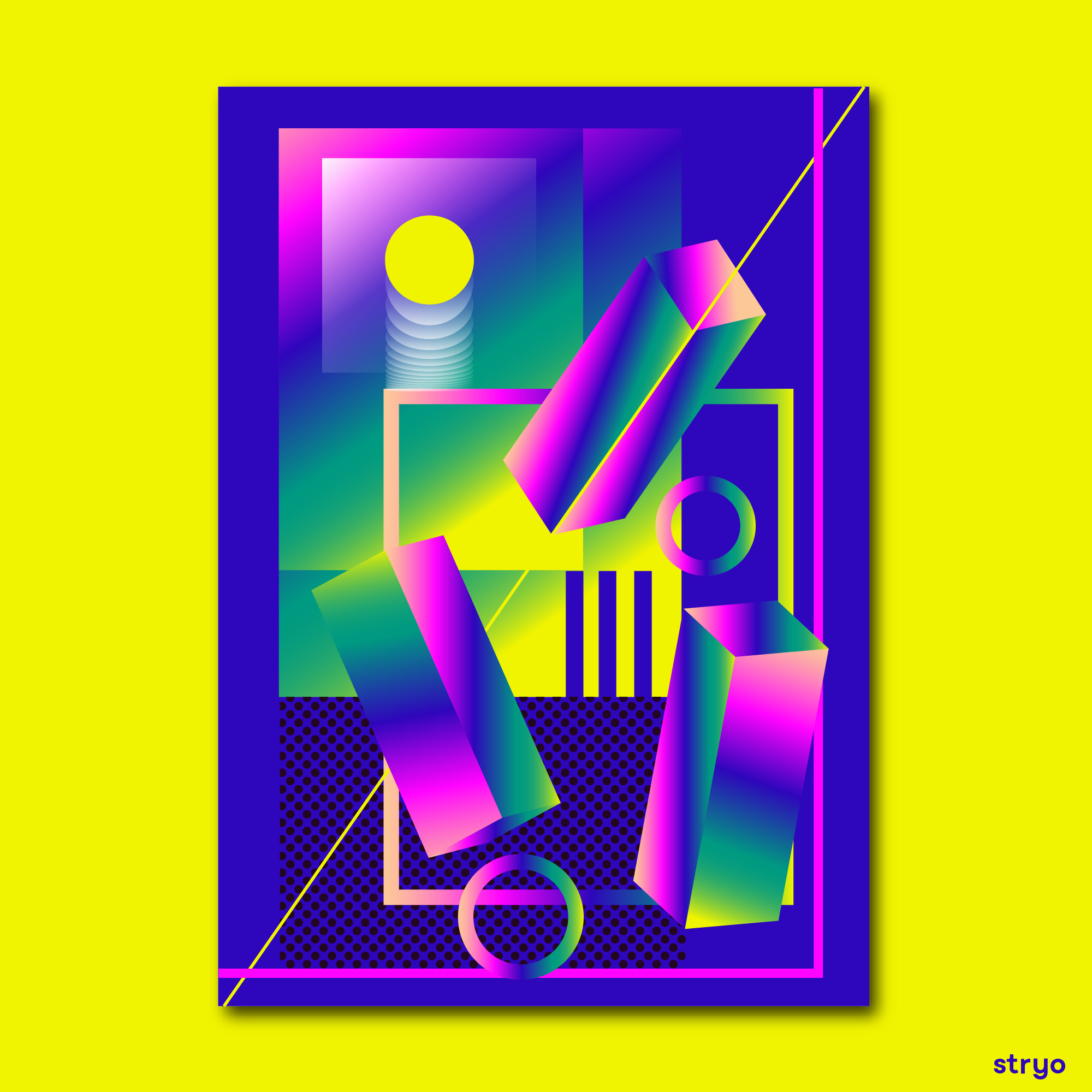
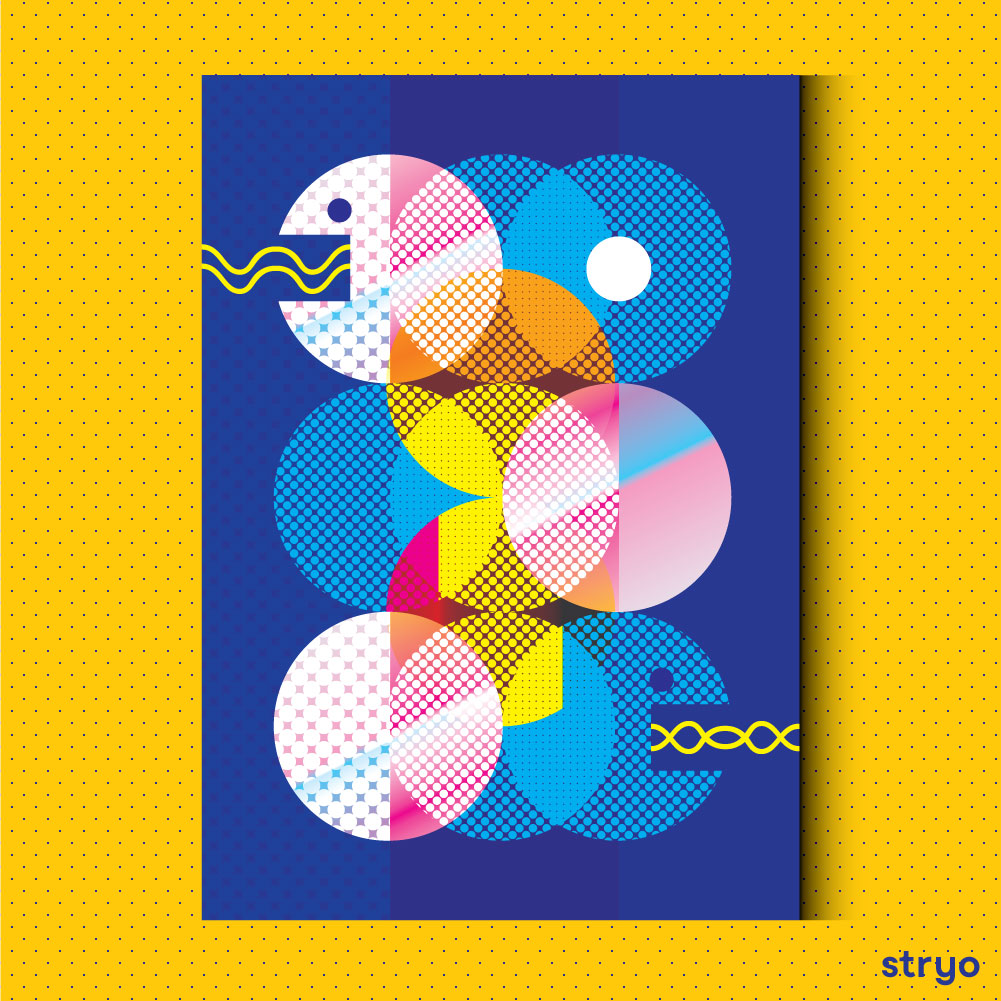
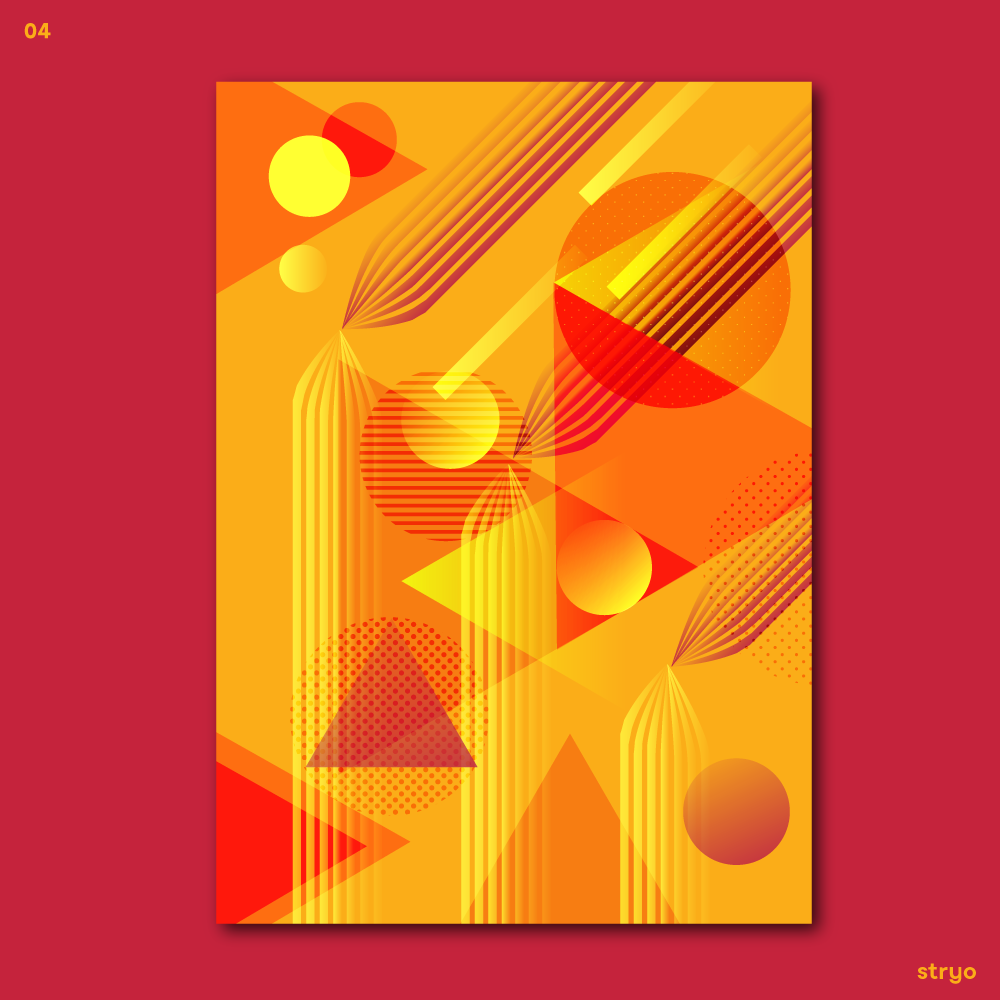
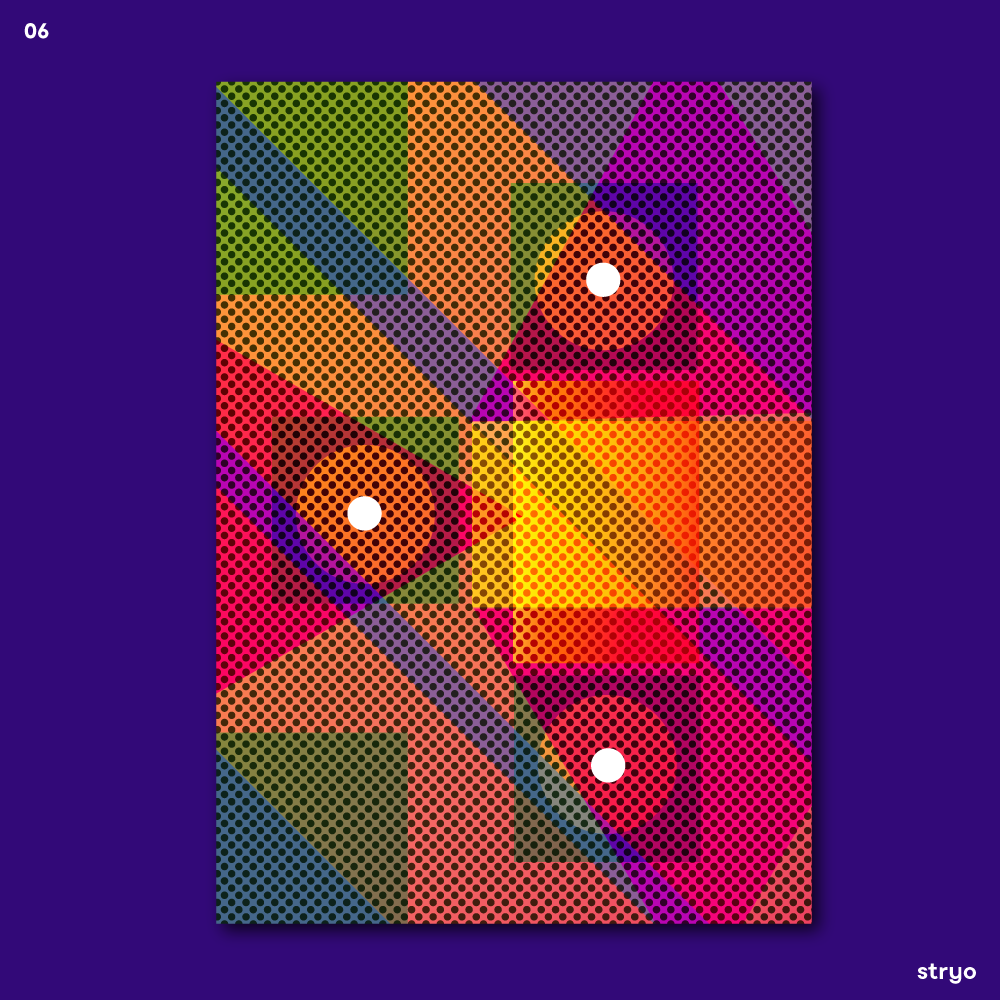
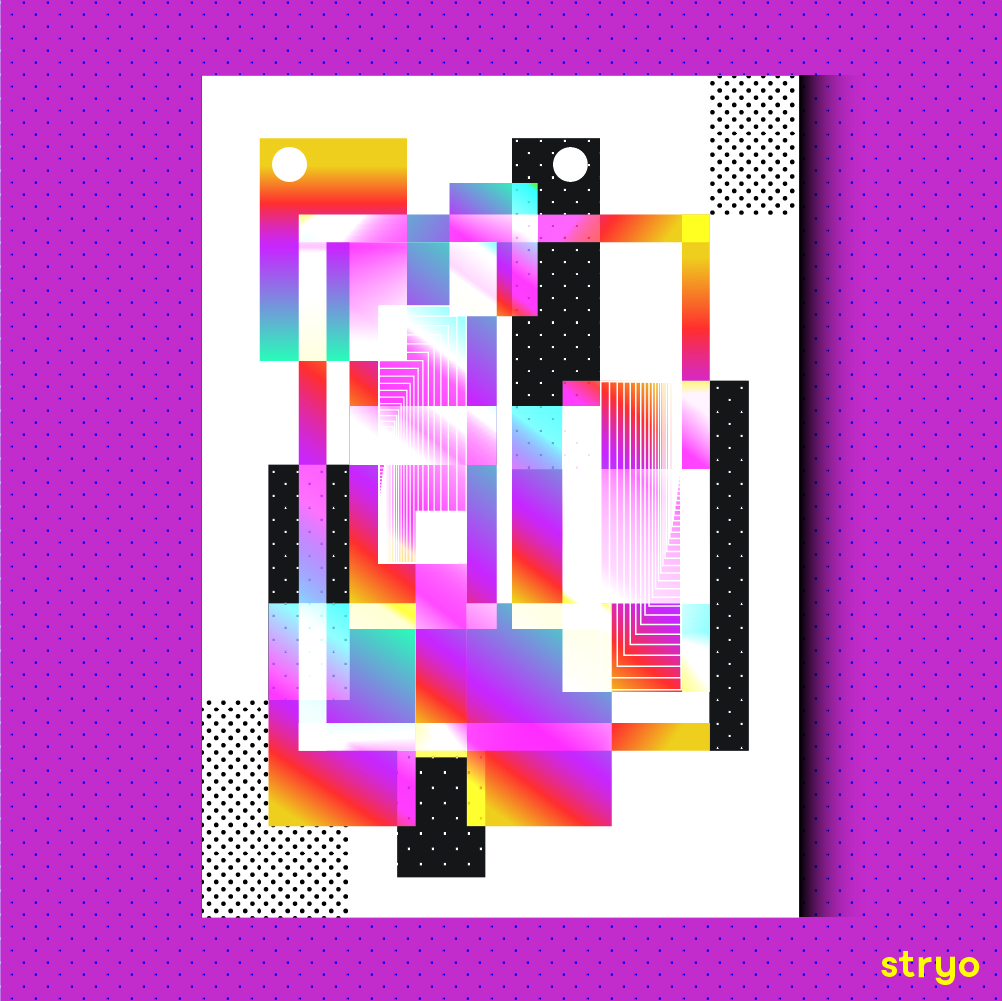

Drawing on multiverse theory, Dimensions imagines space as layered, infinite, unfolding. Each composition is a window into a different scale—a meditation on the dimensions we inhabit and those we can only imagine.


In 2019, Strahinja Jovanović began a visual exploration of space—not the space of everyday experience, but the spaces that lie beyond human perception. The project, titled Dimensions, uses color, line, and perspective to render scales we cannot see: the macro-dimensions of galaxies and cosmic structures, the micro-dimensions of particles and quantum fields. It is an attempt to make visible the invisible, to give form to the spaces that physics describes but the eye cannot grasp.
The project draws on a rich conceptual framework. It is connected to Strahinja's ongoing exploration of "Elementarium," a project that investigates the fundamental building blocks of matter and meaning. It also engages with multiverse theory, the idea that our universe is not alone but one of many, nested in structures of unimaginable scale and complexity. Dimensions visualizes these ideas not as scientific illustrations but as abstract compositions—spaces to be entered, contemplated, explored.
The visual language of Dimensions is precise and open. Lines create vectors of expansion, contraction, relation. Color establishes depth, distance, the difference between one scale and another. Perspective shifts, refusing a single point of view, suggesting that there is no privileged position from which to see the whole. The viewer is invited to move between scales, to imagine what it might be like to see from the perspective of a galaxy, or a particle, or a dimension beyond our own.
The series includes both macro-dimensions and micro-dimensions. The macro images suggest vastness: curves that could be galactic arms, fields of color that could be nebulae, structures that evoke cosmic filaments stretching across billions of light-years. The micro images suggest the opposite: forms that could be atoms, molecules, quantum fluctuations, the architecture of the very small. Together, they suggest a continuum, a universe in which the macro and the micro are not opposites but reflections of one another.
The connection to multiverse theory adds another layer. If there are multiple universes, what do they look like? How do they relate? Dimensions imagines them as spaces that are adjacent, overlapping, nested, parallel. The compositions suggest structures that are not singular but multiple, not linear but branching, not contained but infinite. It is a vision of reality as fractal, as layered, as always extending beyond what we can perceive.
For Strahinja, the project was an opportunity to bring together his interests in science, philosophy, and visual art. The work is informed by physics—by theories of relativity, quantum mechanics, cosmology—but it is not bound by them. It uses science as a starting point, a source of wonder, a way of asking questions that art can explore in its own language.
Dimensions is also a meditation on the limits of human perception. We see only a fraction of what exists; we inhabit a sliver of the scales that constitute reality. The project asks what it would mean to see more, to perceive the macro and the micro, to imagine the dimensions beyond our own. It offers not answers but provocations—visual arguments for the existence of worlds beyond the visible.
In the end, Dimensions is an invitation to expand one's sense of scale. It asks us to look up, to look down, to look inward and outward, to imagine the spaces we cannot see. It is a project about the universe, but also about the mind that tries to comprehend it.