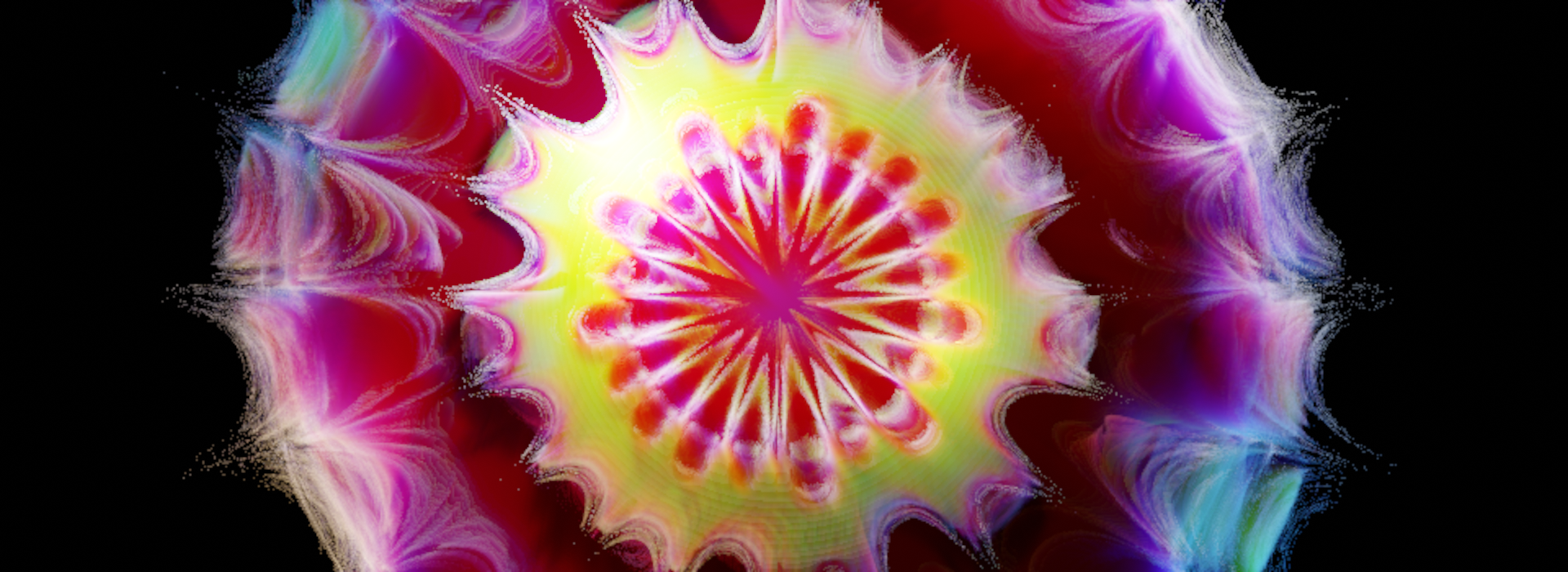
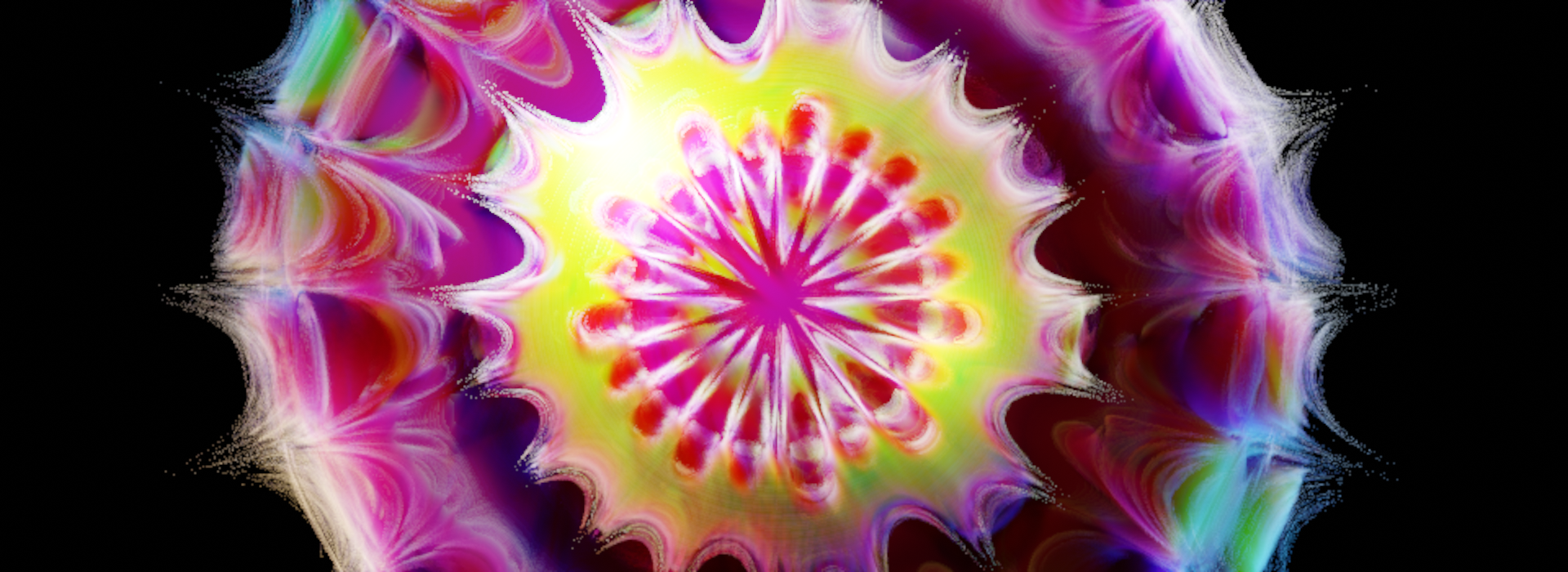
Infinity: The Beginning explores the feeling of sublimation toward nature through fractal systems. Growth, movement, and depth unfold in experimental animation, tracing the mathematical beauty that has shaped human understanding of nature across civilizations.

Through fractal systems, the animation captures the sensation of infinity—the complexity that arises from simple rules repeating endlessly. The work invites viewers to lose themselves in movement, to feel the sublime in patterns that extend beyond perception.

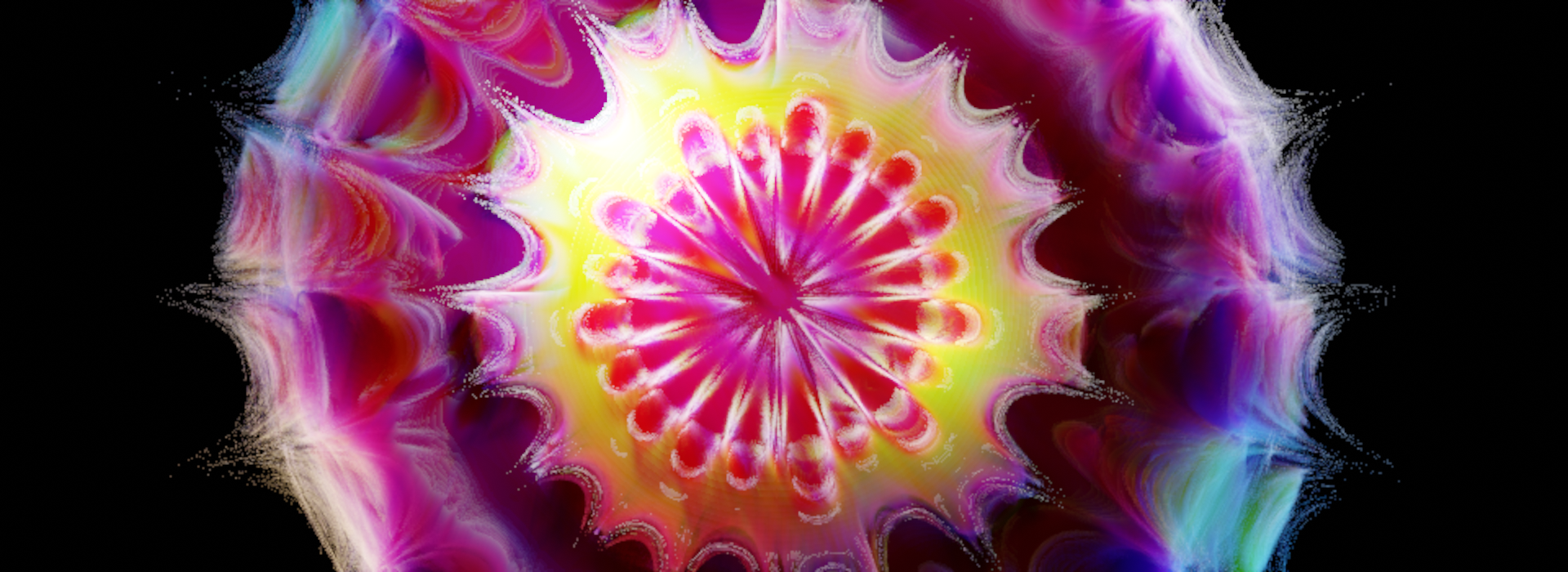
A poem accompanies the animation, creating harmony between text and visual. Infinity is not a distant concept but something seen in every human eye—the infinite stories of past and future unfolding in a single gaze. Sound, image, and word become one.
Throughout the history of human civilization, the search for a priori truth has taken many forms. Fractal systems have served as a model for mathematical exploration of nature—and, by extension, for the aesthetics that have developed across cultures, across objects, across time. The feeling of infinity, of the sublime, is intimately connected to our understanding of fractal complexity. It arises not from chaos but from order that repeats, transforms, and expands beyond the limits of perception.
In Infinity: The Beginning, an experimental animation created at Aalto University in 2021, Strahinja Jovanović investigates this relationship between fractal systems and the experience of sublimation. The work explores how we encounter the sublime in nature—through growth, through movement, through depth—and how these phenomena can be rendered in visual form. Fractals become not just mathematical structures but poetic ones, their infinite recursions mirroring the human experience of encountering something vast, something beyond comprehension, something that still, somehow, feels like home.
The animation is accompanied by a poem, also titled "Infinity." Together, image and text create a sense of cohesion—a totality in which sound, movement, and language resonate with one another. The poem speaks of infinity as something we see in the eyes of every human being, in the stories of past and future that converge in a single gaze. It is not a distant abstraction but a presence we carry within us, a reflection of our own depth.
Fractal systems offer a mathematical language for this experience. In their self-similarity across scales, they suggest that the infinite is not somewhere else but embedded in the structure of things. The same patterns that shape galaxies shape snowflakes, ferns, the branching of blood vessels. Infinity: The Beginning renders these patterns in motion, allowing viewers to witness growth as it happens, to feel the movement of depth unfolding in real time.
The work is experimental in its form. It does not tell a story in the traditional sense but creates a space for contemplation, for immersion. The viewer is invited to lose themselves in the movement, to follow the fractal iterations as they expand, contract, transform. Sound and music deepen the experience, creating an environment that feels both mathematical and meditative, precise and open.
For Strahinja, Infinity: The Beginning is an exploration of the relationship between mathematics and aesthetics, between the precise language of fractals and the ineffable experience of the sublime. It draws on a long tradition of artists and thinkers who have turned to fractal systems to understand nature—not to reduce it to formula, but to find new ways of seeing its complexity, its beauty, its infinite depth.
In the end, the work suggests that infinity is not something we reach at the end of a journey. It is something we encounter in the beginning, in the moment we look closely at the world around us, in the patterns that repeat and transform, in the eye that sees and the gaze that reflects. Infinity: The Beginning is an invitation to look, to listen, to feel—and in that looking, to find the infinite already there.