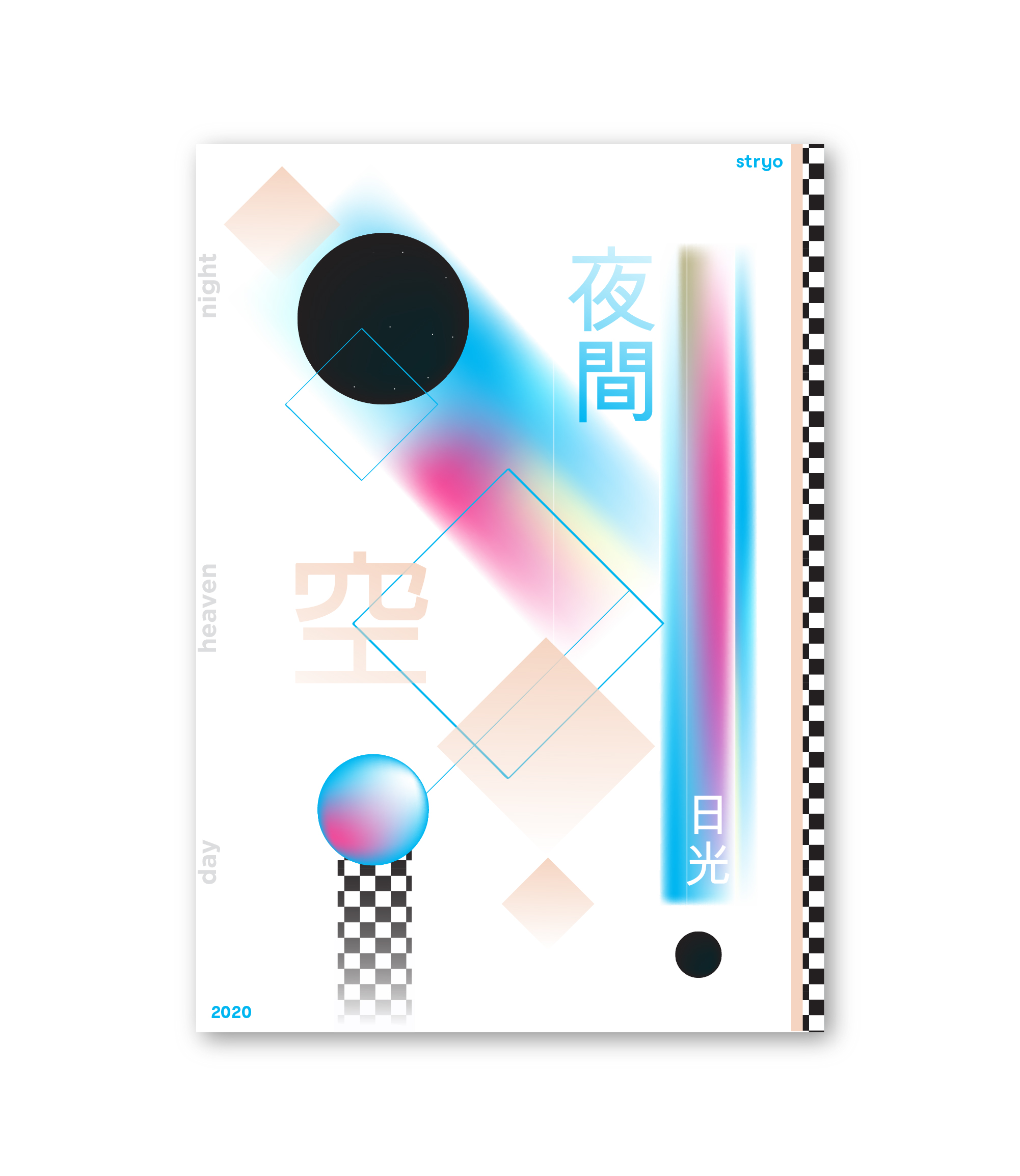
Imagis introduces a cast of imaginative beings inhabiting a world of isometric perspectives and vibrant color. Each character—Bezubco, Slipco, Eater, Senshi, and others—embodies a distinct emotion, a unique personality, a way of being.


In the world of Imagis, emotion takes form. Through isometric illustration and carefully chosen color palettes, each character becomes a portrait of a feeling—a visual exploration of what it means to be.

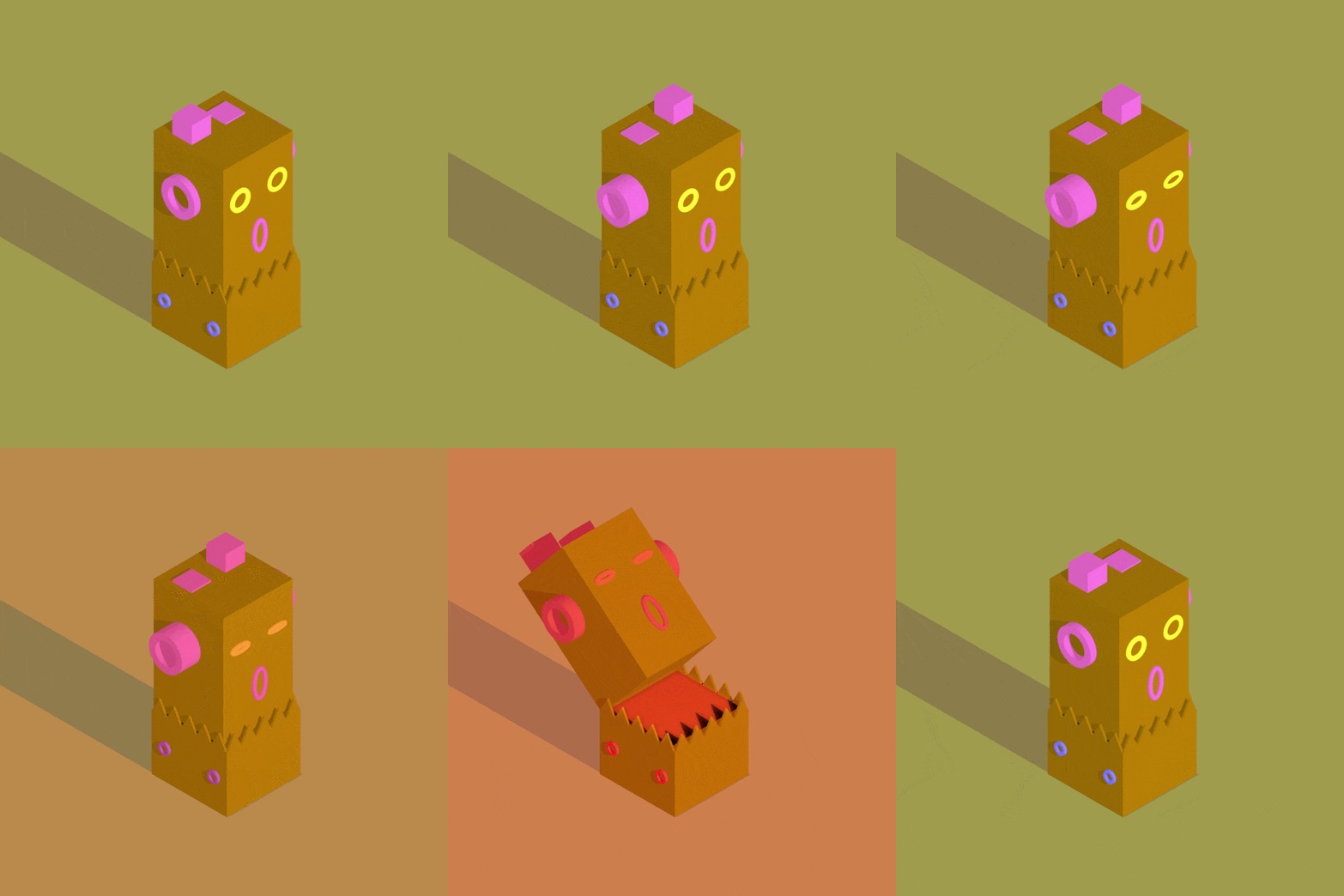
Meet Bezubco, Slipco, Eater, Senshi, Smotco, Flipus, Koloro, Flauwis, Chigra, Baku, Lony. Eleven beings, eleven personalities, one shared world. Imagis invites you to explore their reality, to meet them, to wonder who they are.


In 2020, Strahinja Jovanović created a series of isometric illustrations introducing a cast of imaginative beings. The project, titled Imagis, is an exploration of emotion, personality, and the possibilities of a reality different from our own. Each character is a world unto itself—a creature of form and color, of perspective and presence.
The characters are many. Bezubco, Slipco, Eater, Senshi, Smotco, Flipus, Koloro, Flauwis, Chigra, Baku, Lony. Their names are evocative, hinting at qualities we might recognize but not name. They live in a world rendered in isometric perspective—a space without a single vanishing point, where objects exist in relation to one another without a privileged position. This is a world of parallel lines, of forms that float, of a reality that is structured but not hierarchical.
Isometric perspective is central to the project's effect. Unlike linear perspective, which positions the viewer at a specific point in space, isometric drawing creates a sense of weightlessness, of openness. The viewer is not outside looking in but somewhere within, moving among the characters, seeing them from multiple angles. The perspective is precise but not constraining; it is a structure that allows for freedom.
Color does the work of personality. Each character is rendered in a palette that suggests its nature. Warm colors for the friendly, cool for the distant, saturated for the intense, muted for the contemplative. The colors are not naturalistic but expressive—they tell us something about who these beings are, what they feel, how they might relate to us.
The characters themselves invite interpretation. Bezubco might be gentle, Slipco elusive, Eater consuming, Senshi perceptive, Smotco watchful, Flipus playful, Koloro chromatic, Flauwis floral, Chigra sharp, Baku dream-eating, Lony lonely. But the interpretations are not fixed; they are invitations. The viewer is asked to project, to wonder, to imagine what it would be like to meet these beings, to inhabit their world.
For Strahinja, Imagis was an exploration of how character can be conveyed through form rather than narrative. There is no story, no plot, no sequence of events. There is only the world and its inhabitants, presented for contemplation. The viewer is free to move among them, to consider them, to make up stories of their own.
The project also reflects a broader interest in modularity and system. Each character is distinct, but they share a common visual language: isometric perspective, flat color, precise geometry. They are variations on a theme, a family of forms, a set of possibilities within a defined framework.
In the world of Imagis, reality is different from ours. The laws of physics may not apply; the rules of perspective are reimagined; the beings that inhabit it are not bound by the constraints of biology. But the emotions they embody are recognizable. In their forms and colors, in their isometric spaces, they reflect something of what it means to be—to feel, to be seen, to exist in a world with others.
Imagis is an invitation to step into another reality, to meet its inhabitants, to see what they have to show us about ourselves. Each character is a question; together, they form a world.