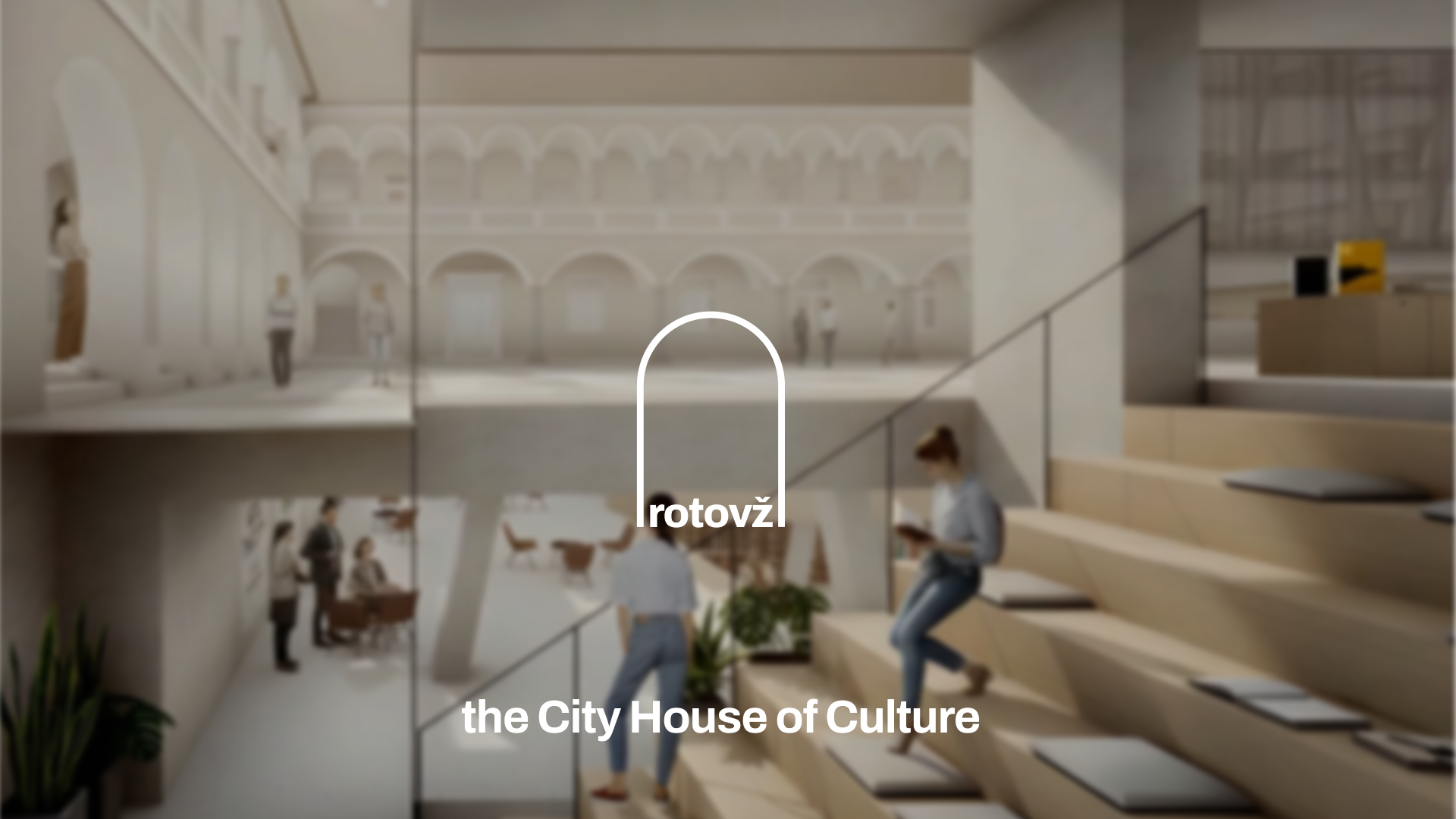
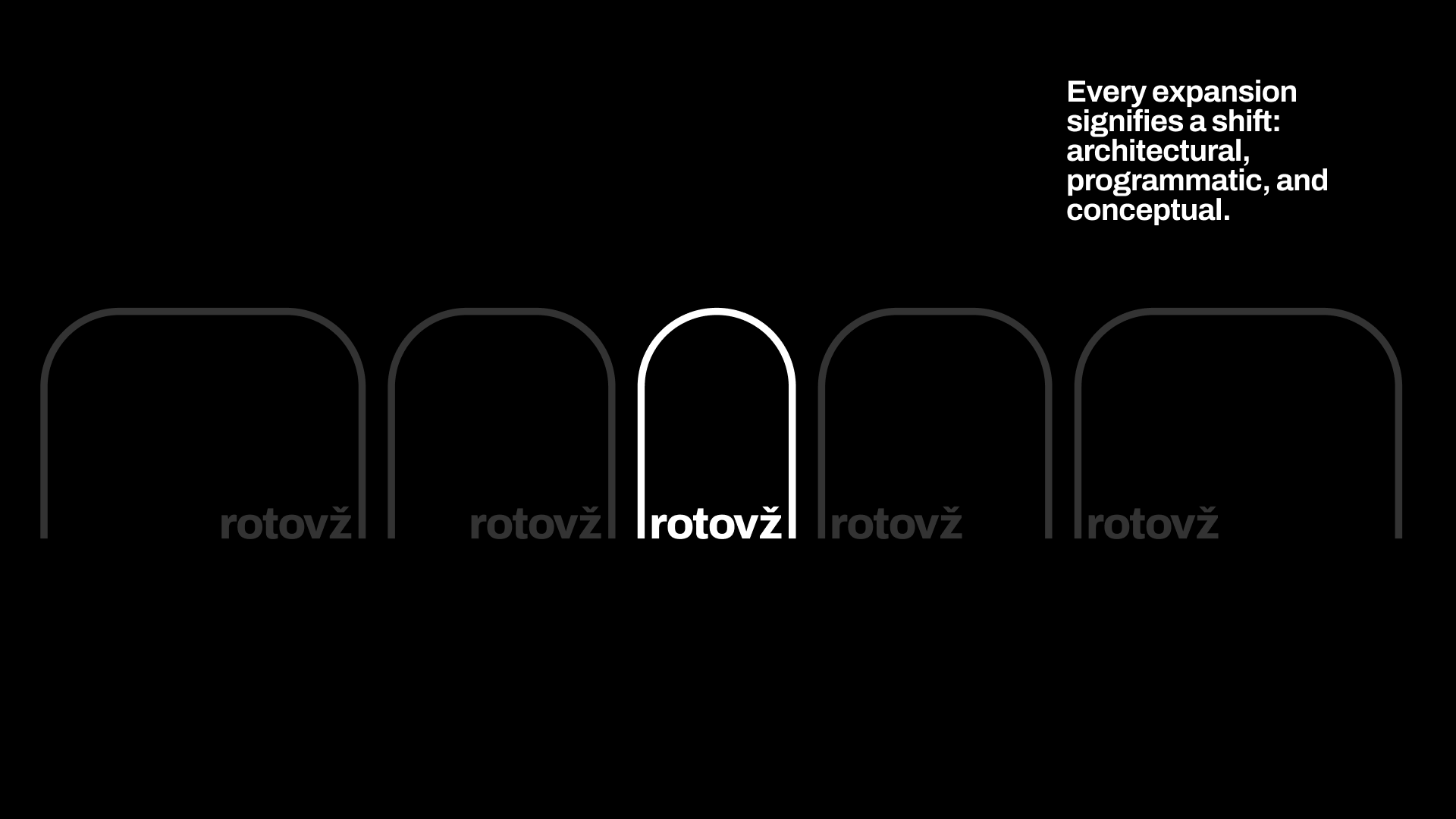
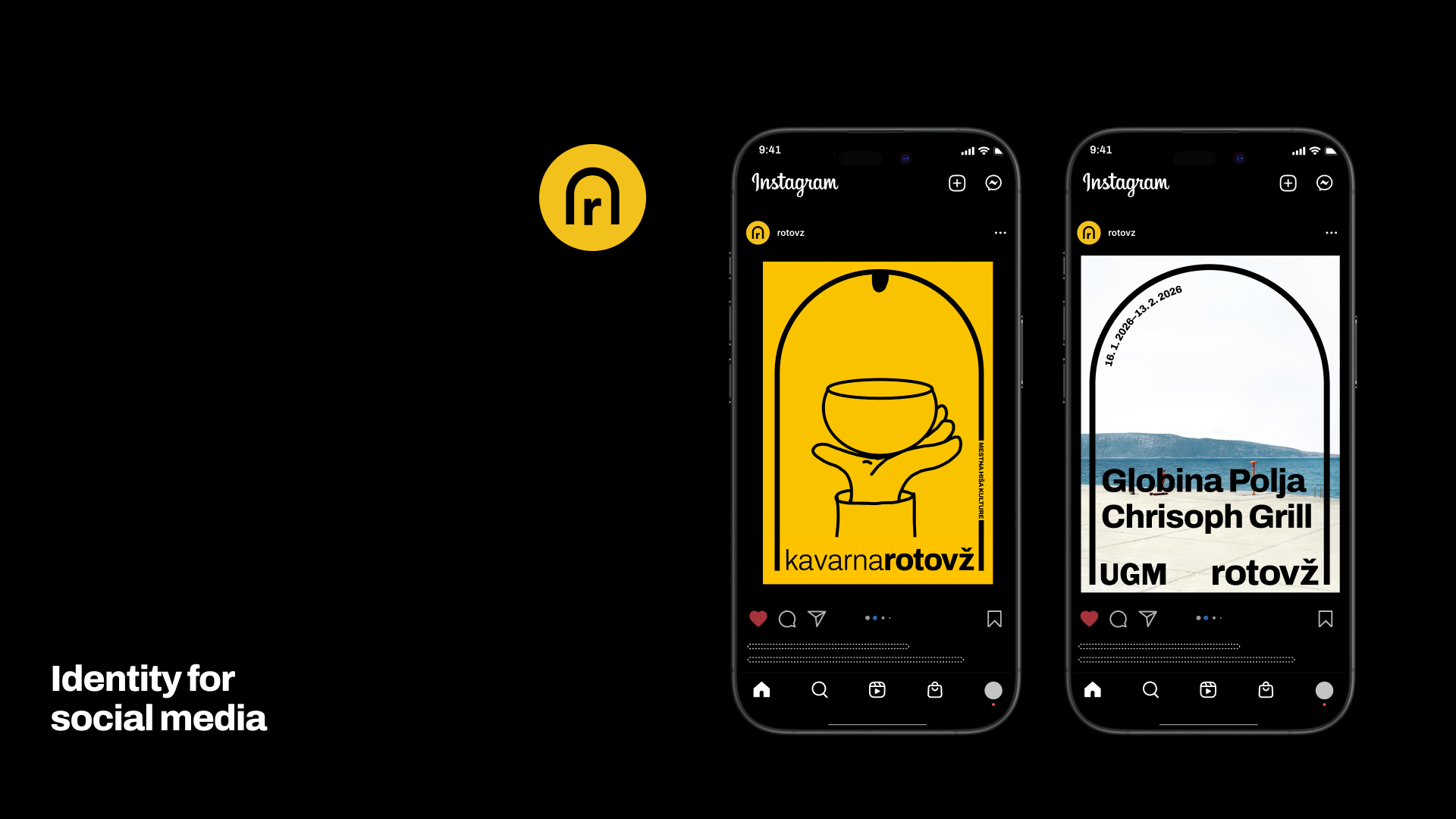
Inspired by the arcades of Center Rotovž, this visual identity is a flexible frame—widening, shrinking, adapting to any format. A structure that holds content, that welcomes, that opens onto the city's new cultural heart.
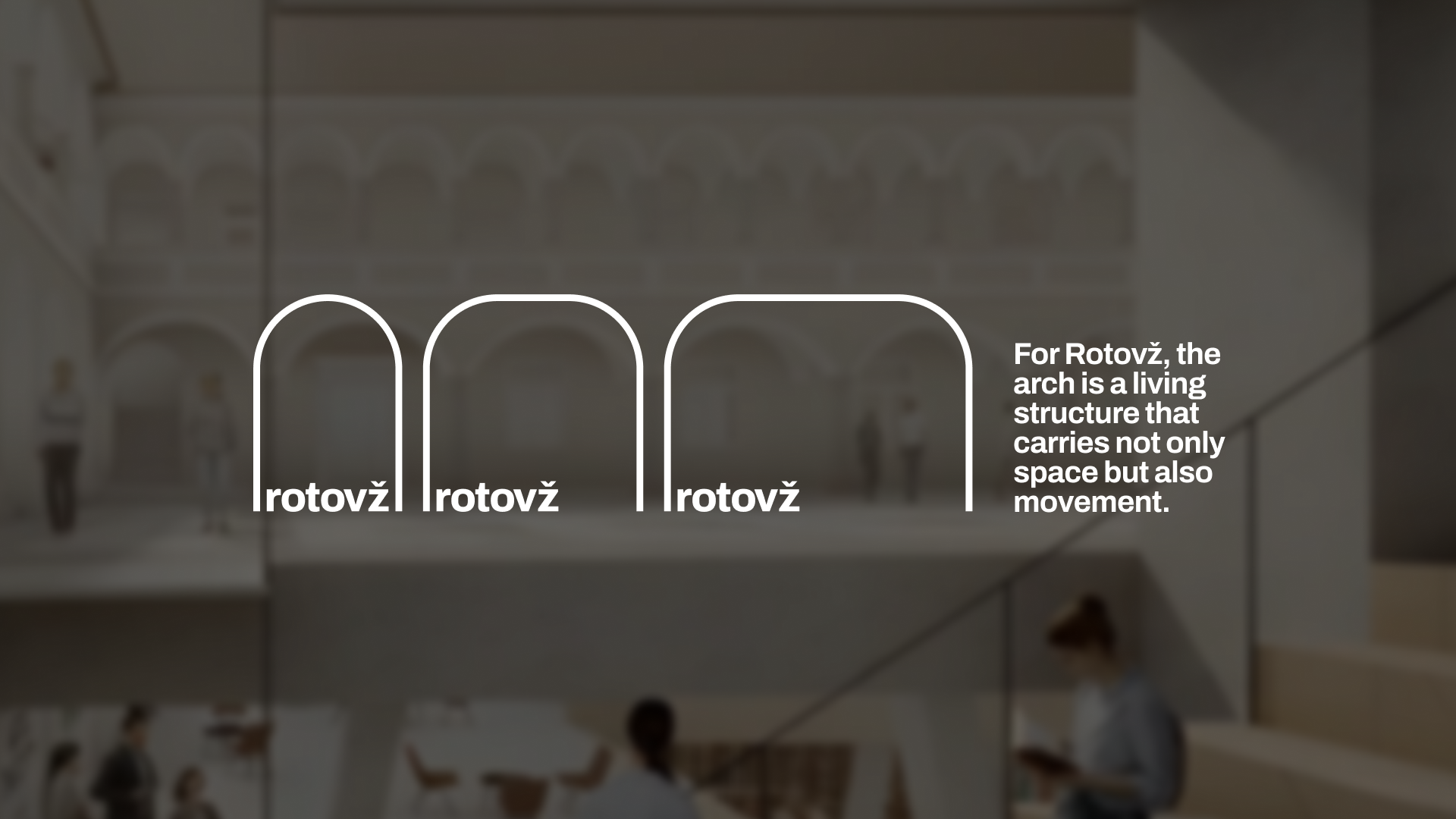
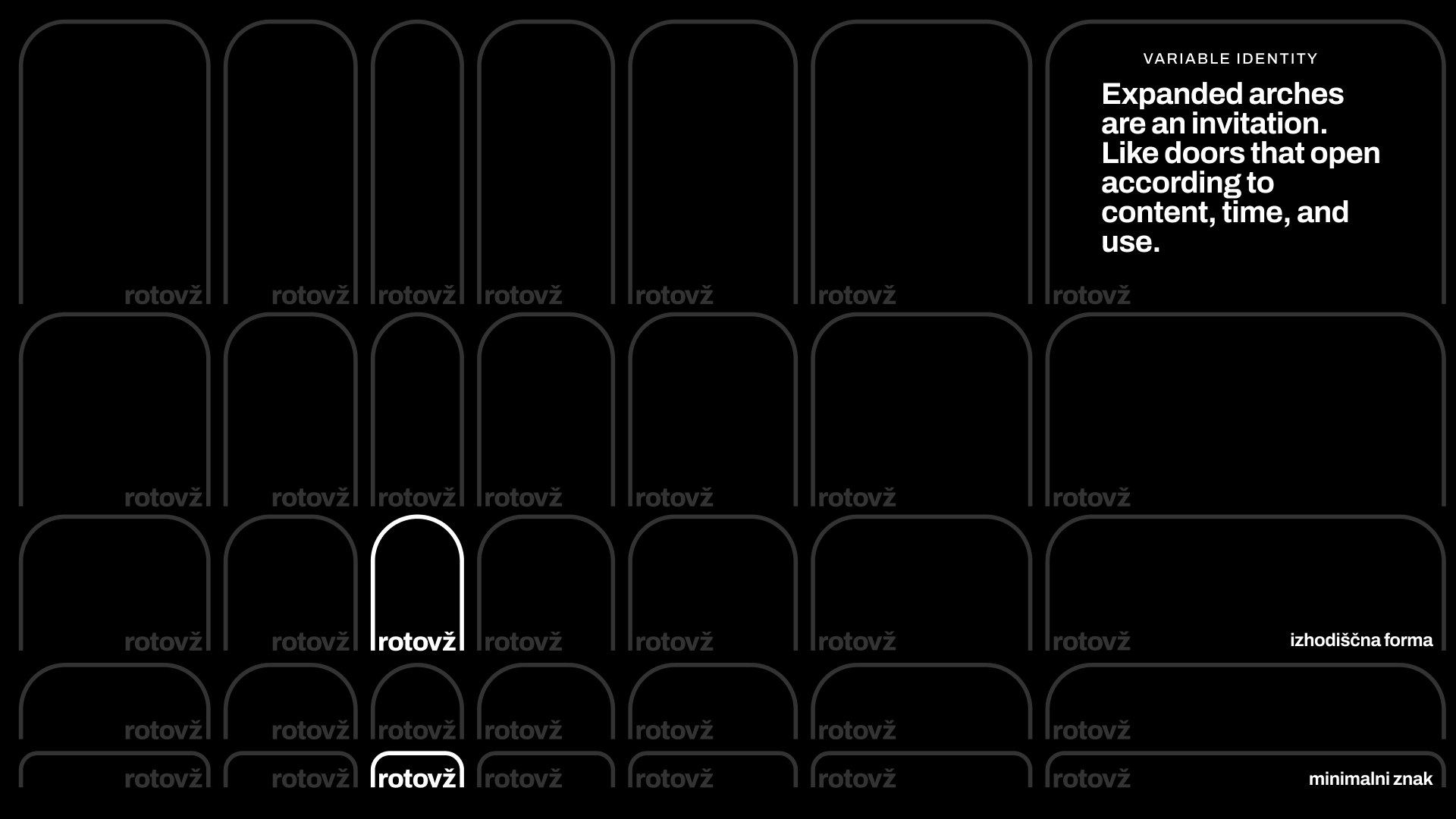
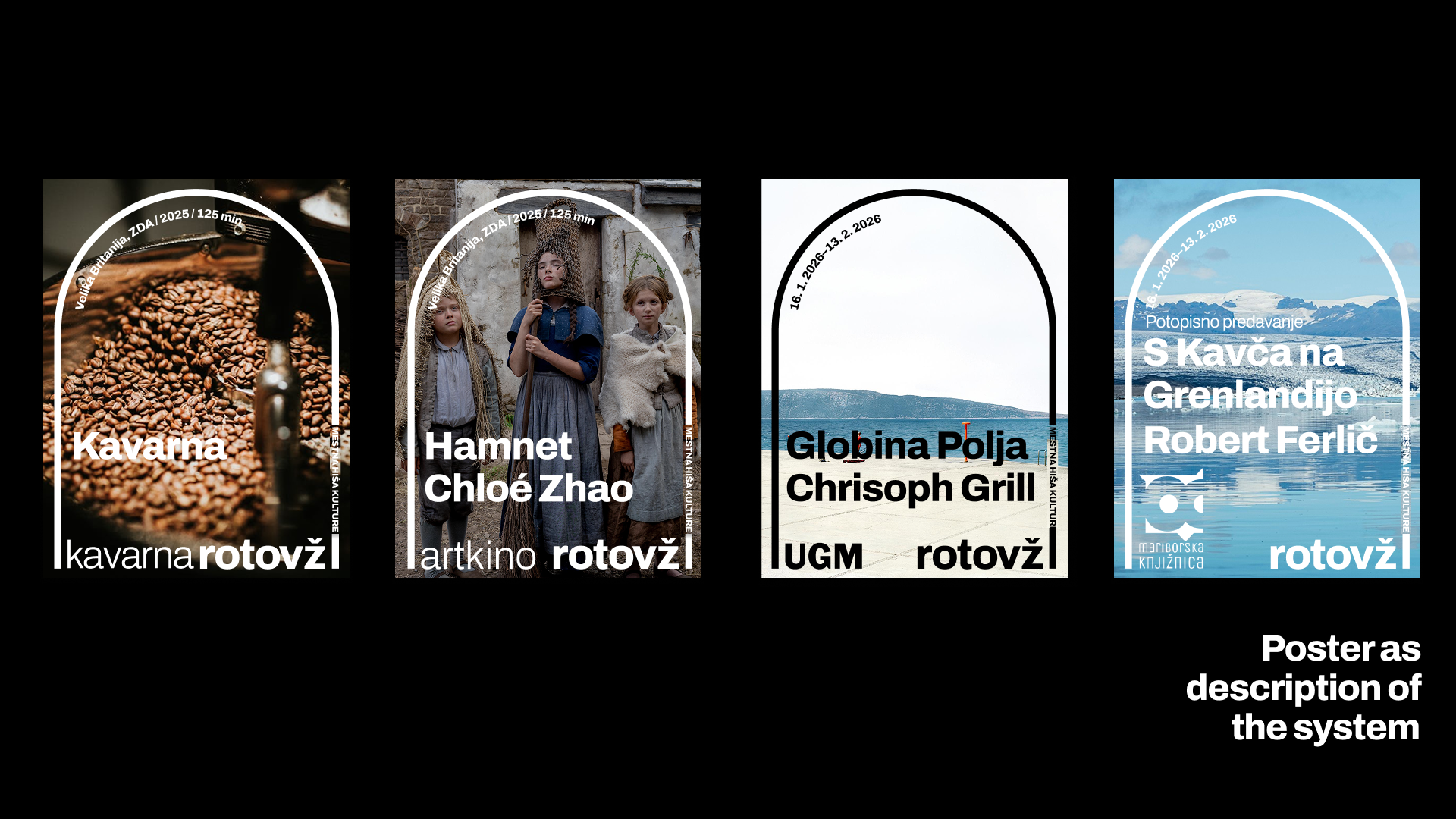
Not a static logo, but a variable system. The identity expands and contracts like the arcades that inspired it—a frame that can contain anything from gallery exhibitions to film screenings to quiet moments in the café.
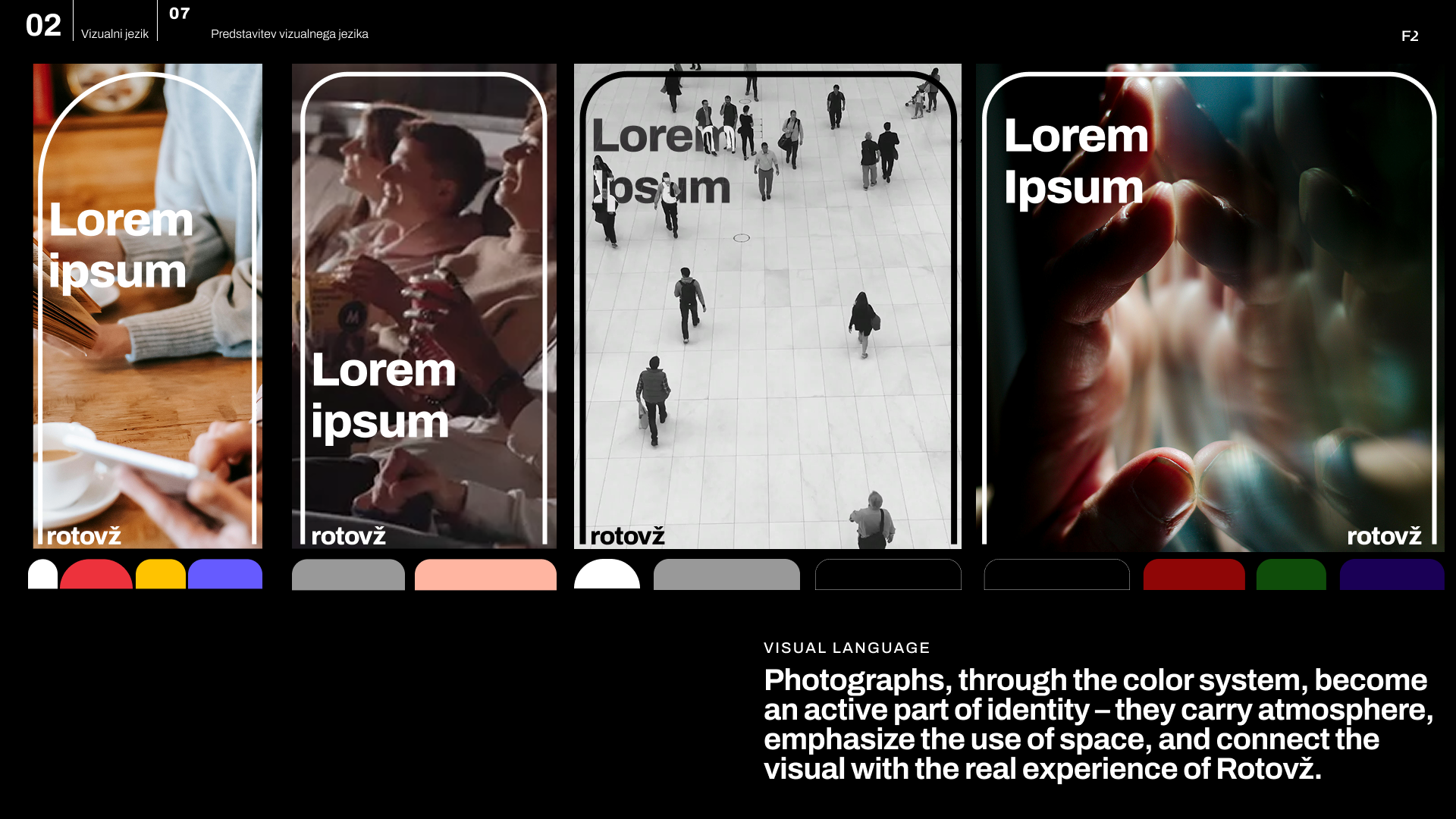
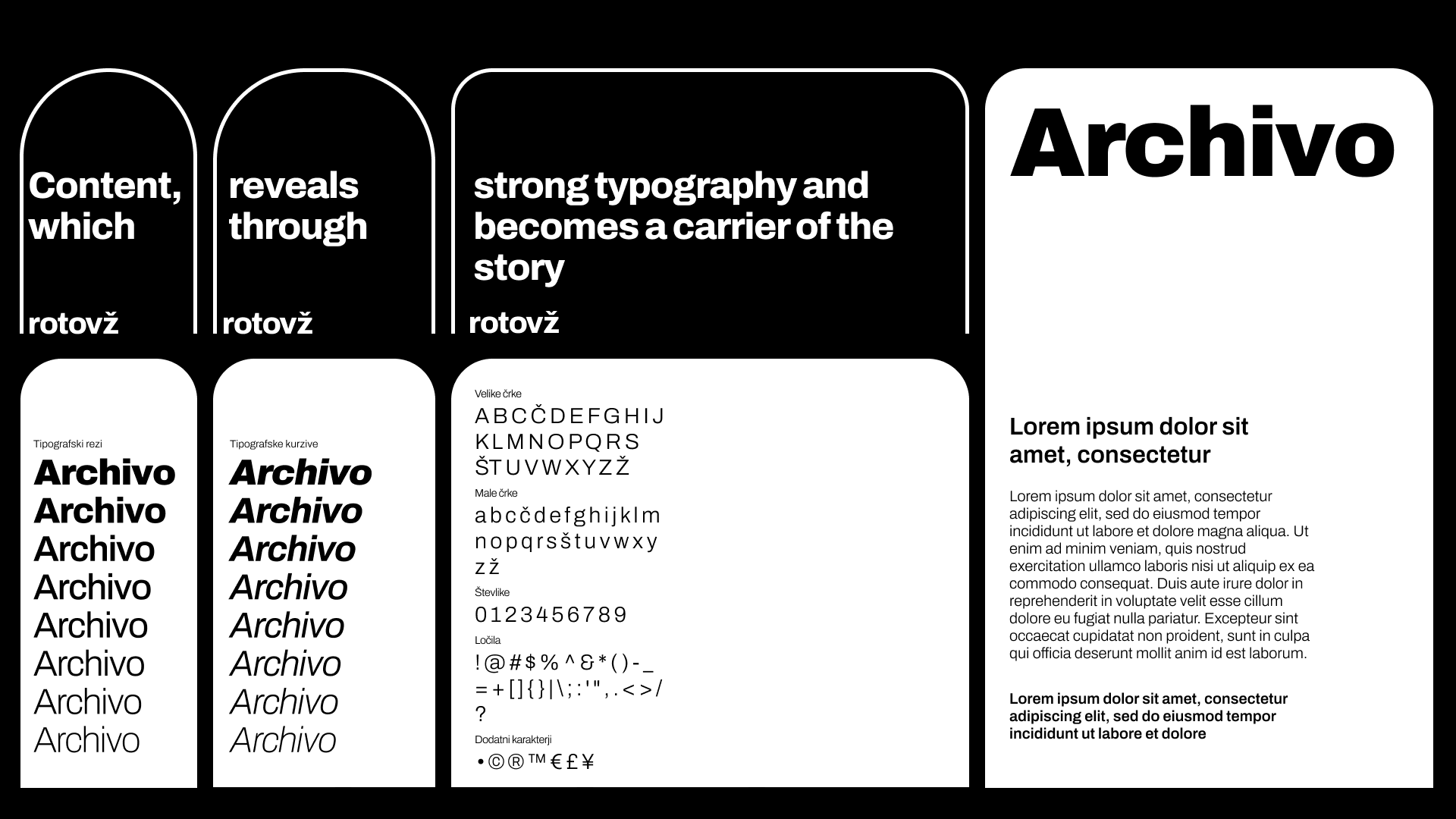
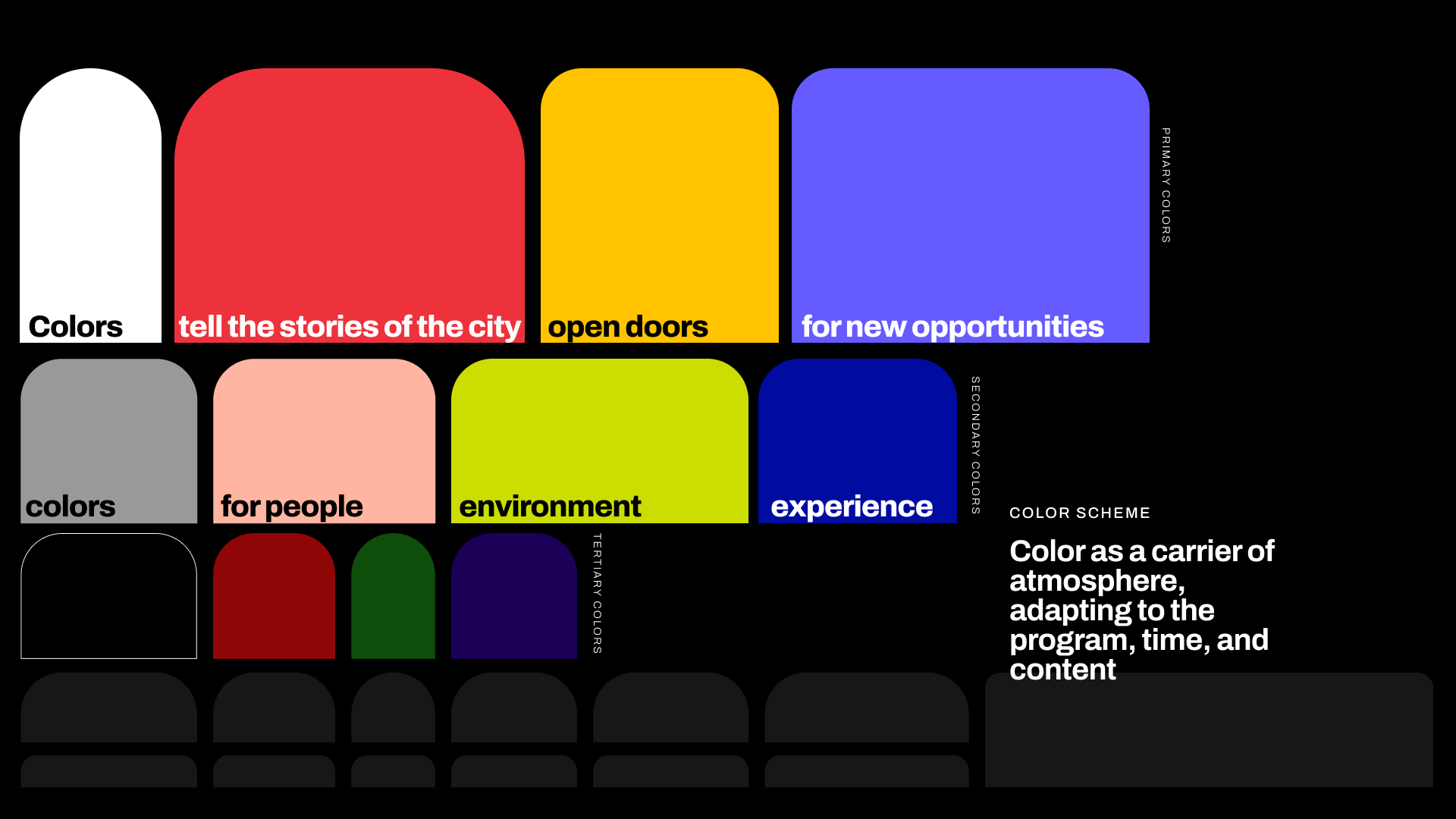
Center Rotovž is designed to be Maribor's "living room"—a place where people gather freely. The identity reflects this openness: flexible, welcoming, a structure that invites participation rather than demanding attention.
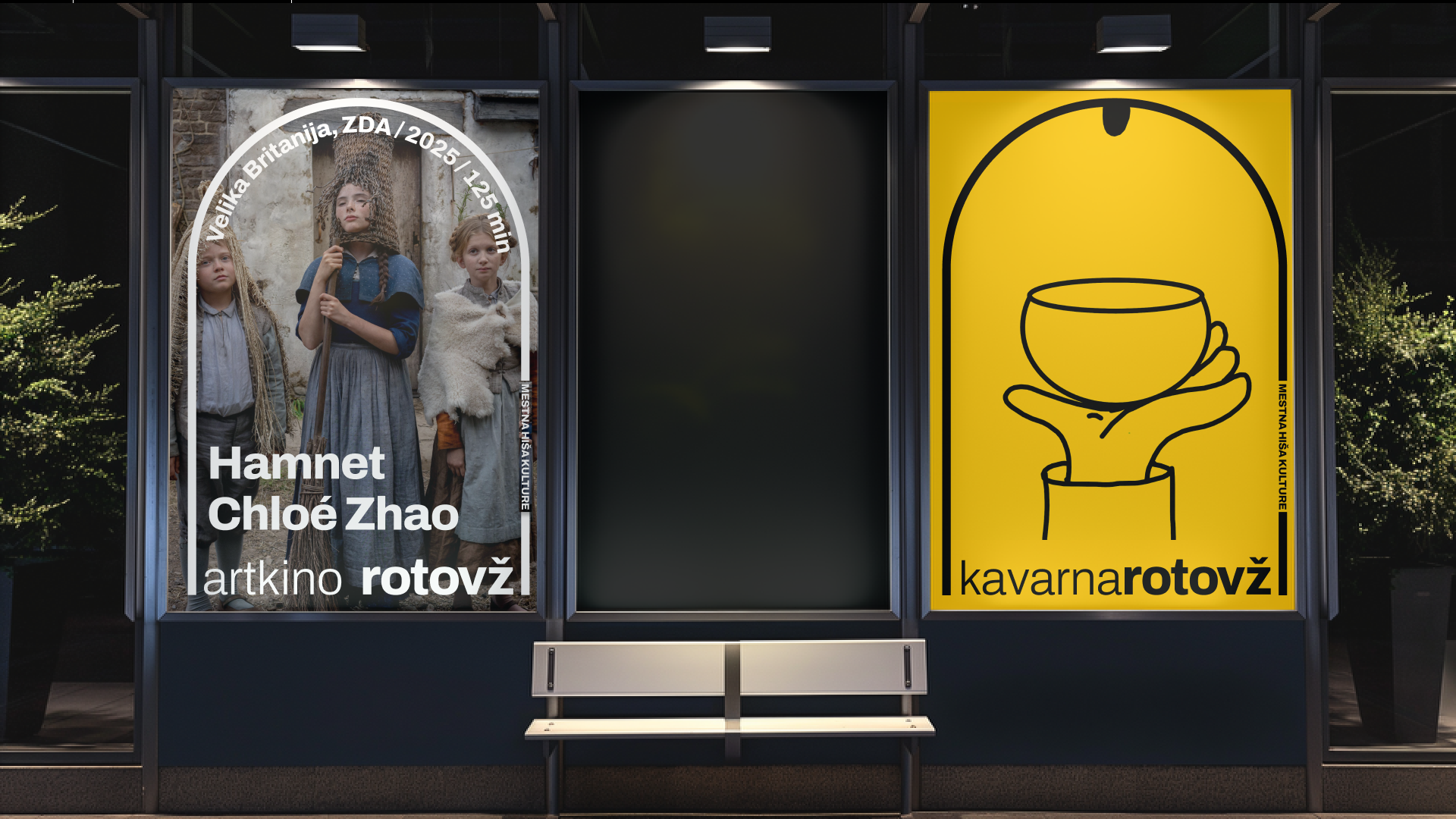
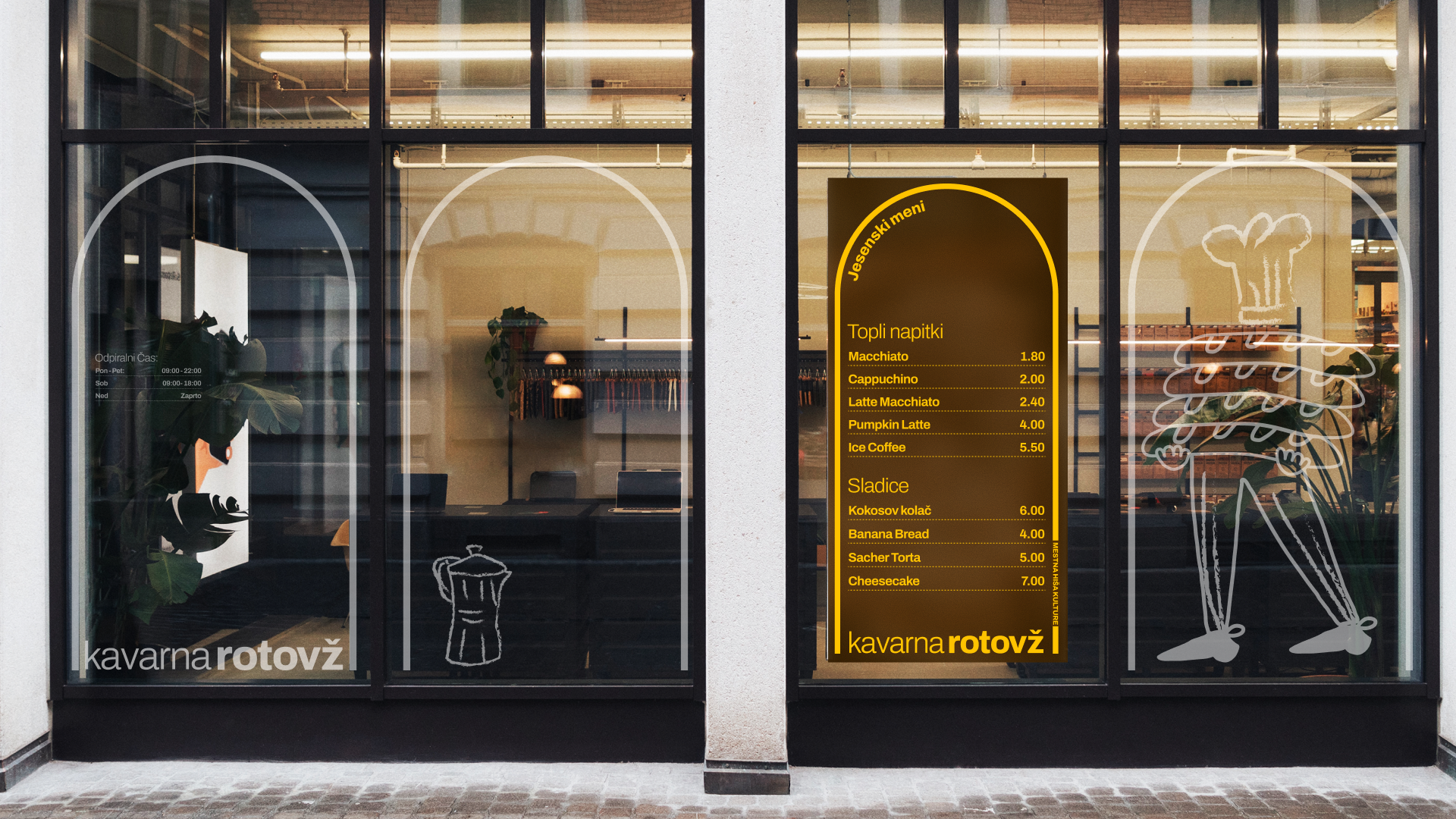
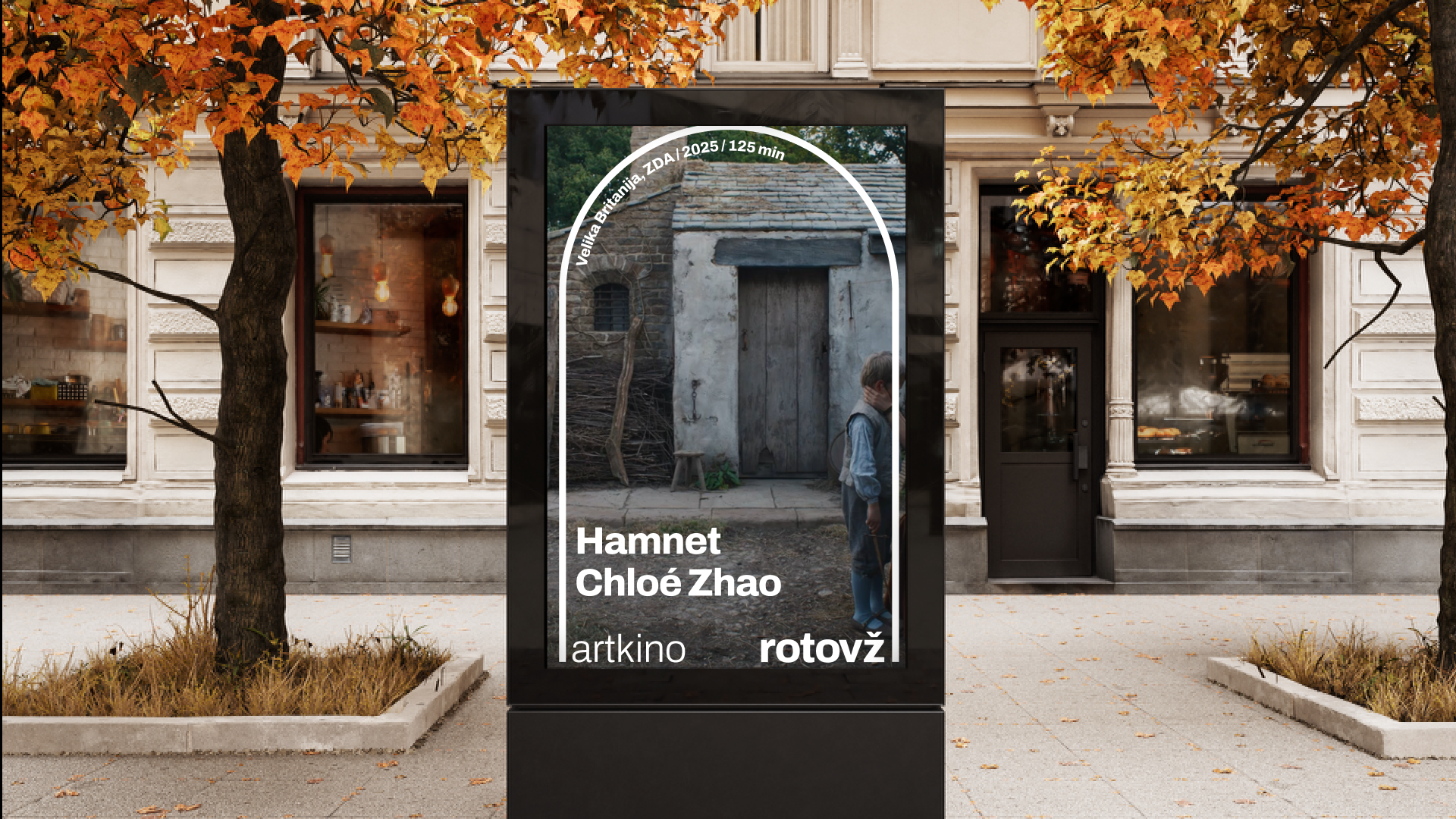
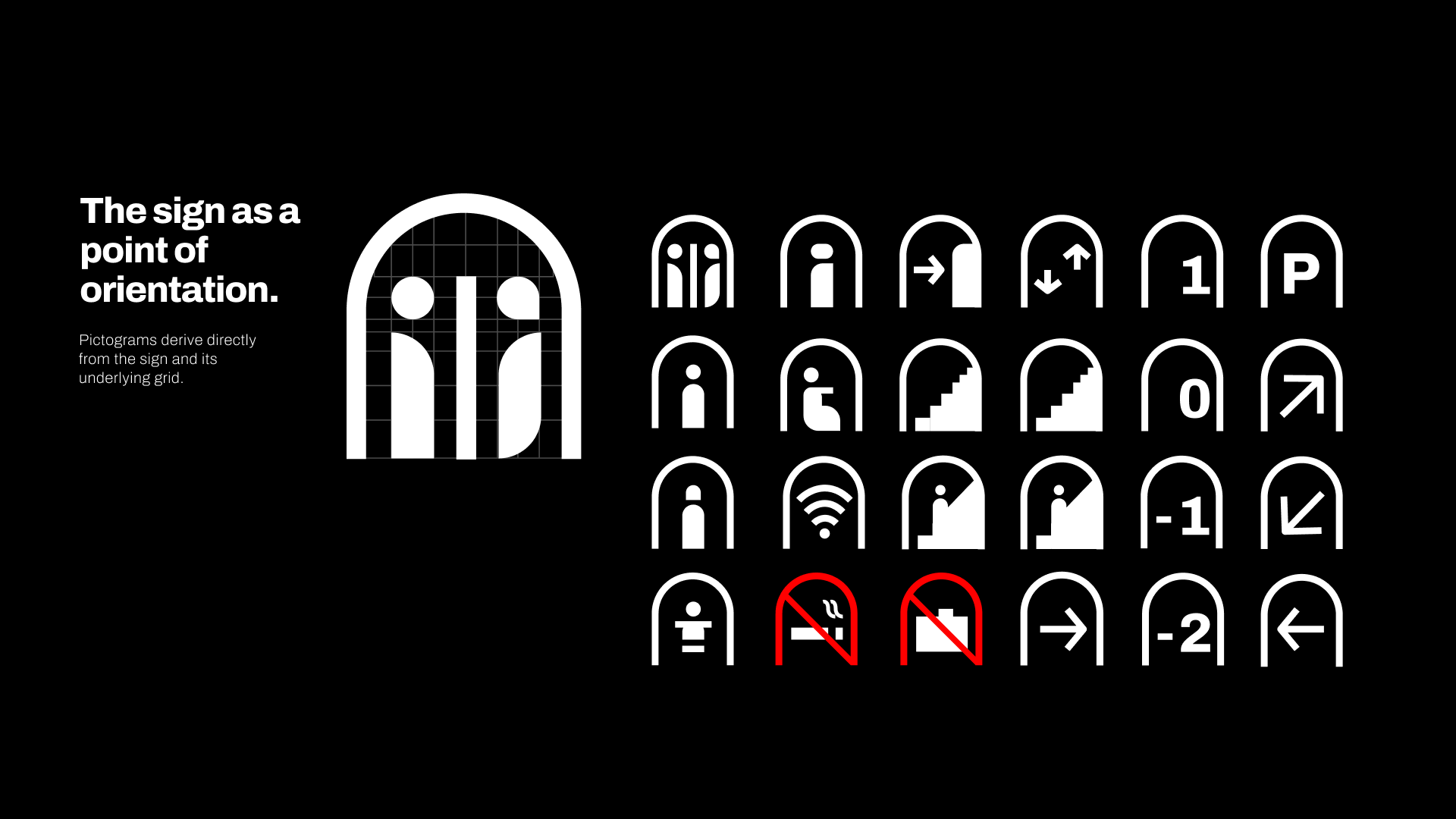
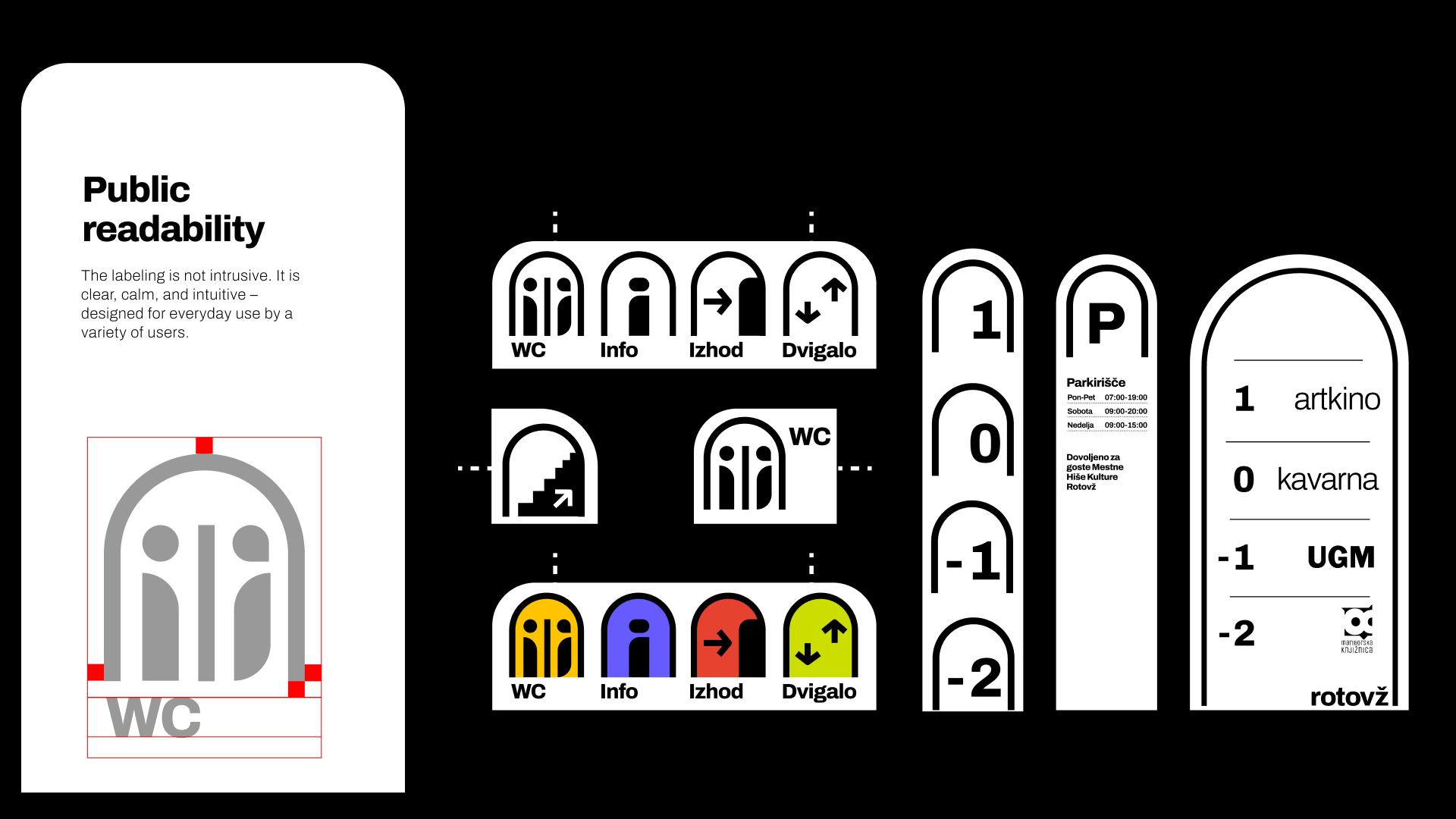
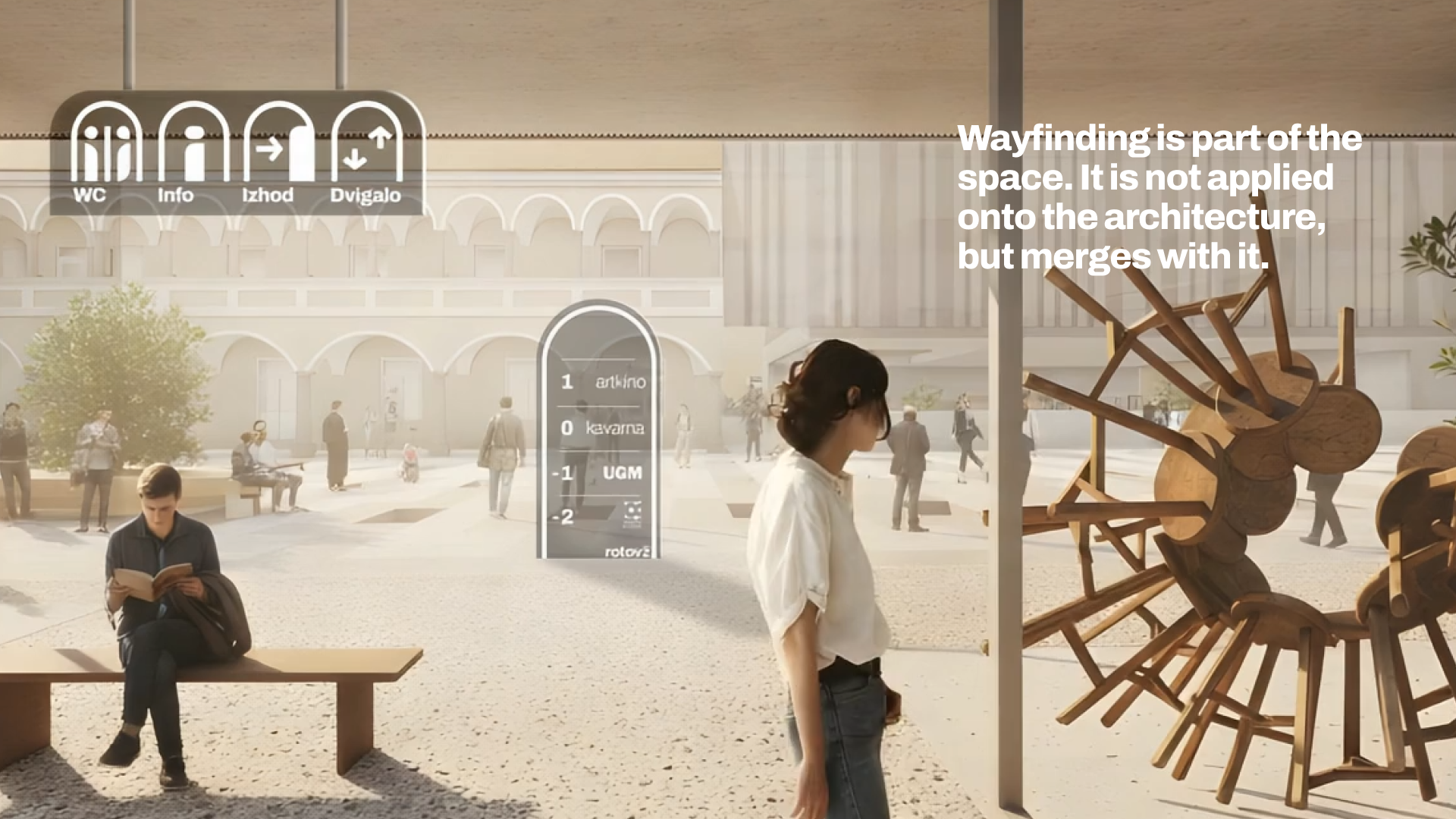
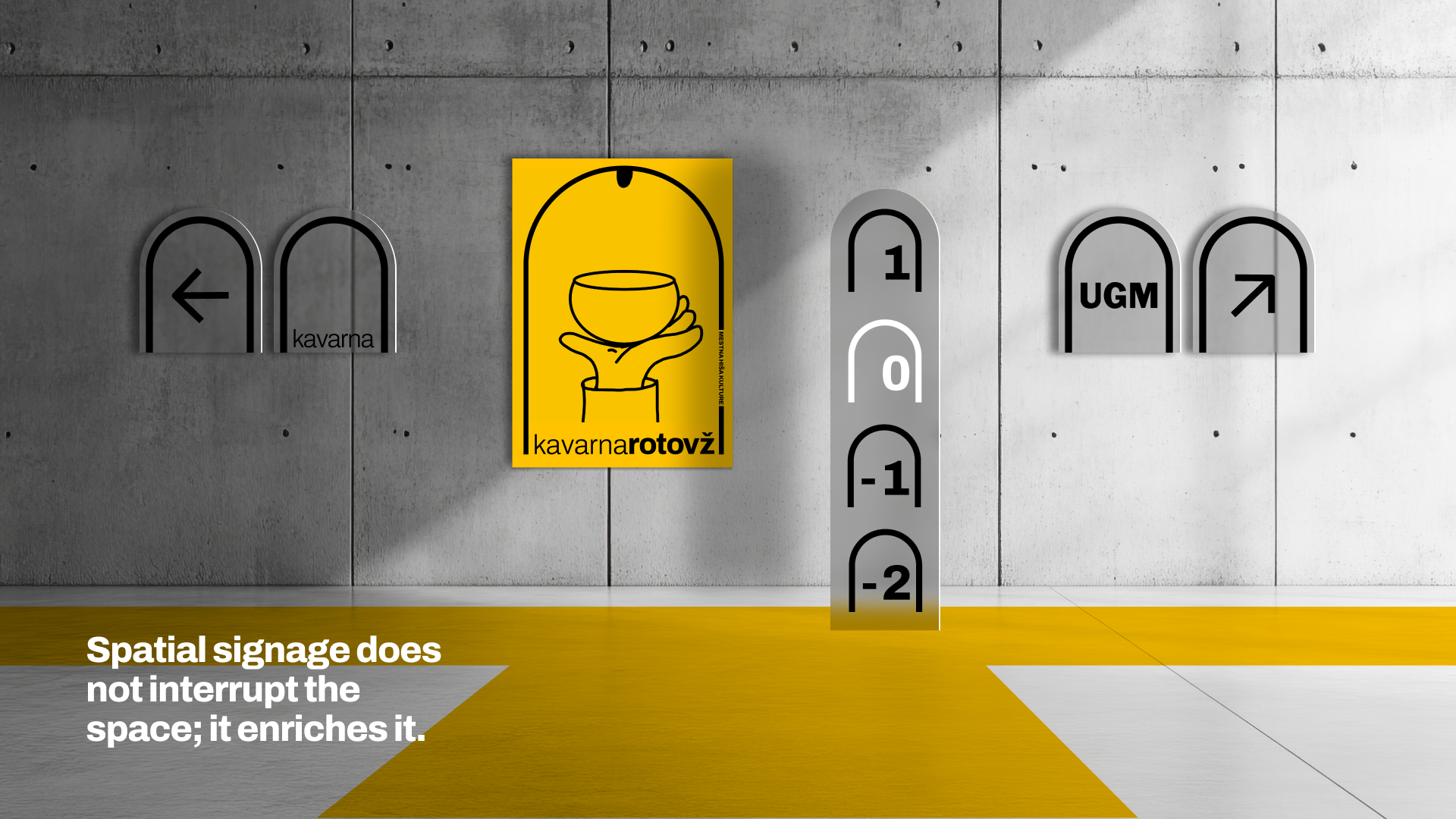
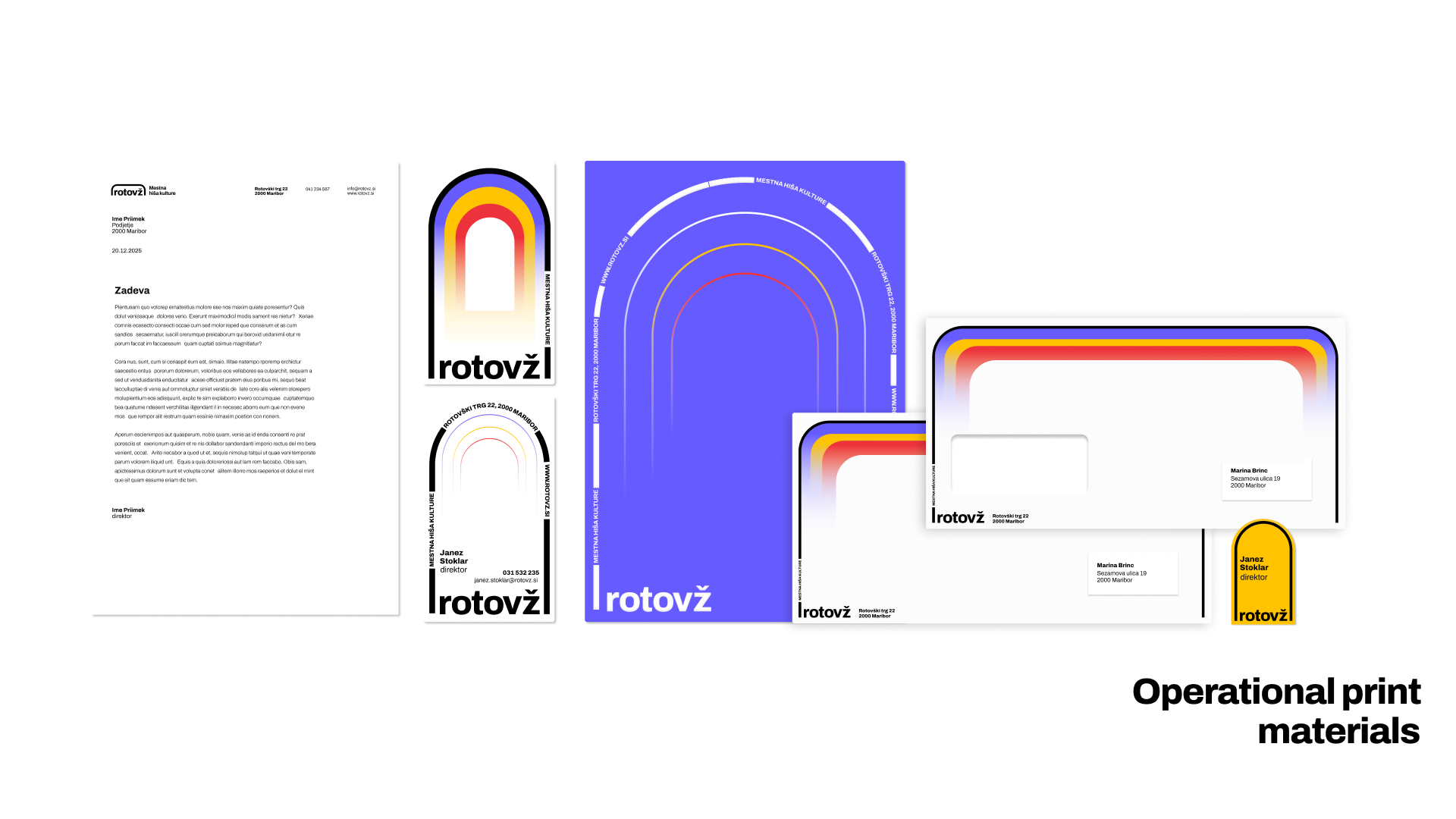
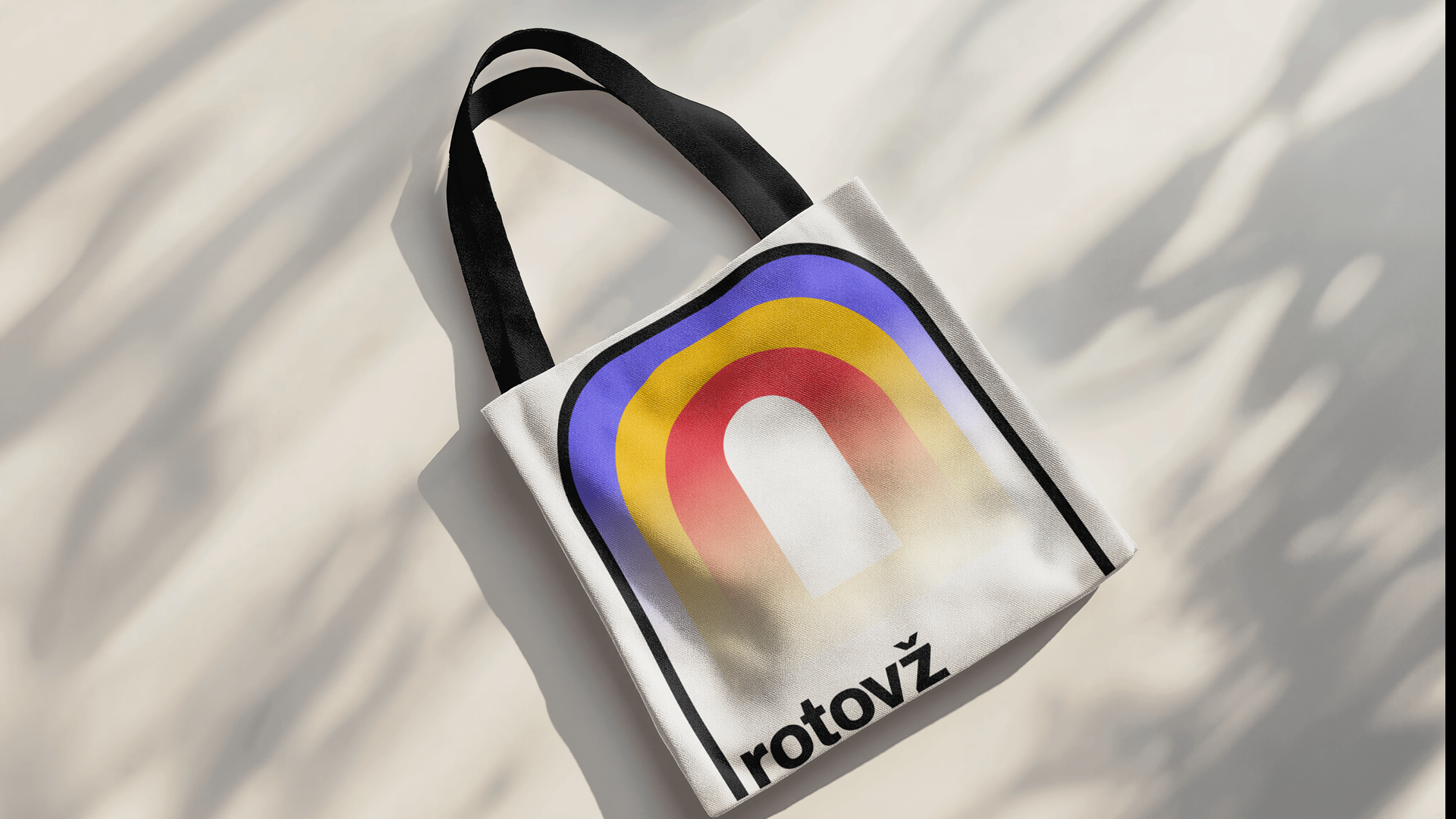
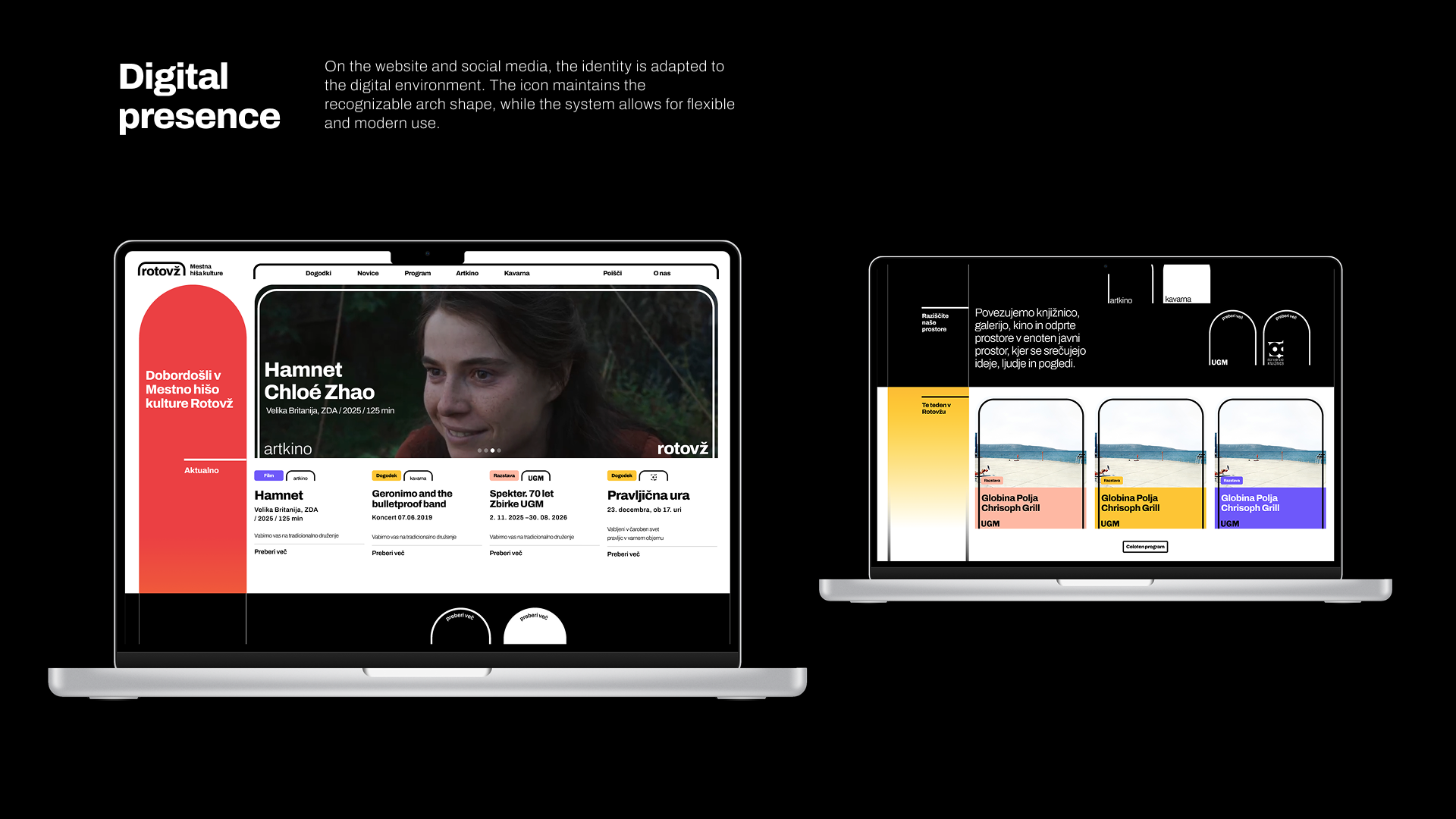
In 2026, Maribor will open a new cultural center on Rotovž Square. Center Rotovž is a 7,000-square-meter building designed to house the city library, an art gallery, a cinema, a café, and educational spaces—all under one roof. It is intended to be the "living room" of Maribor, a place where people come freely to read, to see art, to watch films, to meet, to linger. For Strahinja Jovanović, the building's ambition called for an identity that was equally open, equally flexible, equally welcoming.
The visual identity he proposed was inspired by the building's arcades. The arcade is a structure of repetition and variation: columns that repeat, spaces that open and close, a rhythm that is both orderly and inviting. It is a frame that contains without enclosing, that welcomes without demanding. The identity translates this logic into graphic form: a variable system that can widen and shrink, that adapts to any format, that functions as a frame for whatever content it holds.
The identity is not a static logo. It is a system—a set of elements that can be arranged, scaled, transformed. At its core is a vertical structure, a rhythm of intervals that echoes the arcade's columns. This structure can be expanded to fill a billboard or compressed to fit a business card. It can hold text, images, color, pattern. It is designed to receive, to adapt, to become whatever the moment requires.
The flexibility of the identity reflects the diversity of the center's programs. A gallery exhibition requires a different visual presence than a film screening; a library event speaks a different language than a café menu. The variable identity can accommodate these differences while maintaining coherence. It is a system, not a mark; a structure, not a stamp.
The name Rotovž carries historical weight. The square has been a center of Maribor life for centuries; the new building is part of a broader revitalization of the city's cultural infrastructure. The identity respects this history while pointing toward the future. Its forms are contemporary but not alienating, precise but not cold. It is an identity designed to welcome, to open, to invite.
The project was developed as part of a public competition for the center's visual identity . Although this particular proposal was not selected, it remains a significant exploration of what a cultural identity can be: not a closed system but an open one, not a mark to be repeated but a structure to be inhabited.
For Strahinja, the project was an opportunity to think about identity as architecture. The building provides the physical frame for cultural life; the visual identity provides the graphic frame. Both are designed to be flexible, to accommodate change, to welcome the new. Both are structures that exist to hold what others bring to them.
In the end, Center Rotovž is about gathering. It is a place where the community comes together, where different programs coexist, where culture is made and shared. The variable identity reflects this: a system that can hold many things, that changes to meet the moment, that is always open to what comes next.